


Astronomers discover a second-generation planet formed from the remnants of a dead star
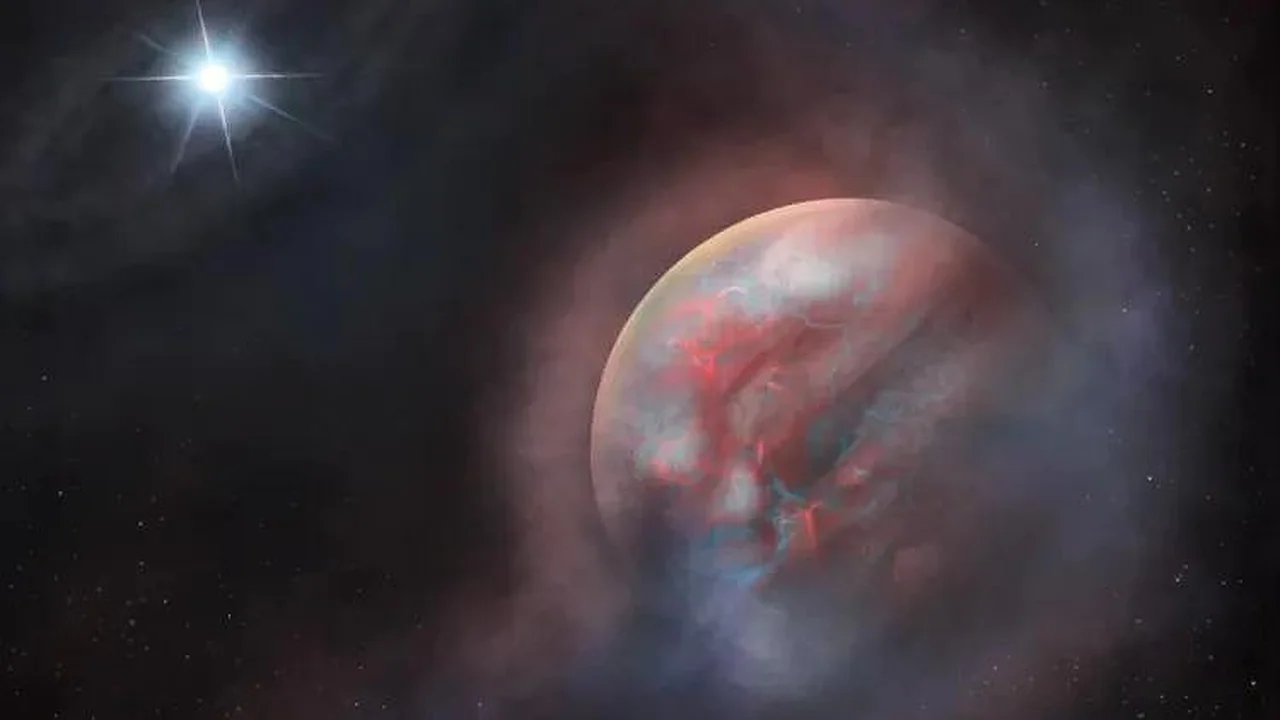
An international group of astronomers has obtained the first reliable evidence of a second-generation planet orbiting a white dwarf. The scientific community is highly interested in this cosmic object, as it may have formed from the debris left behind after its parent star's collapse. This was reported by Ixbt.com reports .
According to the publication ixbt.com, the Jupiter-sized gas giant orbits the white dwarf HS 0209+0832, with a full orbital period of approximately 4.4 Earth days. Typically, planets form simultaneously with stars from a protoplanetary disk surrounding a young star. However, in this case, scientists are proposing a completely different scenario.
The secrets of an unusual planet's birth
Researchers state that this celestial body emerged after the star passed through the final stages of its evolution, shed its outer layers, and became a white dwarf. This is why the authors compare it to the mythical phoenix, as it has been "reborn" from the matter of a dead star.The primary evidence supporting this hypothesis is the chemical composition of the white dwarf's atmosphere. An unusually high concentration of heavy elements such as zinc, copper, and especially niobium was detected there. It was found that the amount of certain substances is nearly a thousand times higher than levels found in the Sun.
The s-process and stellar evolution
The identified heavy elements are associated with the s-process, a chain of nuclear reactions within aging stars. These processes are particularly active in the late stages of stellar evolution, shortly before the outer layers are shed. This factor made the system's chemical composition a significant discovery.Currently, the white dwarf is slowly pulling material from the nearby gas giant. This material falling into the atmosphere of the stellar remnant allows astronomers to study the chemical composition of the disintegrating planet directly by observing the white dwarf's spectrum.
NASA telescope observations and the mystery of binary stars
To deepen the research, additional observations were conducted using NASA's TESS space telescope. A periodicity of approximately 4.4 days was found in the system's brightness, which perfectly matches the object's orbital period around the white dwarf.Scientists believe that the formation of such a new planet after a star's death requires special conditions. Initially, a sun-like star turns into a red giant and ejects a significant portion of its outer material. It is hypothesized that HS 0209+0832 may have previously been part of a binary star system. The gravitational pull of the second star may have captured some of the ejected material, returning it to an orbit around the white dwarf and creating the conditions for a new disk and planet to be born.


Comments 0
…