


Short air flight: Can the new Roadster presented by Tesla save the mass market?
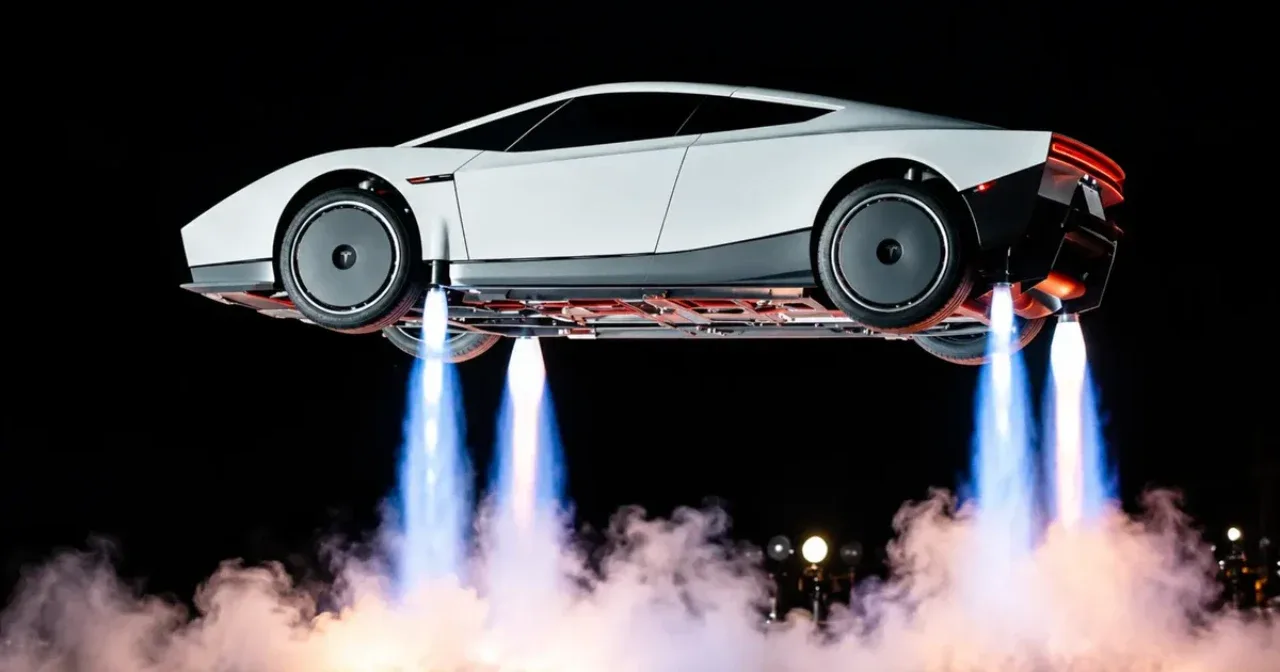
Led by Elon Musk, Tesla has once again shaken the automotive world with details of its most sensational and long-awaited project — the new-generation Roadster supercar.
Presented on October 15, 2026, the technological capabilities of this electric vehicle go far beyond the boundaries of traditional hypercars: compressed air engines, reaching one hundred kilometers per hour in under a second, and even the ability to perform short-term "aerial maneuvering."
However, an analysis published by the renowned scientific-analytical publication Naked Science raised a crucial question: can this expensive supercar with its staggering performance solve Tesla's serious mass-market competition problems?
Compressed Air System: How Does the Car "Fly"?
The most sensational aspect of the new Roadster is its creation through a combination of space and aerodynamic technologies:
Reactive nozzles and maneuvers: Compressed air from high-pressure cylinders is expelled with great force through special nozzles located at the front, rear, and bottom of the car. This is not long-distance flight like an airplane, but it allows the car to perform maneuvers such as short-term lifting into the air and even mid-air rotation;
Fan-forced downforce: Powerful fans under the body suck in air, dramatically increasing downforce. This maximizes tire grip on the asphalt during turns.
Inconceivable Dynamics: 0.59 Seconds and Astronaut G-Forces
The presented technical specifications break hypercar records:
Rocket acceleration: The standard model accelerates from 0 to 97 km/h in just 0.81 seconds. The extreme Rocket version covers this distance in an astonishing 0.59 seconds;
Dreadful physical load: During such sharp acceleration, the gravitational pressure on the driver's body reaches 3.4 g in the standard model and 4.6 g in the Rocket variant. This is equivalent to the loads experienced by fighter pilots or astronauts, requiring special physical training from the driver;
Power and range: The model's motor power is 1 megawatt, and the battery capacity is 150 kWh. Recharging from 15 to 85 percent takes 10 minutes, the driving range on a single charge is at least 480 km, and the top speed exceeds 370 km/h.
(It should be noted that these figures are currently presentation data and have not yet been confirmed by independent testing ground trials).
Mass Production and Anticipated Obstacles
The Roadster's entry into assembly is scheduled for 2028. However, there are a number of challenges along the project's path:
Price and target audience: The previously mentioned starting price of $250,000 is not yet final. If the price increases, it may turn into a toy for just a few collectors (much like the Cybertruck, which turned out significantly more expensive than expected);
Legal permits: It remains unknown how safety authorities will evaluate a car with compressed air nozzles and jet acceleration systems driving on public roads.
The Main Problem: Chinese Expansion and the Shortage of Affordable Electric Vehicles
The main conclusion of Naked Science's expertise is that while Tesla is amazing the public with supercars, the company's position in the mass market is being undermined:
Chinese competition: Chinese manufacturers are rolling out new, high-quality, and most importantly, affordable electric vehicles day by day, squeezing Tesla out of global markets;
Risk of a flawed strategy: The author criticizes Tesla for focusing excessively on complex robotaxis and expensive hypercars instead of affordable, mass-market new platforms. Meanwhile, the introduction of driverless transport faces numerous legal, economic, and technical barriers.
The Roadster may be the pinnacle of Tesla engineering. But the company's future fate depends not on such supercars, but on how quickly it can apply these advanced technologies to affordable mass-market vehicles.



Comments 0
…