


What rank does Uzbekistan hold in the ranking on women’s safety?
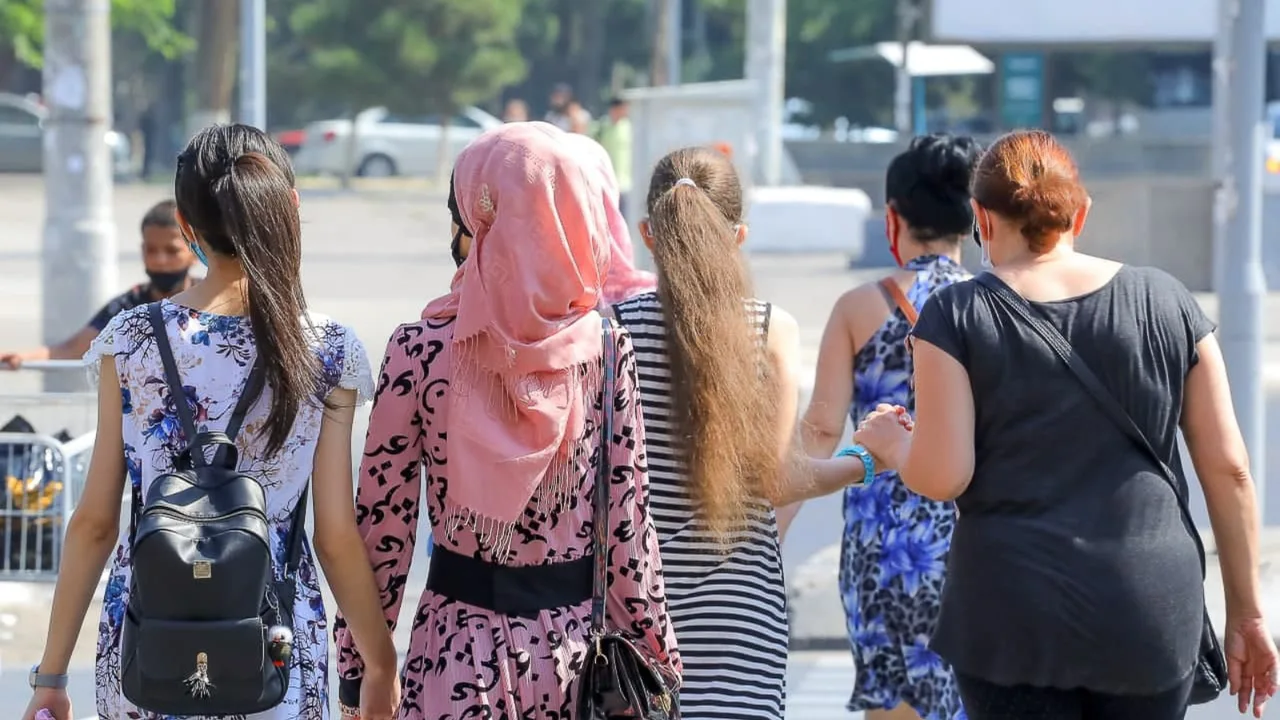
Uzbekistan ranked 98th out of 181 countries in an international ranking assessing women’s well-being, rights and safety. The country scored 0.674 points in the 2025/26 index. This was reported by Georgetown University’s Institute for Women, Peace and Security.
The ranking assesses women’s inclusion, rights, justice and security in society based on 13 key indicators. It takes into account such important criteria as access to education, employment rates, access to financial services, representation in parliament, legal equality, access to justice, maternal mortality, domestic violence and public safety.
Among CIS countries, Moldova ranked 36th with a score of 0.821. Armenia ranked 56th with 0.762 points, Belarus 63rd with 0.739 points, and Kazakhstan 72nd with 0.722 points.
Turkmenistan ranked 74th with 0.720 points, Russia 75th with 0.718 points, Kyrgyzstan 84th with 0.697 points, and Tajikistan 89th with 0.685 points.
Uzbekistan ranked 98th with a score of 0.674. Within the CIS, only Azerbaijan ranked below Uzbekistan in this comparison, taking 111th place.
When the five Central Asian countries were compared separately, Kazakhstan also recorded the highest result, ranking 72nd. It was followed by Turkmenistan in 74th place, Kyrgyzstan in 84th, Tajikistan in 89th and Uzbekistan in 98th.
Denmark ranked first
Northern European countries dominated the top five of the ranking.
Denmark ranked first with 0.939 points. Iceland came second with 0.932 points. Norway and Sweden shared third place, each scoring 0.924 points. Finland ranked fifth with 0.921 points.
Afghanistan, Yemen and the Central African Republic occupied the bottom three places in the ranking. Afghanistan ranked 181st with 0.279 points, Yemen 180th with 0.323 points, and the Central African Republic 179th with 0.362 points.
According to the Georgetown Institute, the 2025/26 index showed that global progress in women’s rights and well-being has slowed significantly.
The study covered 181 countries worldwide and comprehensively assessed not only the legal status of women, but also a number of other important areas, including education, economic opportunities, security and participation in society.


Comments 0
…