


US Space Nuclear Power Faces Fuel Shortage
Despite the rapid development of US space nuclear programs, they face a number of systemic problems that could seriously slow their progress. At an industry symposium held on August 13, government and private-sector representatives openly identified the main obstacles in the field, particularly fuel and workforce shortages. According to ixbt.com, the lack of specialists capable of managing both nuclear and space systems, along with disruptions in the supply of reactor components, is hindering the industry's development. This is what Ixbt.com reports .
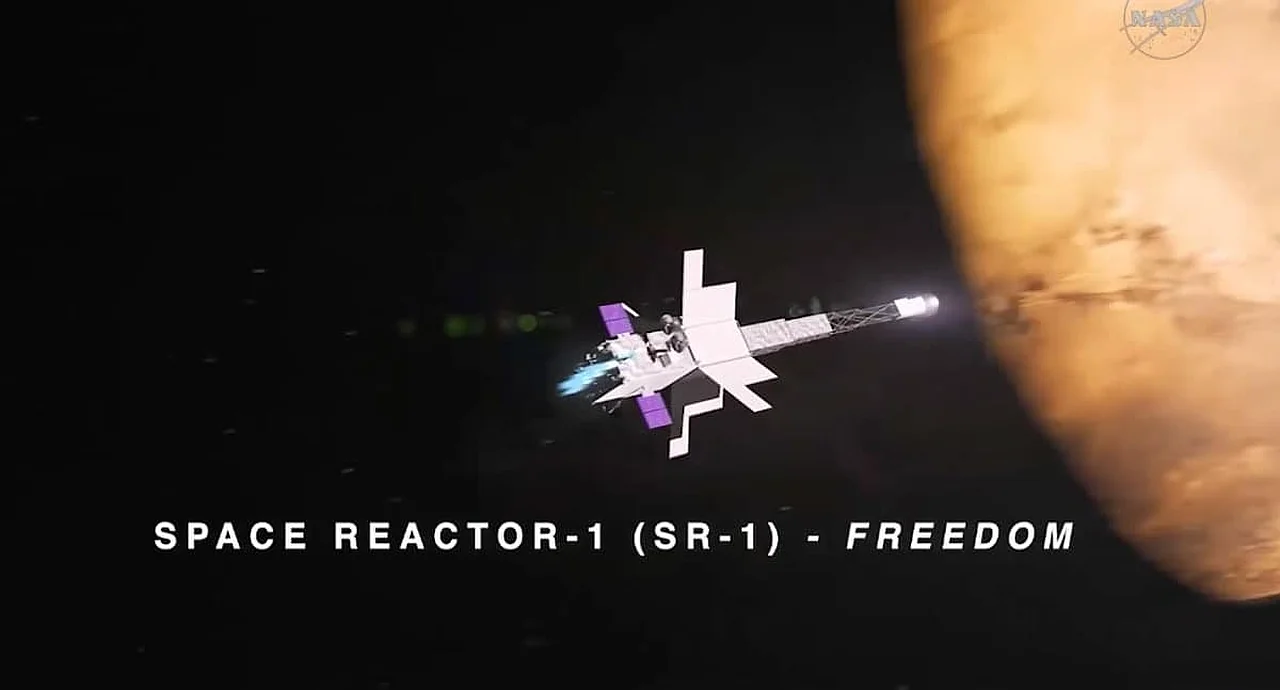
NASA is currently pursuing several promising projects. These include Space Reactor 1 Freedom (SR-1), which envisages launching a nuclear electric propulsion system by the end of 2028, and the Lunar Reactor 1 (LR-1) program, designed for operations on the Moon. These systems are expected to play a crucial role in future deep-space exploration and in supplying long-term bases with energy.
Intense Competition for HALEU Fuel
Experts believe one of the most serious problems is the sharp increase in demand for HALEU fuel, which contains high-assay low-enriched uranium. This type of fuel is being considered not only for space reactors but also as a coolant for small modular reactors on Earth. The US Department of Energy (DOE) remains the country's only domestic HALEU supplier. On July 23 of this year, the department allocated fuel for NASA's SR-1 mission, as well as for Radiant and other programs.Jeremy Kenney, head of NASA's Office of Advanced Nuclear Technologies, says the limited availability of HALEU fuel could become a key challenge when resources are allocated among different programs in the future. In addition, the US Army's Janus program is creating further competition. The military initiative is developing microreactors to supply bases with power, and the Army is expected to announce the names of five companies that will continue work in this area soon.
Political Stability and Financial Risks
In addition to short-term technical challenges, industry representatives are concerned that funding stability could disappear after a change in the US administration. Citing a 2025 study, former NASA deputy administrator Bhavya Lal warned that current support may depend on specific officials in office rather than on a long-term policy.In particular, experts note that the SR-1 project still lacks a clear and permanent customer. To reduce future risks, they recommend starting work on SR-2 earlier and securing multiyear funding through Congress. Otherwise, the program could repeat the fate of the SNAP-10A reactor launched in 1965, putting future missions at risk of cancellation.


Comments 0
…