


A three-person transition council has been officially formed in Iran: a new era is beginning
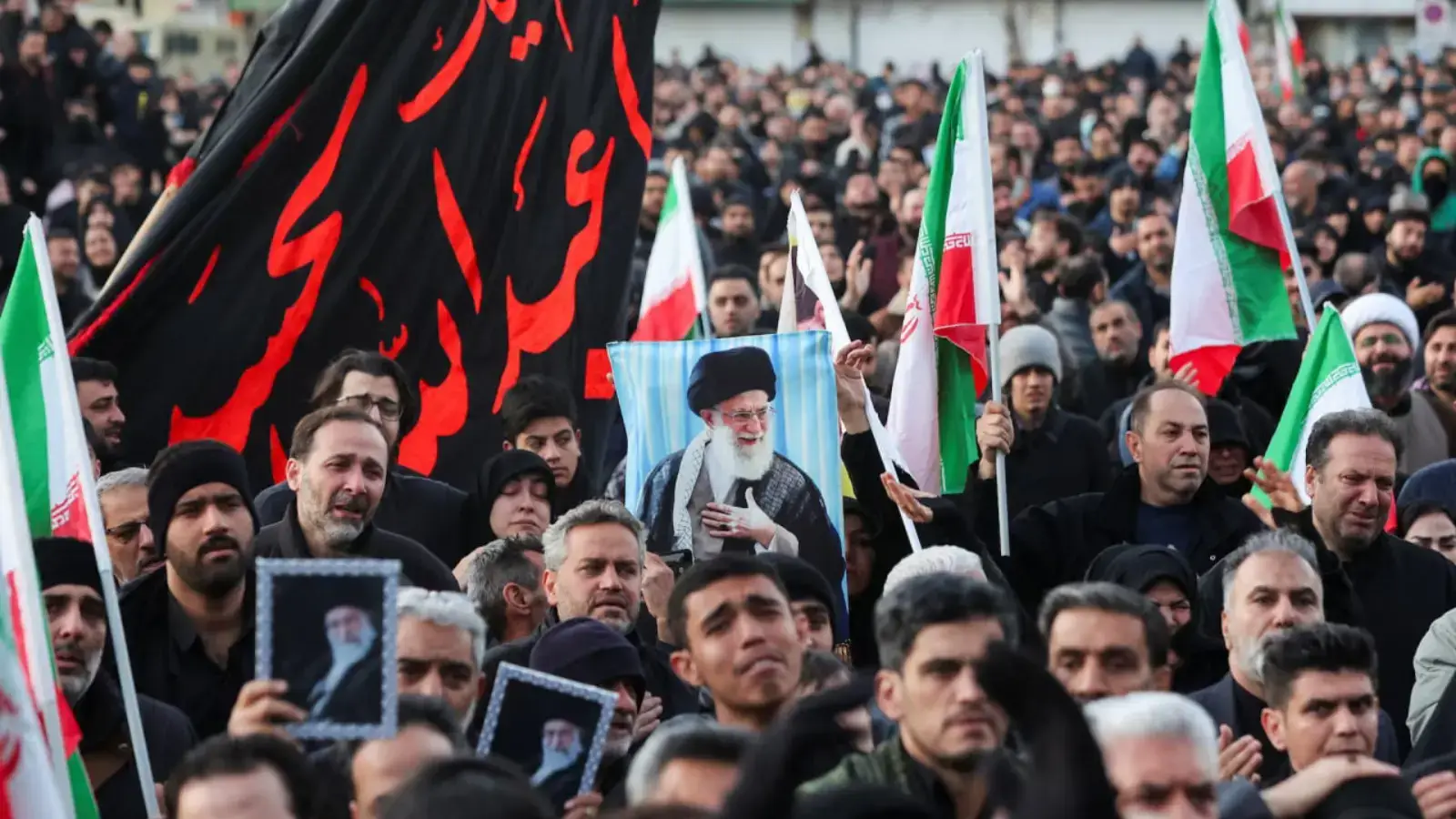
Photo: Reuters / People are gathering in Tehran's Revolution Square to commemorate Ali Khamenei. March 1, 2026
One of the most difficult and decisive periods of political history began in Iran. On Sunday, Iranian state media reported the creation of a special transitional council for the temporary administration of power in the country following the death of Supreme Leader Ayatollah Ali Khamenei. This news signifies the beginning of a new political stage not only within Iran but throughout the Middle East.
In accordance with the procedure established by the Constitution of Iran, when the position of supreme leader becomes vacant, the powers of state administration are temporarily transferred to a special council. According to the Associated Press, this structure will consist of Iran's incumbent President Masoud Pizishkiyan, the head of the judiciary Ghulomhusayn Muhsini Ejeei, and a representative of the Council of Fiqh. It is this council that assumes the main functions of leadership until a new supreme leader is elected.
This process is not just a technical transition. Because in Iran, the highest leader is the highest point of the state system. It has a decisive influence on military structures, security agencies, the judiciary, and key strategic decisions. Therefore, the council being formed today is becoming the most important temporary mechanism for filling the power vacuum in the country.
Now the focus is on the "Expert Meeting" in Iran, consisting of 88 members. According to the legislation, it is this commission that must select a new top leader as soon as possible. This body consists entirely of Shia clergy, which are formed through elections. However, candidates are first approved by the Council of Fiqh. Therefore, in the coming days, it is expected that not only mourning will begin in Iran, but also intense political disputes and a major selection process.
Meanwhile, the Iranian president's administration reacted very sharply to Khamenei's death. The official statement assessed the incident as a "grand crime" and stated that the answer was inevitable. At the same time, Associated Press and other sources report that a 40-day national mourning period has been declared in the country, in addition to which a week-long national break has been introduced.
The mood in Tehran also shows how serious the situation is. Footage released by Reuters and other international sources shows people gathering around Revolution Square to react to recent events. This indicates that the political and psychological climate within Iran is also very tense.
At the same time, information about the losses of Iran's high military elite is also growing. According to AP, the head of the Iranian army's General Staff, Abdulrahim Musavi, and Defense Minister Aziz Nasirzoda were reportedly killed. Reuters reported that high-ranking figures such as Muhammad Pakpur and Ali Shamkhani were also targeted. Some names have been officially confirmed, while information about others is still being clarified.
In short, Iran is now entering an extremely delicate transitional period, which could determine the fate of not just a simple political change, but the entire system. On one side - mourning, on the other - a promise of a response, and on the third - a historic decision to choose a new top leader. The coming hours and days can determine the future not only of Iran, but of the entire region.



Comments 0
…