


Piziskyan officially announced the commencement of the interim council
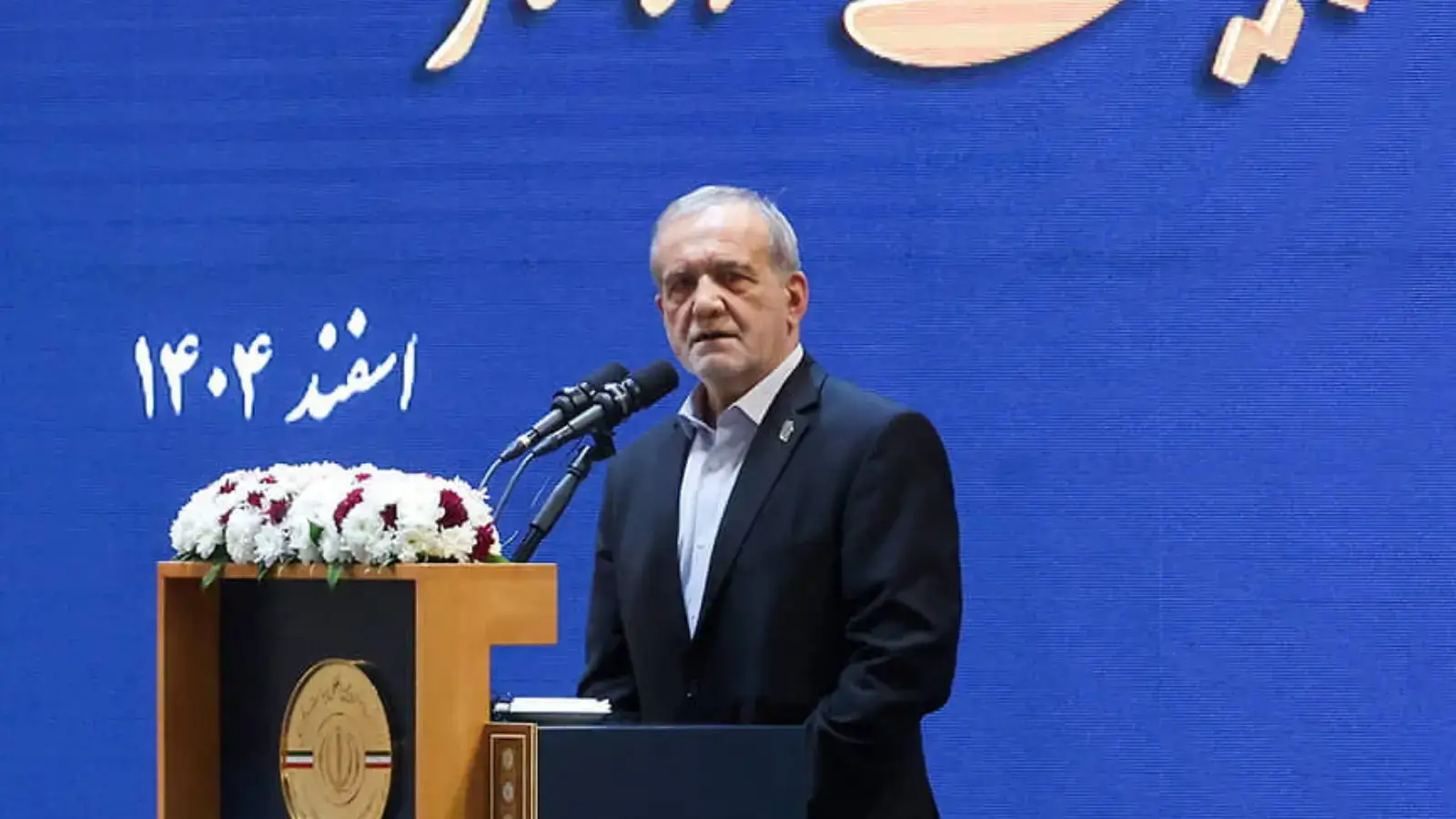
Photo: WANA / Reuters
The transition to power in Iran officially began. President Mas'ud Piziskyan addressed the nation through the state television and radio company, announcing that the interim council had begun its work and would resolutely follow the path of Ali Khamenei, whom he called the "dear imam." Reuters and other international sources confirm the launch of a council in Iran that temporarily assumes the powers of the supreme leader.
According to the Constitution of Iran, when the position of supreme leader becomes vacant, a council of three people is created to temporarily govern the country. According to Reuters, this structure includes President Mas'ud Pizishkiyan, head of the judiciary Ghulomhusayn Muhsini Ejeiy, and Alizara Arafi as a representative of the Council of Fiqh. Thus, Piziskyan's statement was not just a political statement, but an official confirmation that the constitutional mechanism had actually started working.
Pisiskyan emphasized another important point in his appeal: he openly stated that Iran would not leave these attacks unanswered. According to the president, the country intends to demoralize its enemies by destroying their bases and capabilities. This rhetoric shows that in the current conditions, Iran is leaving open not only the political, but also the military response path. Al Jazeera also wrote that the Pizishkiyon office assessed the incident as a "major crime" and issued a statement in the spirit of revenge.
The President's statement, previously circulated via Telegram, was in the same sharp tone. In it, Khaminai's assassination was interpreted as an "open war of the American-Soviet alliance against Muslims, especially the Shiites of the world." This expression means that within Iran, the incident is viewed not only as the death of the head of state, but also as a religious-political and civilizational blow. This sentiment was strongly reflected in Al Jazeera's materials on March 1.
These statements were made against the backdrop of Israeli and US strikes on Iran on February 28. In an interview with Reuters, the Israeli official previously stated that Iranian Supreme Leader Ali Khamenei and President Masud al-Pisiskyan were also among the targets during these strikes. Reuters later wrote that Khamenei had been killed and that the incident had created a power vacuum in Iran.
In short, Piziskyan's speech officially confirmed the beginning of a new political stage in Iran: on the one hand - a temporary council began its work, on the other - the state leadership chose the rhetoric of a sharp response. Now the biggest question is: will this transition period be limited only to internal governance, or will it lead to even greater escalation in the region?



Comments 0
…