


Ukraine attacked Russia with 419 drones
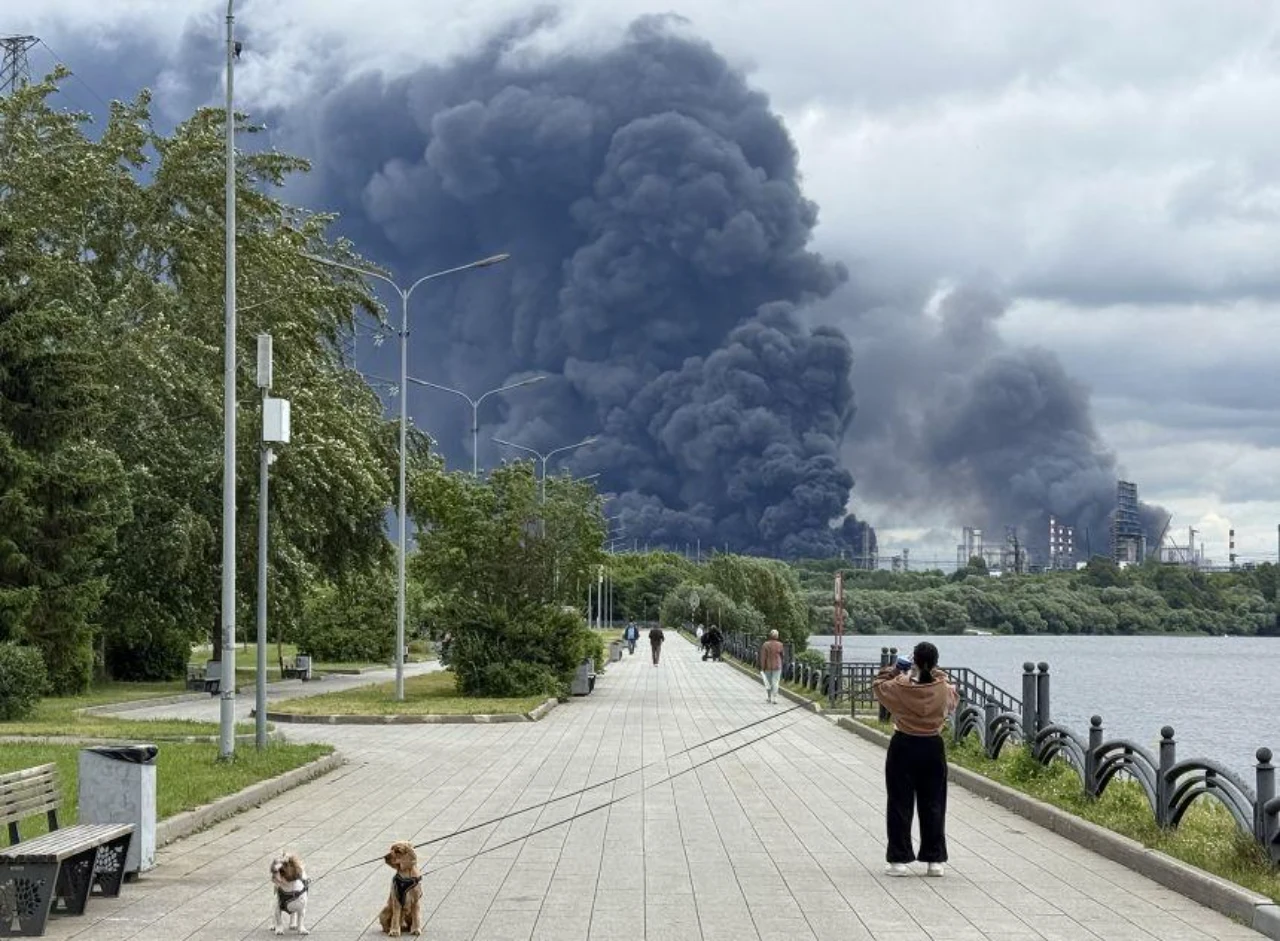
Consequences of the June 18 drone attack on Moscow / Photo: AFP
Overnight on June 30, Ukraine launched another massive drone attack on Russian territories and the Russian-controlled Crimea. The Russian Ministry of Defense stated that its air defense forces shot down a total of 419 unmanned aerial vehicles throughout the night.
According to Russian officials, more than 60 drones were directed at Moscow and its surrounding areas. It was reported that a six-month-old baby was killed in the Moscow region as a result of the attack. The Ukrainian side stated that the strikes were primarily aimed at Russia's military, energy, and communications infrastructure.
Dozens of drones shot down around Moscow
Moscow Mayor Sergey Sobyanin announced that air defense forces destroyed more than 60 drones approaching the capital.
According to him, emergency services worked in the areas where drone debris fell. No casualties or serious destruction were reported within Moscow city itself.
The Russian Ministry of Defense claimed that a total of 419 drones were shot down over Russian territories and Crimea. These figures have not yet been fully verified by independent sources.
Baby killed in Moscow region
Moscow Region Governor Andrey Vorobyov reported that drone debris fell on a private house in the city of Yegoryevsk, located about 96 kilometers southeast of the capital.
The incident caused a fire in the building. Rescuers pulled people out of the house, but a six-month-old baby died while being transported to the hospital.
Several other people are said to have been injured in the area. Russian officials blamed Ukraine for the incident. Kyiv did not immediately provide a specific comment regarding this casualty.
Restrictions imposed at Moscow airports
Following the drone attack, Russian aviation authorities introduced temporary restrictions at airports serving Moscow.
According to Rosaviatsia, three of the capital's four major international airports briefly suspended flight arrivals and departures during the night.
Due to the increased number of drones aimed at Moscow in recent months, temporary airport closures are becoming more frequent. Such restrictions are leading to hundreds of flight delays or diversions to other airports.
Sputnik communications center targeted
The Ukrainian side announced that during the attack, a space communications center located in the city of Dubna, north of Moscow, was struck.
Ukrainian President Volodymyr Zelenskyy emphasized that this facility is involved in coordinating satellite communications used in Russia's military operations.
Russian officials did not disclose the extent of the damage to the facility. The Moscow regional administration reported that one of the administrative buildings in the area was damaged.
Zelenskyy: 'The reality of war is returning to Russia'
In an address prior to the attack, Volodymyr Zelenskyy said that Ukraine's long-range strikes are 'returning the reality of war to Russia itself.'
He emphasized that strikes on Russia's oil refineries, pumping stations, fuel depots, and export ports are aimed at limiting the country's ability to finance the war.
'We are ensuring the necessary results for Ukraine so that the aggressor state cannot keep the war somewhere far away,' Zelenskyy said.
The Ukrainian president calls such operations 'long-range sanctions' and continues to emphasize that their main goal is to force Russia to end the war.
Fuel problems intensifying in Russia
Ukraine has recently sharply increased its strikes on Russian oil refineries and fuel infrastructure.
These attacks are causing shortages of gasoline and diesel fuel in some regions, queues at gas stations, and disruptions in supply.
A major oil refinery in Moscow was hit by drone attacks several times in June. According to Reuters sources, it could take at least half a year for the severely damaged facility to fully restore production.
Problems with electricity and fuel supply are also being observed in Crimea. In some areas, public transport movement is restricted, street lighting has been reduced, and temporary regulations have been introduced for fuel sales.
Heavy fighting continues at the front
Russian troops are trying to advance in eastern Ukraine, particularly in the Donetsk region. Moscow sees the capture of the remaining parts of the region as one of its main military goals.
However, the widespread use of drones on the front line has made movement difficult for both sides. Although Russian forces are advancing slowly in some directions, they are unable to quickly capture large territories.
At the same time, Ukraine has increased the flight range, payload capacity, and accuracy of its drones. This allows Kyiv to strike major facilities deep inside Russia with more devices.
Putin says he will not abandon his plan for Donbas
Russian President Vladimir Putin stated that the drone attacks carried out by Ukraine will not change Moscow's plans.
In an interview with a Russian state TV channel, he emphasized that he would not abandon the goal of fully capturing Donbas and the territories he calls 'Novorossiya'.
Putin acknowledged that Ukrainian strikes are causing problems for Russian infrastructure and that fuel shortages are being observed in some places. However, he claimed that Russia's strikes on Ukrainian territory are much more powerful and destructive.
Russia also regularly strikes Ukrainian cities with missiles and drones. Both sides deny intentionally targeting civilians, but many citizens have been killed in both countries during the war.
The June 30 attack showed that the scale of Ukrainian drones reaching Russian territory has expanded further. However, information about the exact number of devices, the share of shot-down drones, and the damage caused to targets remains difficult to verify independently under wartime conditions.



Comments 0
…