


Unexpected changes discovered on the far side of the Sun
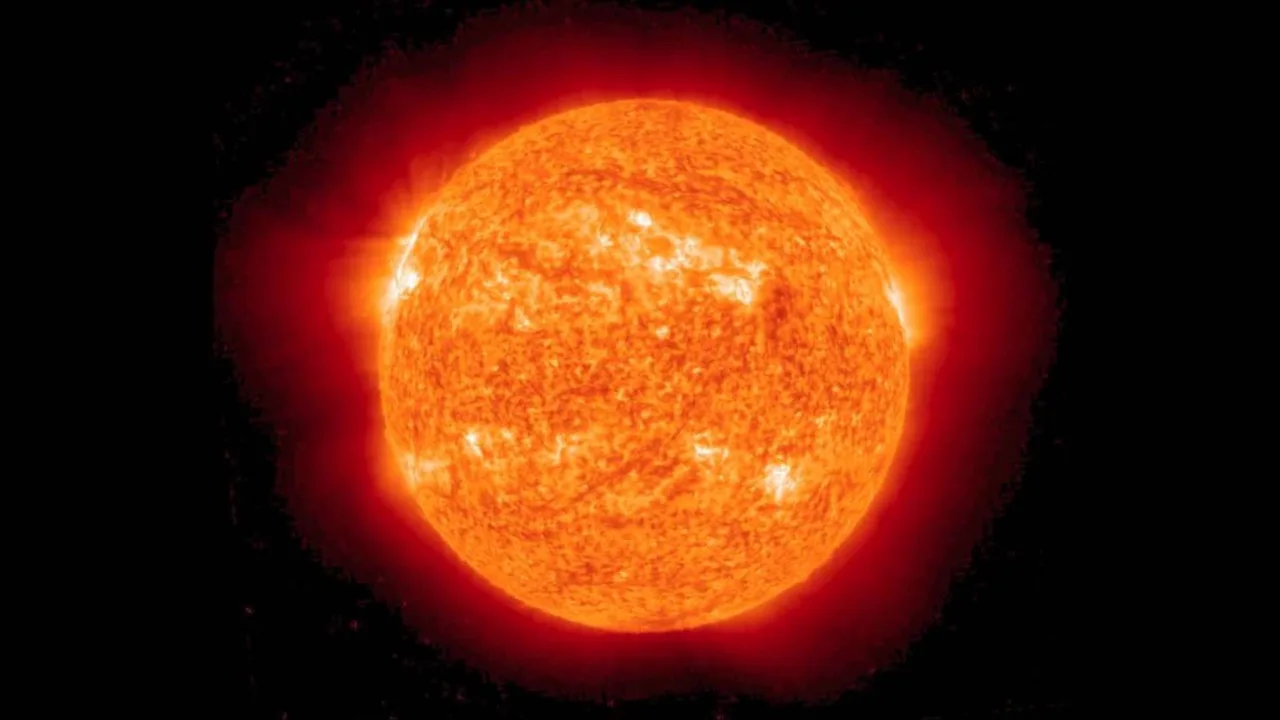
Europe's Solar Orbiter spacecraft has, for the first time in a long while, managed to observe the processes occurring on the far side of the Sun, which is invisible from Earth. The new data obtained differed from what scientists had expected — the massive active regions that had been closely monitored in recent months have begun to rapidly lose their activity. This was reported by Tengrinews.
During the observations, the Solar Orbiter was positioned on the side of the Sun opposite to Earth, allowing it to image the region invisible to telescopes on Earth. It was on this side that, until recently—specifically at the end of June—the regions numbered 4478 and 4479, considered the largest and most active in recent years, were located.
Experts note that Zone 4478, which just two weeks ago was rated as the second-largest active region of the last decade, has now significantly weakened.
"Zone 4478, which is located on the far side and was considered the second-largest region of the decade two weeks ago, has weakened significantly. Although there is about a week left before it rotates back toward Earth, it is questionable whether it will even persist until then. However, region 4479 is currently maintaining its activity," laboratory experts say.
Thus, one of the most powerful active regions on the Sun may disappear completely before it faces Earth again. Researchers note that an unusually calm period is currently being observed on the Sun. Even the X-ray sensors of the Solar Orbiter have not recorded any significant activity.
Why did scientists expect a different result?
As early as May, experts had identified a very large active region appearing on the far side of the Sun. At that time, scientists compared it to a similar region observed in 2024. That specific active region had triggered one of the strongest geomagnetic storms on Earth in the last 20 years.
Researchers had predicted that the new region would also turn toward Earth in June and become a source of powerful flares and geomagnetic storms. However, the latest data sent by Solar Orbiter did not confirm these expectations. The observations showed that one of the largest active zones had weakened considerably, and the Sun's overall activity remains unexpectedly low.
Experts continue to monitor these processes. They emphasize that such changes in solar activity are crucial for predicting space weather that could impact Earth in the future.


Comments 0
…