


Borders Closed: Uzbekistan and Pakistan Choose a Route Bypassing Afghanistan
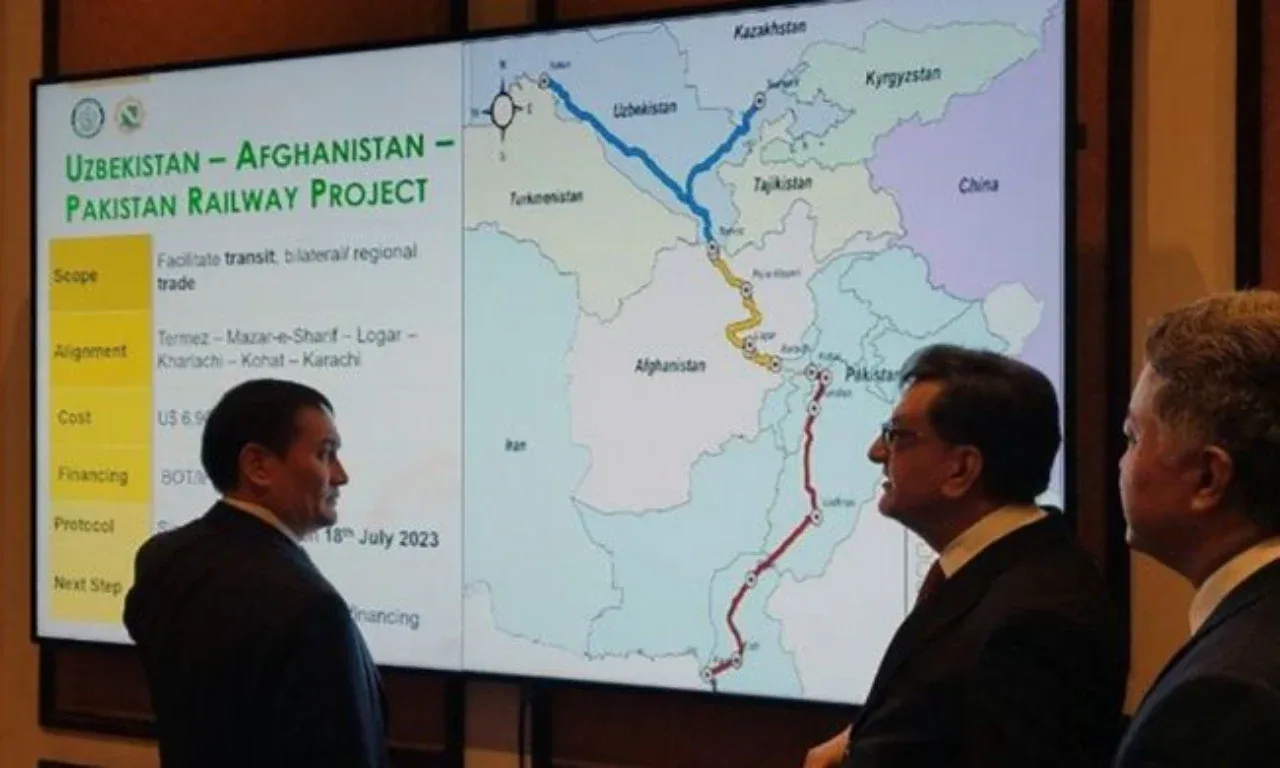
Discussion of the Trans-Afghan route project. Photo: Ariana News
Against the backdrop of changing regional security and geopolitical situations, a fundamental shift is taking place in the trade and logistics chain between Central and South Asia. According to the Asian Express publication, Uzbekistan and Pakistan have officially agreed to integrate a new alternative transport corridor passing through China for cargo transportation due to instability in Afghanistan.
During the visit of the Deputy Prime Minister of Uzbekistan to Islamabad, an important protocol is expected to be signed, turning this new route into an official transport corridor between the two countries.
Why were the Afghan and Iranian routes abandoned?
Previously, the route through Afghanistan was considered the shortest and most financially cost-effective, and was even viewed as the basis for the "Uzbekistan – Afghanistan – Pakistan" trans-Afghan railway project. However, two main factors changed these plans:
Closure of the Afghan route: Following a sharp deterioration in relations between Islamabad and Kabul, the Torkham and Chaman border crossing points were closed in October 2025. As a result, this transport corridor practically ceased operations.
The Iran factor: The parties also considered alternative routes passing through Iranian territory. However, the growing military and political tension around Iran significantly reduced the attractiveness and safety of this option.
How does the new logistics scheme work?
Ultimately, despite the greater length and higher transportation costs, the route through China was deemed the most reliable and predictable option.
Route sequence: Pakistani goods are transported through the Sost dry port on the border with China.
Transit: Goods pass through the western regions of China and then enter Central Asian countries, including Uzbekistan.
Advantage: While Pakistan gains a stable supply corridor to Central Asia, Tashkent maintains uninterrupted communication with Pakistani ports.
Comparative analysis of regional transport corridors
Route | Main Advantage | Main Disadvantage | Current Status |
Via Afghanistan | Shortest and cheapest route | Borders closed, endless political risks | Practically suspended |
Via Iran | Access to sea ports | Military and political instability in the region | Low attractiveness |
Via China (New) | High security and stability | Longer distance and higher costs | Officially being integrated |
In Numbers: Uzbekistan and Pakistan Trade Relations
Pakistan is Uzbekistan's second-largest trading partner in South Asia. The new logistics chain serves to maintain and further increase the volume of trade between the two countries.
Total trade volume in 2025: $445.9 million
Pakistani exports: $120.9 million
Uzbekistan's share: $325 million
Geopolitical conclusion:
This decision by Tashkent and Islamabad further strengthens China's status as the main transport and logistics hub connecting Central and South Asia. Countries in the region are now prioritizing security over costs.
Send this important geopolitical and economic analysis to your loved ones!
The shift in regional trade routes is of historic significance for the Central Asian economy.
Send this hot news and analytical article to your friends and partners right away!
In your opinion, how will the new route through China affect product prices? Leave your thoughts in the comments!



Comments 0
…