


Chinese Rocket Exploded 85 Seconds After Launch
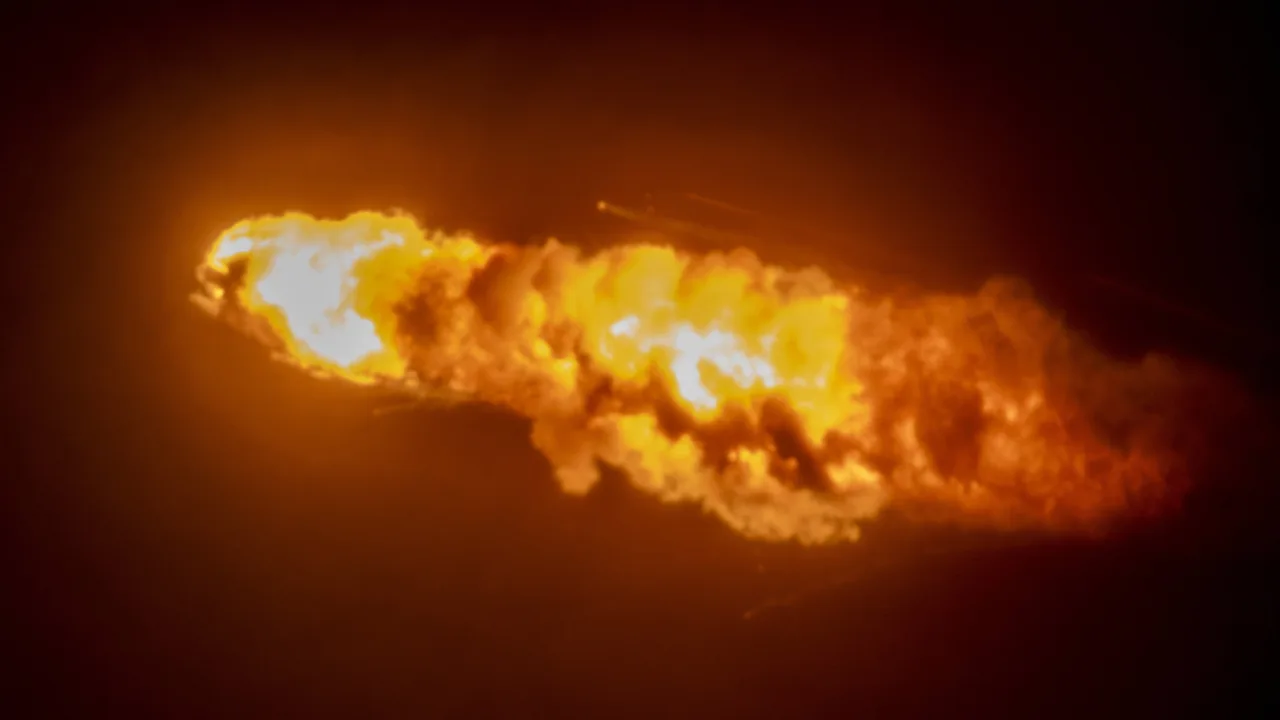
China’s Long March 7A carrier rocket suffered a serious accident during its latest flight. The rocket exploded in midair just 85 seconds after being launched from the Wenchang Spacecraft Launch Site on Hainan Island in southern China. The incident could also affect the schedules of future space launches. Space reported this.
The incident reportedly occurred yesterday, around 8:02 p.m. Beijing time on August 10 The Long March 7A carrier rocket was supposed to carry the Zhongxing-4B communications satellite into orbit. However, the planned mission failed, and the rocket exploded 85 seconds after launch.
The accident occurred before the rocket’s first stage separated. As a result, the satellite scheduled to be placed into orbit along with the rocket was also destroyed.
China’s Xinhua news agency reported that an “emergency situation” had occurred during the flight and caused the explosion. Specialists are currently conducting inquiries and investigations to determine the exact cause of the accident.
However, because information exists linking the satellite to military activities, not all details of the incident may be disclosed to the public.
Experts Speculate About the Cause of the Accident
Rocket flight analyst Georgy Trishkin described the accident as “extremely astonishing” He noted that such major failures were frequently observed during the early years of the space race, in the middle of the last century. However, such an incident was unexpected for a modern rocket, especially on its 18th launch.
According to the expert, several factors could have caused the accident. These include manufacturing defects, errors in flight planning, or malfunctions in the rocket engines.
In particular, specialists are focusing on possible problems involving the YF-100 engines used in the rocket’s core stage. This engine is widely used in various Chinese rocket systems.
If the investigation identifies a serious technical problem specifically related to the engine, it could also affect China’s other planned space launches. Other rockets using the same engine technology would then need to undergo additional inspections.
China’s Fourth Space Accident This Year
The analyst said that several rocket-related failures are recorded in China every year. This is mainly attributed to the country’s rapidly increasing number of space launches and its accelerated testing of new rocket systems.
However, this year’s accident is particularly significant for China. It is the country’s fourth failed space launch in 2026 The analyst described this figure as an anti-record among countries.
On January 17, two launches in China failed on the same day. In early April, the launch of the Tianlong-3 rocket, which was intended to be China’s answer to the reusable Falcon 9, also ended in an accident.
The Second Accident for Long March 7A
This is not the first failure for the Long March 7A program. Since the rocket’s maiden flight in March 2020, it has failed to complete a mission successfully for the second time.
At the same time, the August 10 flight was the rocket’s 18th launch This accident, following the rocket’s previous 17 flights, has made a serious technical investigation necessary for Chinese specialists.
The main focus is now on determining exactly what caused the explosion. The investigation’s findings could be important not only for the Long March 7A’s future flights but also for the fate of China’s other space programs.


Comments 0
…