


A Miracle of Nature: Where Does the Only Bird in the World with a Horn on Its Head Live?
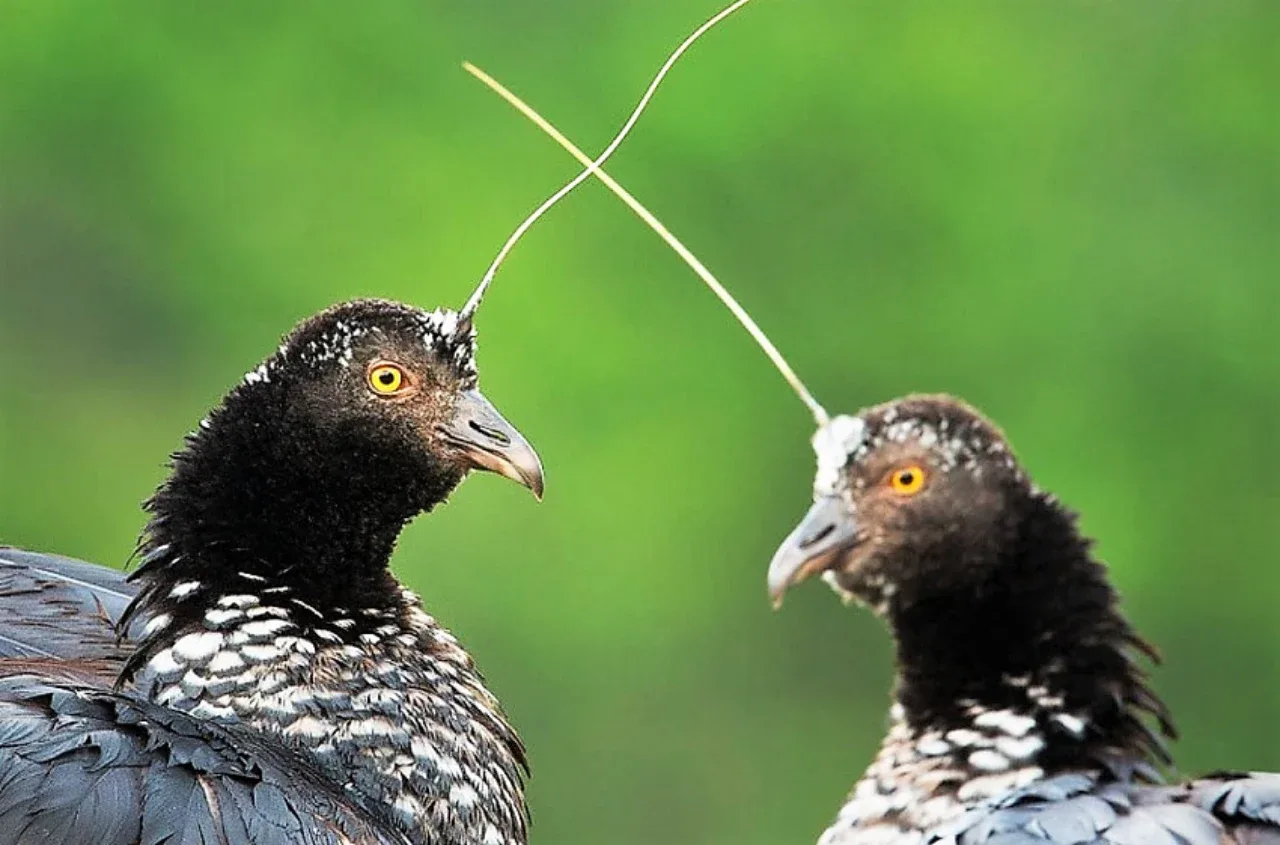
In the dense tropical swamps of South America lives a real "unicorn" of the bird world. Reminiscent of legendary creatures due to the peculiar horn on its head, this unique being is known in science as the horned screamer (Anhima cornuta). It is considered the only bird species on Earth with such an outgrowth on its head.
Black feathers, a chicken-like beak, and a yellowish-white horn protruding straight from its forehead give this bird a unique and imposing appearance.
The 15-centimeter horn on the head: Weapon or ornament?
The most distinctive feature of the horned screamer is the outgrowth on its forehead, which is approximately 15 centimeters (6 inches) long:
Structure of the horn: Anatomically, it is not a true horn (true horns consist of bone and keratin), but is made of flexible cartilage;
Why it is not used in combat: This "horn" is very loosely attached to the skull and can easily break off. Although it grows back, the bird does not use it as a weapon, but only for decorative (aesthetic) purposes.
Real weapons on the wings and bloody battles
When defending itself and its territory, the horned screamer employs a completely different "arsenal of weapons":
Sharp daggers on the wings: On the bird's wings, there are extremely sharp bone spurs 2 to 5 centimeters long;
Fierce clashes: Male birds use these very spears to attack each other when defending their territory from intruders. Often, these battles are so intense that broken spurs are found embedded in the chest of the defeated opponent.
Honking, warning signals, and the cracking sound during flight
It is no coincidence that this creature is called a "screamer":
"Mo-ku-ka" signal: It produces loud, resonant sounds similar to a trumpet or a goose. Its most famous "mo-ku-ka" cry serves to warn other birds of an approaching predator;
Air sacs in the body: There are many small air pockets inside the bird's skin and bones, which lighten its weight. Sometimes, when it takes flight, all the air sacs compress simultaneously, creating a terrifying cracking sound (noise) in the surroundings.



Comments 0
…