


Vladimir Putin Announces New Strict Migration Requirements
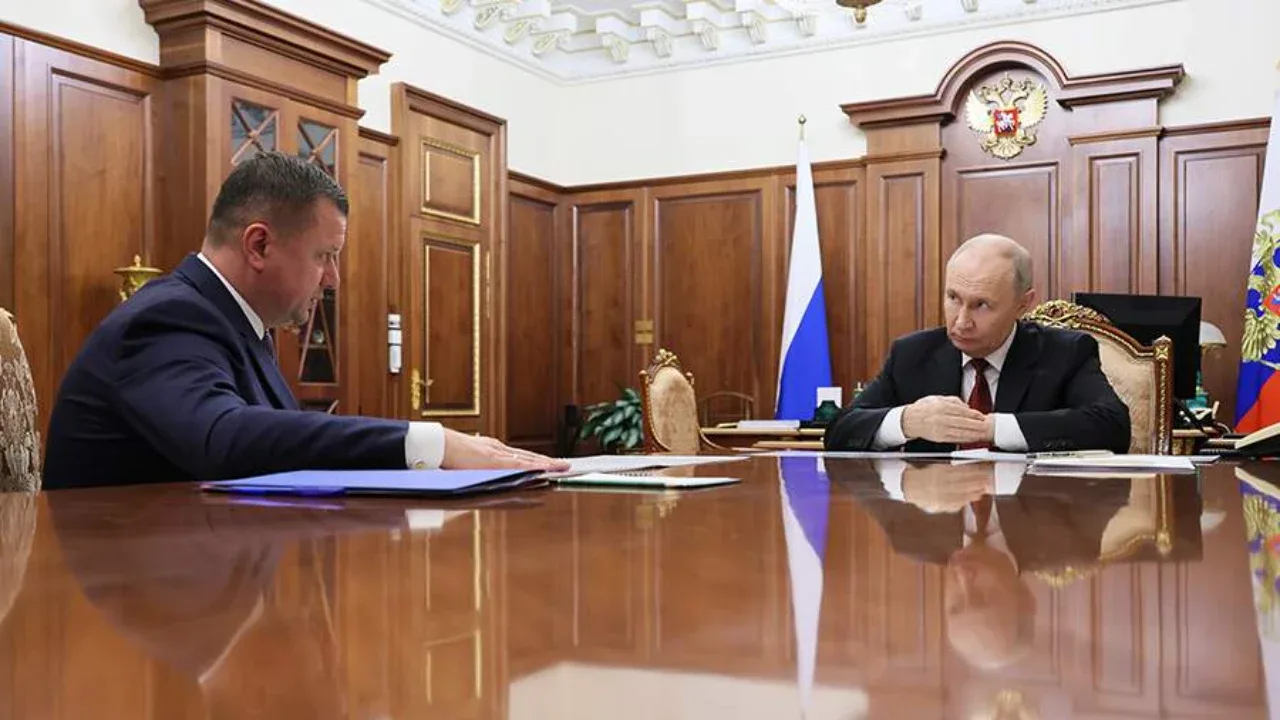
In the Russian Federation, significant political statements have been made regarding labor migration, encompassing both high revenue and strict restrictions, including a wave of deportations. While receiving a report from Andrey Kikot, head of the Migration Service of the Ministry of Internal Affairs, Russian President Vladimir Putin emphasized that while attracting foreign labor is an important direction for the Russian economy, the interests of the local population must come first. It is reported that although the Russian government has recently expelled about 100,000 migrants, legal migration has brought a record 321 billion rubles into the state treasury. The President has now ordered a fundamental change in the system of hiring migrants, introducing a "closed cycle" for them. So, how many of the 100,000 migrants were forcibly deported, which budgets benefit most from patents, and how will the new "home-work-home" rule work? At the end of the article, we provide all the details regarding the mandatory conditions imposed on employers and the new requirements for the Russian language.
100,000 deportations and a massive revenue of 321 billion rubles
Andrey Kikot, head of the Migration Department of the Ministry of Internal Affairs, revealed the figures at a meeting held on the eve of September 11, the day of system employees:
Large-scale expulsion: Approximately 100,000 migrants have been expelled from Russian territory, 75,000 of whom were forcibly deported by direct court and law enforcement decisions;
Growth of the legal market: Despite all restrictions, the share of legal labor migration in the country has increased from 45% to 50%, which is assessed as a positive indicator;
Record budget revenue: Over the last 1.5 years, the state has received 321 billion rubles (a 30% increase) in net income from migration processes;
Patent benefits: Vladimir Putin noted that the bulk of this income was formed through patent fees, pointing out that more than 60 billion rubles went to the federal budget, and 250–260 billion rubles went directly to the regional treasuries.
"This is a very substantial amount. But for us, the most important thing is that the process is civilized and the interests of our local citizens are protected first," the Russian President emphasized.
"Home-work-home": New strict obligations are being imposed on employers
Vladimir Putin instructed the government to develop special requirements for preparing foreign workers before they arrive in Russia and for controlling their movement:
Housing obligation for employers: Representatives of large and medium-sized businesses will now be required by law to provide foreign workers with specially specialized dormitories (housing);
Mandatory transfer to work: Enterprises will be required to transport workers from the dormitory to the workplace and back using special transport;
Closed control cycle: To prevent migrants from wandering around the city, a "home-work-home" system will be introduced, and upon the expiration of the labor contract, they will be returned to their homeland in an organized manner.
Requirement for language learning and cultural preparation
Touching upon the dialogues held with officials from countries sending migrants, the Russian leader stated that they are also interested in this initiative:
Preparation in the homeland: The system of professional and legal preparation of foreign citizens in their own countries before sending them to Russia will be expanded;
Russian language and teacher issue: Knowledge of the Russian language by migrants and their children is becoming a mandatory criterion; it was stated that it is necessary to expand the ranks of teachers who teach the language;
Internal order and security: According to the President, it is impossible to create a normal and safe migration environment in the country without language skills and cultural competence.
A new era in labor migration: Will free movement be restricted?
These instructions issued by the Russian leadership indicate that a new era is beginning in the country's labor migration policy. Although it is acknowledged that hundreds of billions of rubles in patent revenue from migrants are extremely important for the economy of Russian regions, the state is prioritizing security and internal political sentiment. If the newly planned "closed cycle" system is implemented, the ability of our compatriots going to Russia to independently look for work and housing may be restricted, and a full transition to a system of working only under official contracts and under the control of specific enterprises may occur. This indicates that punitive measures for those living illegally or without a patent will become even stricter.
In your opinion, will the "closed cycle" (home-work-home) and housing obligation proposed for migrants in Russia ensure the rights and safety of labor migrants, or will it excessively restrict their freedom? How justified is such strict control against the backdrop of 321 billion rubles in revenue from migrants? Leave your thoughts in the comments and share this analysis of important news with your loved ones and acquaintances working in Russia!



Comments 0
…