


Proposal to deprive drunk drivers of their license for life put forward
The issue of road safety has once again become a subject of serious discussion in Uzbekistan. Dangerous situations on the roads, driver responsibility, pedestrian safety, and the effectiveness of penalties for traffic violations were discussed on the “Munosabat” program broadcast on the “Uzbekistan” TV channel.
During the discussion, the participants particularly emphasized one question: despite the increase in surveillance cameras and fines, why do hazardous situations on the roads still persist?
Some human rights defenders stressed that ordinary fines and explanatory work are not enough to properly educate drivers, putting forward radical proposals to further toughen punishments.
Cameras have increased, but the problem remains unresolved
Alongside the consequences of traffic violations, the TV broadcast also discussed their causes.
Today, there are more cameras on the roads recording various violations, and drivers are being penalized.
Despite this, dangerous situations continue.
The most painful aspect highlighted was that as a result of violations, innocent people who broke no rules, including children, are suffering.
Therefore, the question of whether the problem can be solved solely by increasing the amount of fines remains open.
“Drivers cannot be disciplined through fines alone”
One of the main points expressed by human rights defenders during the discussion was that calling drivers to order solely through fines is insufficient.
In their opinion, certain violations pose such a serious threat that liability in such cases must be commensurate.
The goal is not only to punish, but to stop the driver before a violation is committed.
In other words, a driver should not avoid breaking rules out of fear of a fine, but because they realize that their actions endanger the lives of others.
Speed limits in residential neighborhoods could be lowered to 30 km/h
Another noteworthy proposal was voiced during the discussion.
Accordingly, it is proposed to install cameras inside residential neighborhoods and limit vehicle speeds to 30 km/h.
This idea is primarily aimed at ensuring the safety of pedestrians, children, and other residents moving within neighborhood areas.
Because on neighborhood streets, the distance between cars and pedestrians is often very short, high speeds in such zones can sharply increase the risk of accidents.
Speed-control cameras are seen not only as a means to detect violations, but also as a factor compelling drivers to be cautious.
The most radical proposal for those who drive under the influence
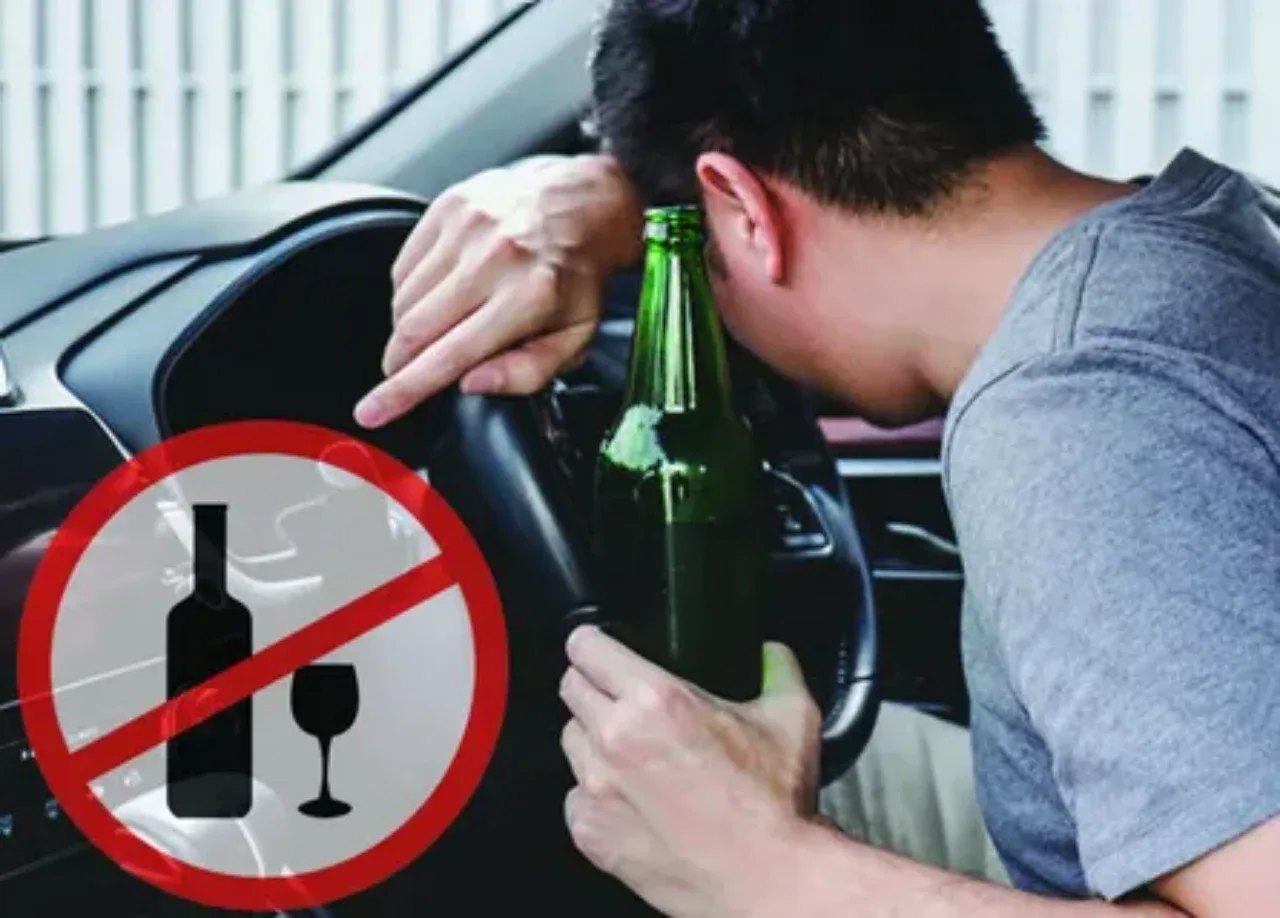
One of the most eye-catching initiatives of the discussion was the proposal to deprive individuals who drive under the influence of alcohol of their driving license for life.
This is an extremely strict measure.
For now, this idea cannot be interpreted as a newly adopted rule or an enacted law; it was merely a proposal voiced and discussed on the television broadcast.
However, the underlying idea is clear: driving while intoxicated poses a serious threat not only to the driver's own life, but to the lives of dozens of people on the road.
For this reason, the issue of toughening punishments for such violations is increasingly being raised in public discussions.
Islam Khamrayev: The problem must be viewed from the perspective of causes, not just consequences
Islam Khamrayev, Deputy Chairman of the Political Council of the Adolat SDP, also participated in the program and expressed his views on road safety issues.
The discussion focused heavily on the need to strengthen preventive mechanisms in addition to applying penalties after a violation has occurred.
This indicates the necessity of changing the approach to road safety.
Not just the question “how much should the fine be?”, but also questions such as:
why a driver is breaking the rule;
why they are not afraid of speeding;
why they decide to get behind the wheel while intoxicated;
why violations continue despite the presence of cameras;
how pedestrian and child safety can be further strengthened
are equally important.
Pedestrian safety discussed alongside driver responsibility
Road safety does not depend solely on the driver.
The discussion also raised the issue of pedestrian responsibility and safety.
Every road user — whether a driver or a pedestrian — must follow established rules.
However, since pedestrians are physically much more vulnerable in a collision with a car, the driver's caution is of particular importance, especially in densely populated areas.
From this perspective, the proposal to lower speed limits in neighborhoods to 30 km/h is also seen as a measure to reduce risks in residential areas.
Is toughening punishment enough?
This is the most controversial point of the issue.
On one hand, applying severe penalties for major violations can deter drivers.
On the other hand, road safety cannot be ensured solely through punishment.
For this to work:
control + prevention + road infrastructure + driving culture + education + strict accountability
must function together.
Otherwise, even if fine amounts are increased, the culture of dangerous driving may remain unchanged.
The discussion sent an important signal to the public
The discussion on the “Munosabat” program does not mean that new rules have been adopted yet.
Initiatives such as setting a 30 km/h speed limit in neighborhoods or permanently depriving drunk drivers of their licenses are discussed proposals.
However, they show that public demand for road safety is growing.
Because the issue is not limited to simple fines or a driver's personal mistake.
Sometimes, it is a matter of an innocent person's life.
Therefore, the main question is no longer “how much will the fine be?”, but how can people's lives on the roads be truly and more reliably protected?
The proposals voiced on the television broadcast may further intensify the discussion around this question.



Comments 0
…