


High-Profile CSTO «Rubej-2026» Exercises Kick Off in Kazakhstan
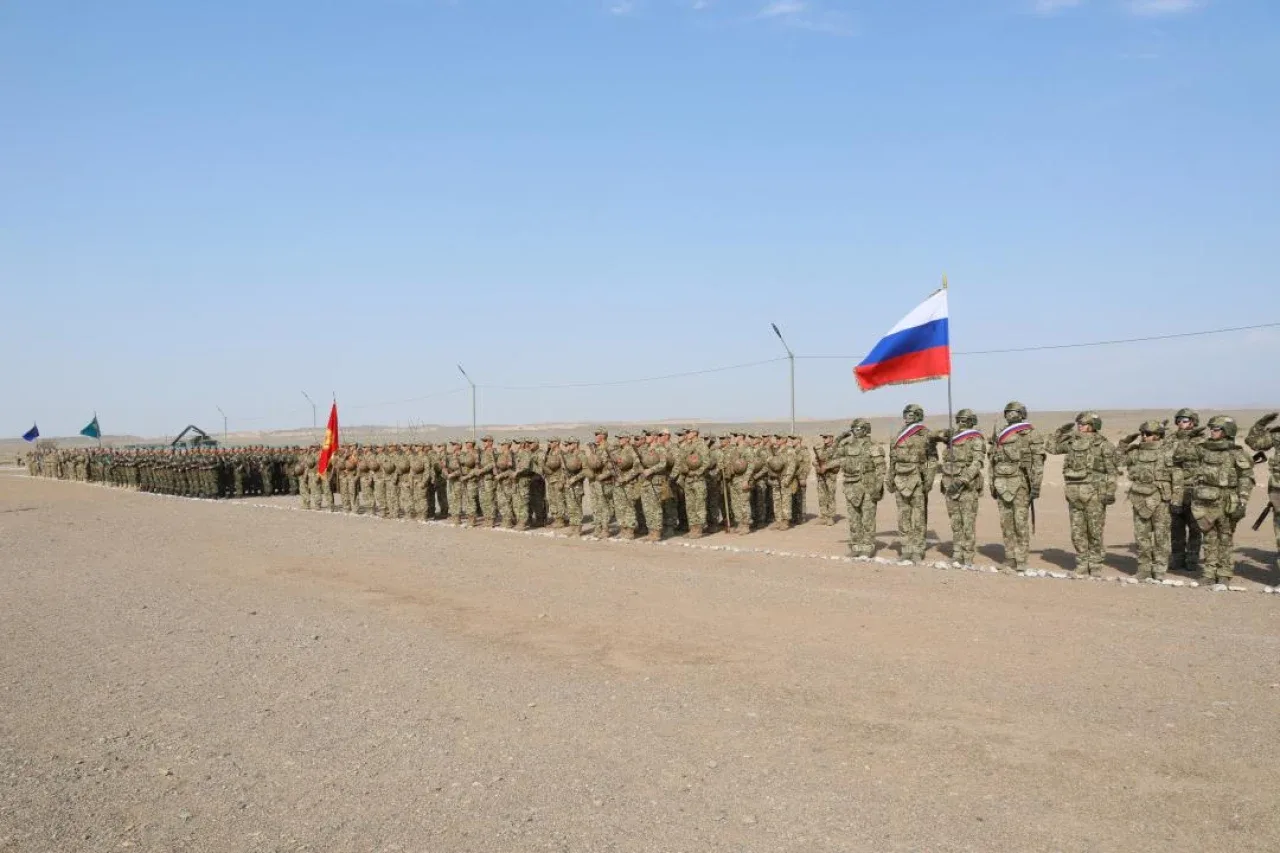
At a time when international security and the military balance in the Central Asia region are undergoing sharp changes, major military forces have been mobilized in neighboring Kazakhstan. Citing Vladislav Shegrikovich, press secretary of the Joint Staff of the Collective Security Treaty Organization (CSTO), TASS agency reported that the active phase of the «Rubej-2026» military exercises involving the Collective Rapid Reaction Forces of the Central Asian region has begun in Kazakhstan. Running from September 13 to September 18, these exercises are integrated with the strategic command-staff drills of the Armed Forces of Kazakhstan titled «Resolute Response — 2026», with a primary focus on eliminating illegal armed formations in complex mountainous and desert conditions.
Approximately 1,500 servicemen from military units of Kazakhstan, Kyrgyzstan, Russia, and Tajikistan, over 300 pieces of heavy equipment, and 115 unmanned aerial vehicles (drones) performing various tasks have been deployed to the exercises. Generals explicitly point out that the experience of modern armed conflicts has nullified the traditional concepts of rear and frontline bases, and new threats can only be addressed swiftly through drones and high-precision strikes. So, what is the significance of these large-scale exercises organized amid an international relations crisis for regional security, what other secrets did the generals reveal about the nature of modern warfare, and under what scenario are the troops training?
Mountain-Desert Combat and Border Intruder Elimination Scenario
Main goals and objectives of the «Rubej-2026» exercises:
Crushing invaded formations: As CSTO Joint Staff press secretary Vladislav Shegrikovich noted, combat actions to encircle and destroy illegal armed formations that have invaded the territory of a member state are being practically tested during the exercises;
Mountain and desert conditions: The main practical phases are conducted in mountainous and desert areas characterized by complex terrain;
Integration with «Resolute Response — 2026»: The drills are fully coordinated with the strategic command program, which is the primary combat training event for the Kazakh army;
Timeline until September 18: The tactical tasks assigned to the joint forces are planned to be fully resolved by September 18.
1,500 Troops, 300 Equipment Units, and 115 Drones: Force Distribution
Scale of the competition and exercises, and the geography of participants:
Four-nation military in single formation: Military units from Kazakhstan, Kyrgyzstan, Russia, and Tajikistan, as well as operational groups of the CSTO Joint Staff and Secretariat, are actively participating in the exercises;
Russia's 201st Base and Central Military District: The Russian component is primarily composed of experienced soldiers and officers from the Central Military District and representatives of the famous 201st Guards Military Base stationed in Tajikistan;
115 combat and reconnaissance drones: A total of 115 state-of-the-art drones designed for aerial reconnaissance, target designation, and strikes have been deployed;
Over 300 armored vehicles: More than 300 heavy and specialized military vehicles with high cross-country capability are moving across mountain and desert routes.
«The Era of Large Bases is Over»: Generals' Statements on New Warfare Concept
The CSTO leadership and generals of the Kazakh General Staff shared important conclusions regarding modern warfare:
Risk of instability in the region: Deputy CSTO Secretary General Mirlan Turgunbekov noted that this event was organized in a difficult political environment marked by escalating international relations and persistent risks in the region;
Barrier against terrorism and separatism: Major General Askar Zholamanov, Deputy Chief of the General Staff of the Armed Forces of Kazakhstan, stated that joint actions against the three evils of terrorism, extremism, and separatism instill confidence in the regional system;
Disappearance of the frontline and rear concepts: Lieutenant General Ruslan Shpekbayev, Deputy Chief of the CSTO Joint Staff, stated that recent armed clashes have changed the nature of war: «Due to the widespread use of high-precision weapons, drones, and reconnaissance means, it is no longer possible to establish large military bases either near the front line or deep in the rear»;
Rapidly mobile compact forces: The general emphasized that under new conditions, only fast-moving and compact mobile units will play a primary role and must be ready to respond instantly to any unexpected threat.
These large-scale exercises taking place in the deserts and mountains of Kazakhstan demonstrate that modern drones and high technologies have taken priority in protecting Central Asian borders from external forces and illegal armed groups.
In your opinion, how should Central Asian states further modernize their defense systems in an era when high-precision missiles and hundreds of drones are being used in modern warfare? What are your thoughts on the role of mobile units in ensuring security in mountain and desert regions? Leave your analytical comments below and share this important analytical article concerning regional security with all your friends and acquaintances!



Comments 0
…