


"Major veto at the UN!": China and Russia block Security Council resolution
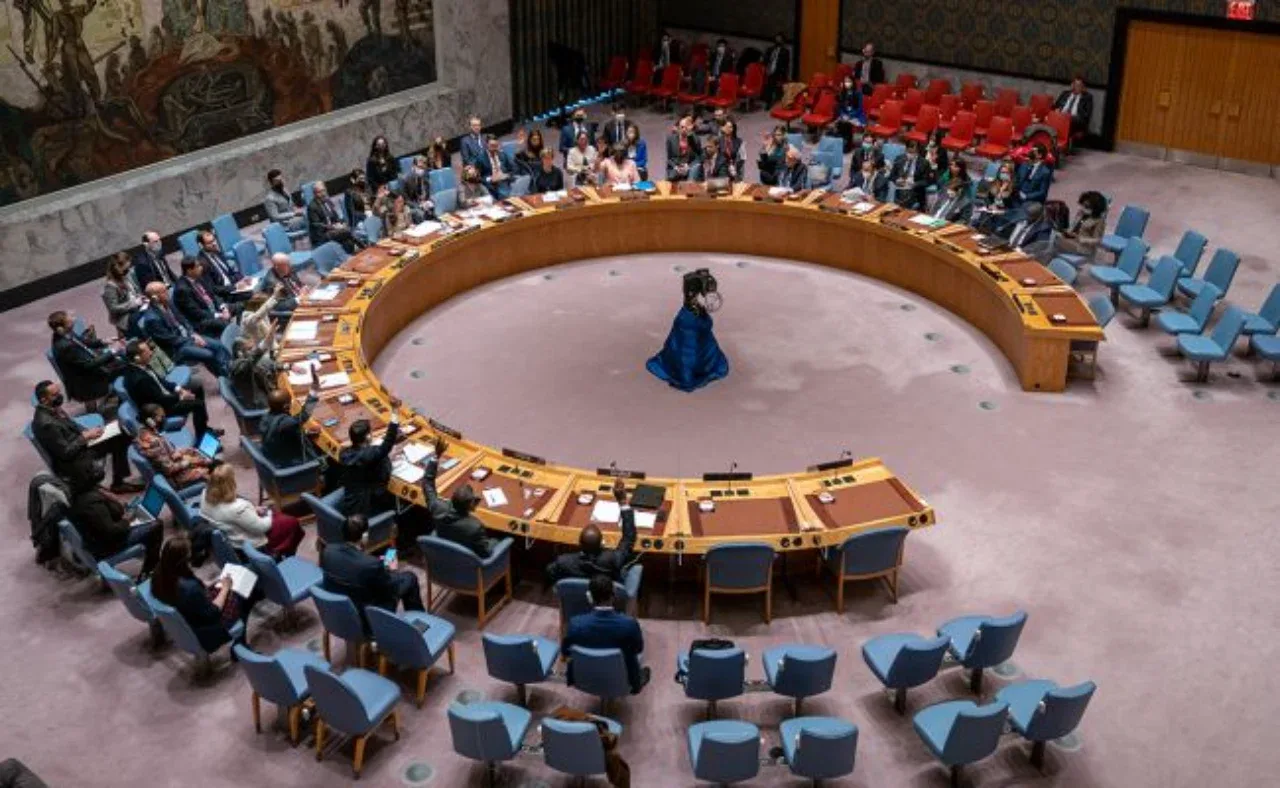
The armed conflict surrounding the Red Sea and the Bab el-Mandeb Strait, considered one of the world's most vital maritime trade routes, has reached the peak of a global diplomatic confrontation. According to Japan's influential broadcaster NHK, at an emergency meeting of the UN Security Council convened over the crisis in the Bab el-Mandeb Strait, China and Russia successfully blocked a mandatory resolution promoted by the US, Great Britain, and their allies. As a result, the council meeting ended in a deadlock without adopting any final document.
Instead of using military force and unilateral pressure, Beijing and Moscow demanded an immediate ceasefire and the resumption of political dialogue. These sharp debates were triggered by intense attacks that began in Yemen on September 3, and by September 11, the Houthis gained full control over the strategic Mayun (Perim) Island located right in the center of the Bab el-Mandeb Strait. The capture of the strait poses a direct threat to the global trade artery connecting Europe and Asia, while the armed clashes have forced over 125,000 civilians to flee their homes.
Why did Beijing and Moscow reject the resolution against the Houthis, what blow will the loss of Mayun Island deal to the global economy, and what steps will the US-led coalition take next?
"Dialogue is needed, not military pressure": The position of Beijing and Moscow at the UN
The main demands voiced by Chinese and Russian diplomats:
Immediate ceasefire: The Chinese representative stressed that the situation is on the verge of a large-scale escalation and called for a return to the negotiating table mediated by Gulf states;
Protection of sovereignty and civilian vessels: Beijing expressed its support for the territorial integrity of Yemen and Saudi Arabia, and stated its opposition to attacks on peaceful merchant ships;
Political dialogue involving the Houthis: The Russian side put forward the need to resume an inclusive peace dialogue involving all forces, including the Houthis;
Lessons of Resolution 2722: Moscow warned the Security Council against "hasty and thoughtless actions," reminding that the previous Resolution 2722 was misinterpreted by certain states and used as a pretext for military operations in the region.
"Holding the world economy hostage": Sharp claims by the US, Britain, and Saudi Arabia
Objections raised by the Western coalition and regional countries:
Houthi withdrawal and Iran's role: The US demanded that the Houthis halt attacks and withdraw forces from captured lands, and called on Iran to stop providing military supplies to the rebels;
Freedom of navigation: The US delegation emphasized that the right to free navigation on the high seas is the foundation of the entire global economy;
Saudi Arabia's accusation: The Riyadh representative accused the Houthis of "choking the straits" and "holding the global economy hostage";
Demand to stop the flow of weapons: Yemen's ambassador to the UN urged the Security Council to block the weapons and financial flows coming to the rebels.
Capture of Mayun Island and 125,000 refugees: The scale of the disaster
Analysis of recent military developments in the Bab el-Mandeb Strait:
Strategic turning point on September 11: As a result of the large-scale offensive that began on September 3, the Houthis took control of Mayun Island located in the center of the strait;
Closure of the maritime artery: The capture of this island has placed all oil tankers and container ships passing through the Red Sea to the Suez Canal directly into the line of fire;
Humanitarian crisis: According to UN data, at least 125,000 civilians have been forced to flee their homes due to the fierce fighting ongoing since the beginning of September.
This veto by China and Russia at the UN shows that the crisis in the Red Sea is no longer just a local conflict, but a massive geopolitical battleground where the interests of powerful nuclear states collide.
In your opinion, after the UN resolution is blocked, will the US and its allies launch a direct military operation without UN permission to open Mayun Island and Bab el-Mandeb? Will the Houthi control over the strategic strait further increase the prices of oil and consumer goods in the world? Leave your analytical thoughts in the comments and share this analysis of the global conflict, where the fate of world trade is being decided, with all politics enthusiasts and your friends!



Comments 0
…