


The radar detector stayed silent, but the fine arrived anyway: The secret technical "trap" drivers don't know about
Many drivers believe they are fully insured on the roads after installing an expensive radar detector in their car. However, it surprises many when a device remains completely silent without giving a single warning signal, yet an unexpected fine for speeding or another traffic violation arrives at home.
This does not mean the radar detector is broken, but rather that the control technologies used on the roads are fundamentally different.
Conventional radar and "smart camera": What is the difference?
Control systems on the roads mainly have two operating principles:
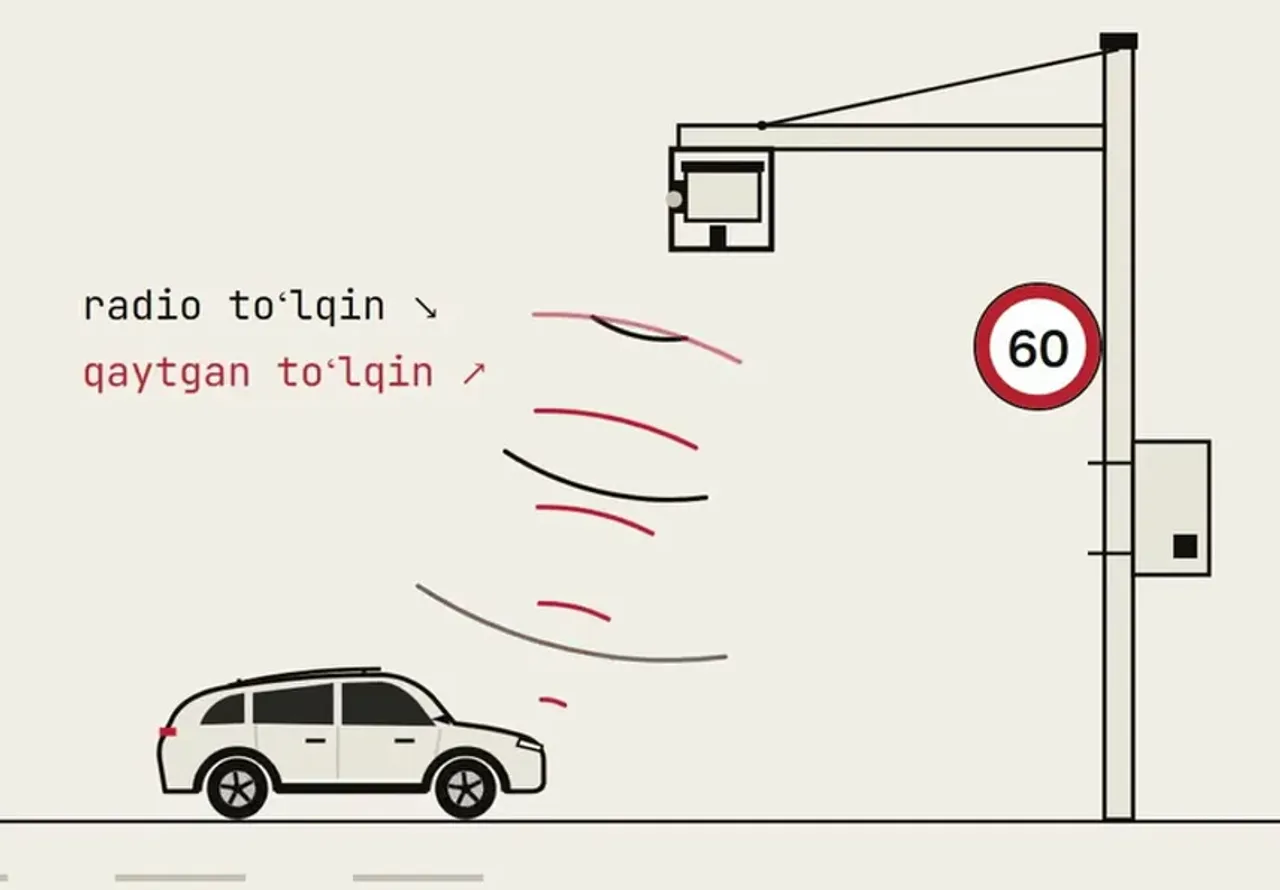
Classic radars (Doppler effect): A special device (on a pole, tripod, or inside a traffic safety patrol car) continuously sends radio waves to the car. Once the wave hits the car's body and bounces back, its frequency changes, and the device calculates the exact speed based on this. Such devices in Uzbekistan mainly operate in the 24 GHz frequency range;
Optical "smart cameras": These modern systems do not emit any radio waves or signals at all. Using only high-resolution video frames and artificial intelligence, they mathematically calculate speed based on the time the car takes to travel from one point to another. In addition, they optically record seat belt violations, mobile phone use, red light violations, and stop line crossings.
Why does the radar detector stay silent?
A radar detector is not a radio-signal emitting device, but a passive receiver that only "listens" to the airwaves:
Distance on an open road: A radar detector can catch a radar wave on an open highway from a distance of more than half a kilometer (500 meters). However, if there are large trucks on the road or the signal is weak, this radius drops sharply;
Signature models: Modern signature devices accurately recognize what type of radar is operating based on the signal structure;
"Invisible" cameras: Because smart optical cameras do not emit any waves outward, the radar detector physically cannot "hear" them. Therefore, the device remains silent, while the speed has already been captured in the camera's memory and sent to the fine database.
How to avoid fines?
Drivers can be warned about smart cameras operating without radio waves by only one aspect — the GPS database built into the radar detector:
The device will only sound an alert if the coordinates where the cameras are installed are marked on the GPS map. If the database is not updated regularly or a new camera has not yet been added to the map, the radar detector cannot help at all;
The safest, flawless, and best "radar detector" that prevents any unexpected financial loss on streets and highways is to obey the rules and look at your personal speedometer on the car's dashboard.



Comments 0
…