


German scientists have created a panel that produces hydrogen directly from sunlight
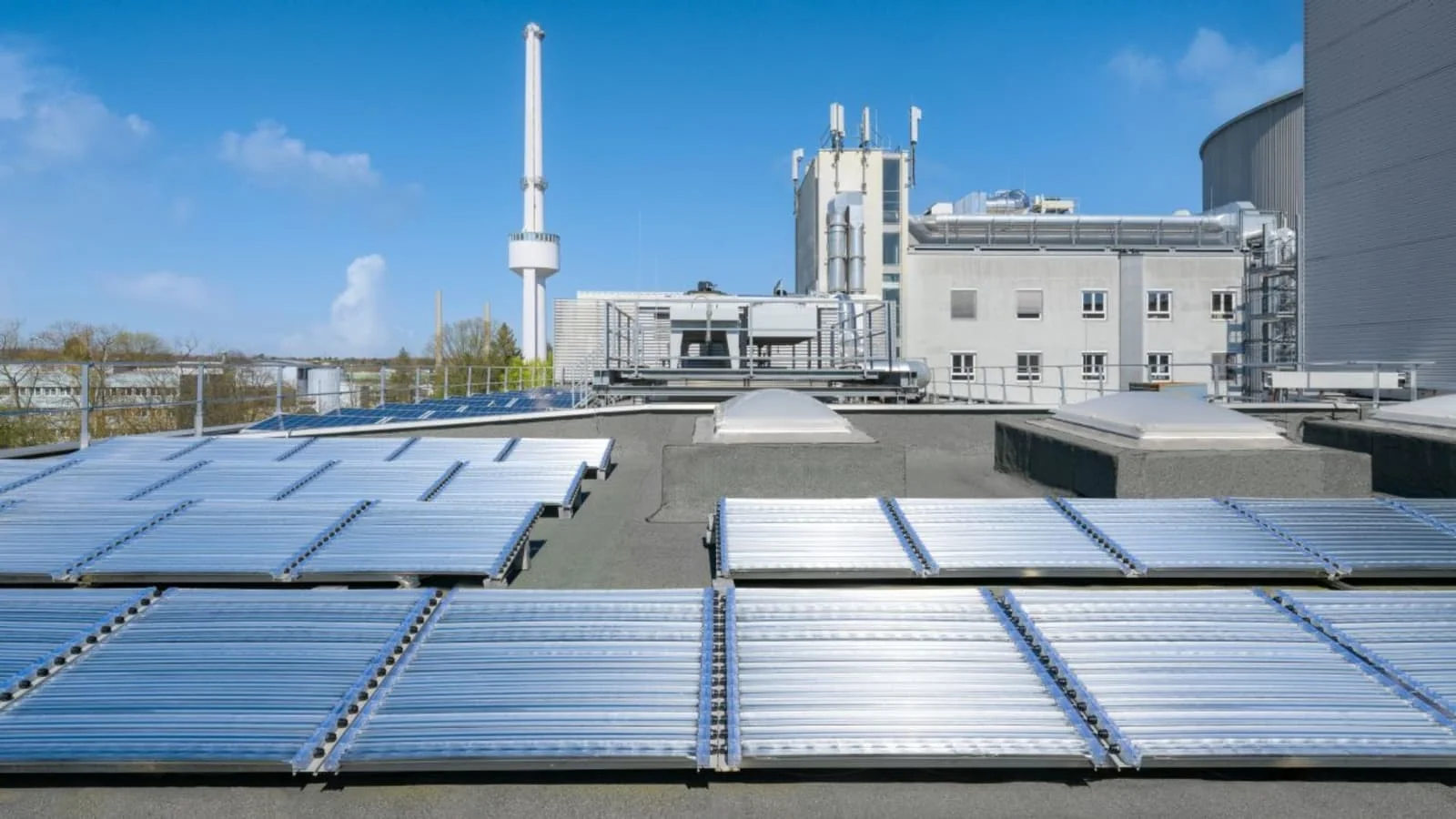
Photreon, a company founded at the Karlsruhe Institute of Technology (KIT), has unveiled a new photoreactor module for hydrogen production at the Hannover Messe trade fair. The prototype, which covers an area of one square meter, is capable of producing hydrogen directly from water using sunlight. This was reported by Ixbt.com xabar beradi.
According to company co-founder Paul Kant, this technology helps eliminate the need for a classic two-stage process. Typically, solar energy is first converted into electricity and then used to electrolyze water.
In the Photreon system, however, sunlight immediately triggers a chemical reaction.
Special light-sensitive materials absorb energy and excite electrons. These electrons are then used to split water molecules into hydrogen and oxygen.
This approach makes the system simpler and autonomous, as it does not depend on the power grid and does not require a separate electrolyzer.
The developers state that the device is designed for large-scale production. The modular panels can be used on building rooftops or in the form of large solar hydrogen farms in regions with high solar activity.
This technology is primarily of interest to enterprises that need hydrogen on-site without complex logistics. This includes sectors such as specialty chemicals, food production, and metal processing, as well as regions without access to the power grid.



Comments 0
…