


New gamma-ray telescope for dark matter research created in Russia
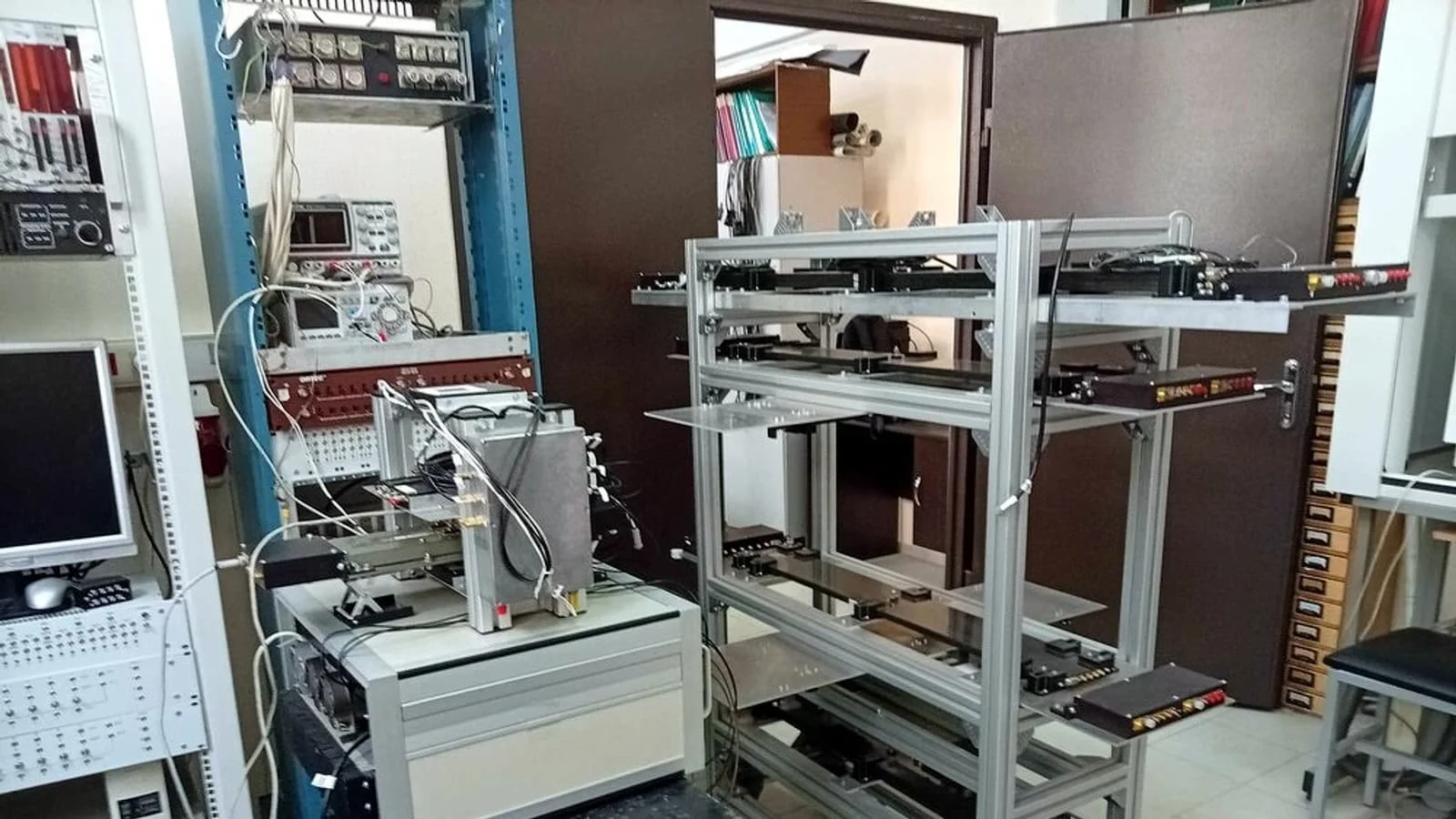
Scientists at the National Research Nuclear University (MEPhI) in Russia have developed a prototype of a new gamma-ray telescope aimed at solving urgent problems in modern astrophysics. The device is designed to study high-energy gamma radiation, as well as to detect signals of dark matter and mysterious gamma-ray bursts. This is reported by Ixbt.com .
The main advantage of the new development is its high ability to distinguish gamma-quanta from charged cosmic particles. MEPhI representatives note that in this indicator, the device surpasses the famous American Fermi gamma-ray telescope. This significantly increases the accuracy of space observations.
Since direct focusing of radiation is impossible in gamma-astronomy, scientists record it using indirect methods. In the new system, a gamma-quantum enters a converter-tracker and forms an electron-positron pair, the movement of which is monitored by special detectors. A time-sensitive protection mechanism installed in the system eliminates noise and allows for precise extraction of the useful signal.
The prototype has already successfully passed tests at the Pakhra accelerator complex in Troitsk and confirmed its efficiency. In the future, it is planned to install this telescope on a spacecraft. Its main task will be to study pulsars, solar flares, and the most complex phenomena in the universe.



Comments 0
…