


Commonwealth Fusion Systems updates ARC fusion reactor model
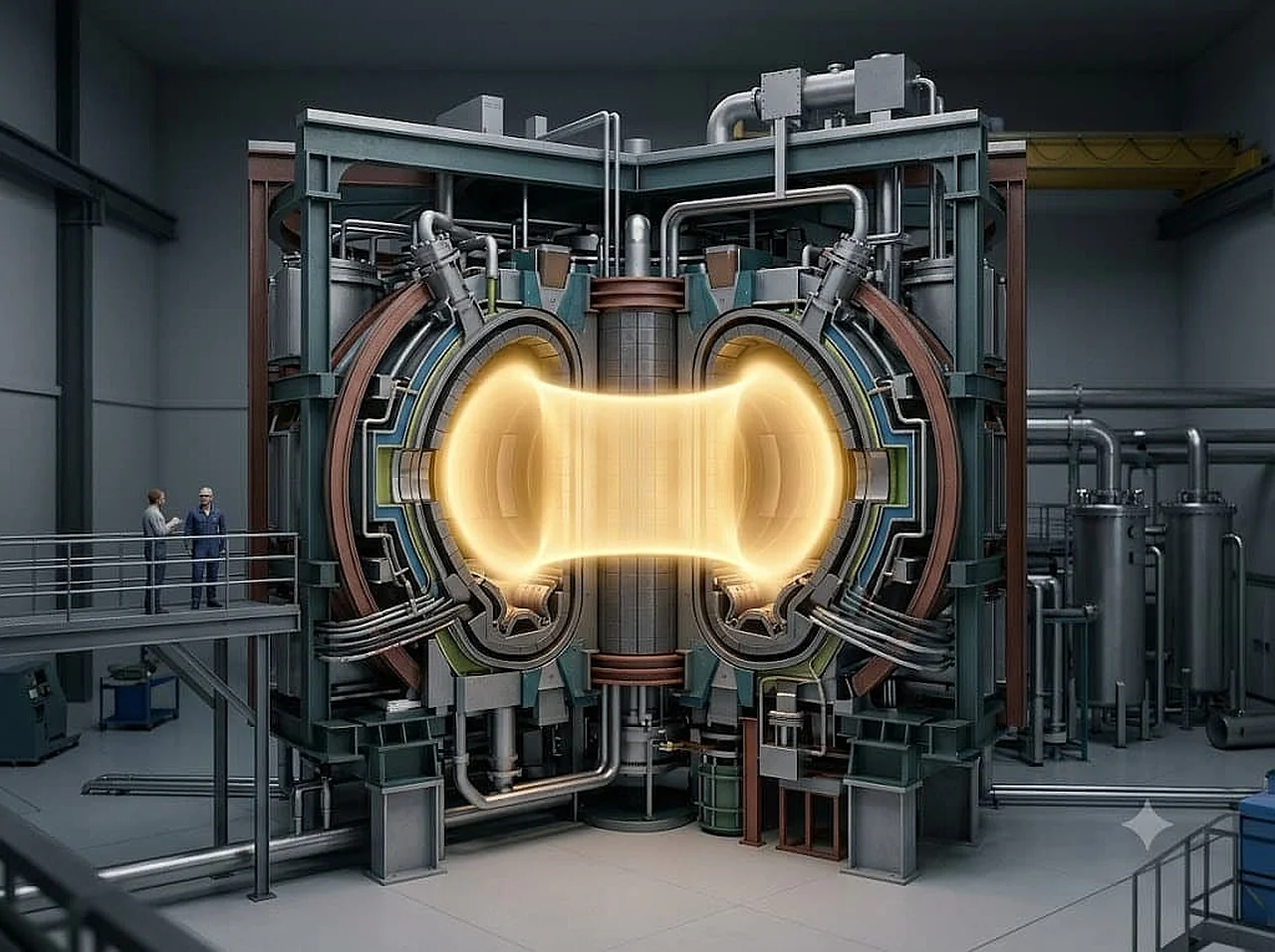
A group of researchers and engineers associated with Commonwealth Fusion Systems has published a series of five papers detailing the future ARC fusion power plant design. These works are based on updated plasma models and engineering calculations, aiming to assess the feasibility of scaling the SPARC experimental reactor to an industrial level. Fusion energy is viewed as a virtually inexhaustible and low-carbon energy source. This is reported by Ixbt.com reports .
The project is based on the fusion reaction of heavy hydrogen isotopes — deuterium and tritium. According to updated calculations, ARC is expected to produce an average of 1.13 GW of fusion power, of which approximately 500 MW can be converted into electricity. After accounting for the station's internal energy needs, it is planned to deliver approximately 400 MW to the grid. The key element of the project is high-temperature superconductors, which allow for the creation of much stronger magnetic fields compared to classical tokamaks.
The new studies pay special attention to the system's operation in dynamic mode. According to the plan, after 15 minutes of active fusion operation, a one-minute break is taken for restart and stabilization. This approach allows for maintaining high plasma temperatures due to thermal inertia. It is also proposed to use tungsten to protect the inner reactor walls and a modular design for the vacuum vessel, which can be replaced every 1–2 years.
The SPARC reactor currently under construction is expected to launch in the coming years and serve as a testbed for verifying plasma stability and the efficiency of reaction byproduct removal. Despite engineering risks, the authors emphasize that ARC is physically robust and capable of achieving a regime where it produces more power than is consumed for plasma heating. However, the questions of the project's economic viability and long-term stability remain open.


Comments 0
…