


Is the power of 320,000 GeForce RTX 3090s being wasted: Controversy surrounding the Pearl project
In the world of cryptocurrency, attempts to combine AI and blockchain technologies have come under serious scrutiny. Although the Pearl project introduced itself as the first network to direct mining processes toward useful calculations, researchers from Cornell University have presented evidence refuting the system's efficiency. According to the study's conclusions, the massive computing power may not be performing any useful work at all. This is reported by Ixbt.com reports .
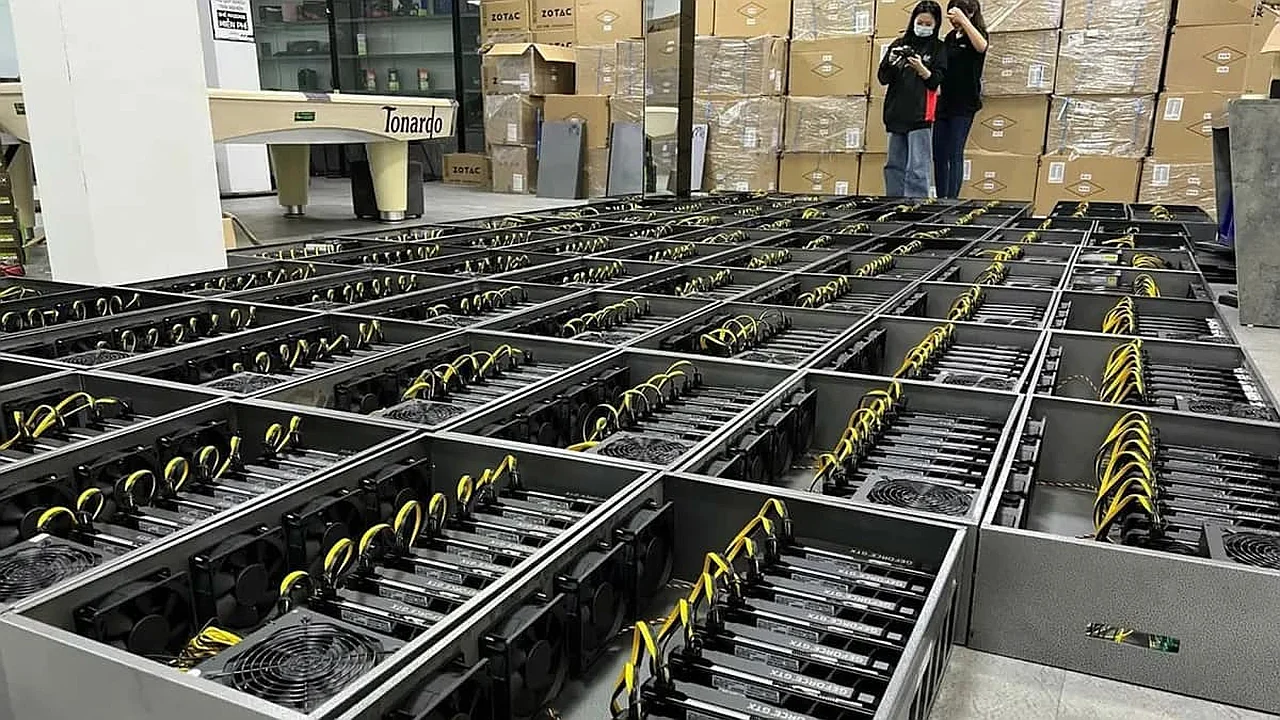
Study author Abhinaba Basu estimated the Pearl network's current computing power at approximately 24 exahashes per second. This figure is equivalent to the simultaneous operation of about 320,000 high-performance NVIDIA GeForce RTX 3090 graphics cards. The energy consumption of such a massive infrastructure could reach 112 MW, covering the electricity needs of an entire small town.
Useful labor or a marketing gimmick?
The core idea of the Pearl project is based on the Proof-of-Useful-Work concept. Theoretically, instead of just solving complex mathematical equations, miners were supposed to perform real tasks like training neural networks. However, according to ixbt.com, the current mechanism has no way to verify if the work being performed is actually useful.To prove his findings, the researcher developed a custom mining program. Instead of performing AI tasks, this program sent matrices consisting of random numbers to the network. Surprisingly, the Pearl network accepted this "useless" data and continued to credit the user with rewards. This shows that the system cannot distinguish between real AI tasks and simple mathematical operations.
Rising market prices
The project is negatively impacting not only energy consumption but also the market for renting computing power. According to data cited in the study, after the Pearl software launched in May, the rental price of cheap graphics cards on the Vast.ai platform increased by 38 percent. The occupancy rate of the devices jumped from 57 percent to 94 percent.Analysis of over 8,000 network nodes revealed that most participants are indeed using modern equipment capable of running AI models. However, no traces of popular machine learning frameworks (such as PyTorch or TensorFlow) were found in the studied software packages.
So far, Pearl representatives have not officially responded to this study. The situation is causing widespread debate in the crypto community: many experts consider this to be merely using the AI topic as a marketing tool. If the project does not reform its algorithms, hundreds of thousands of powerful graphics cards will remain busy "heating the air."


Comments 0
…