


A massive and potentially hazardous asteroid is approaching Earth: A 400-year record
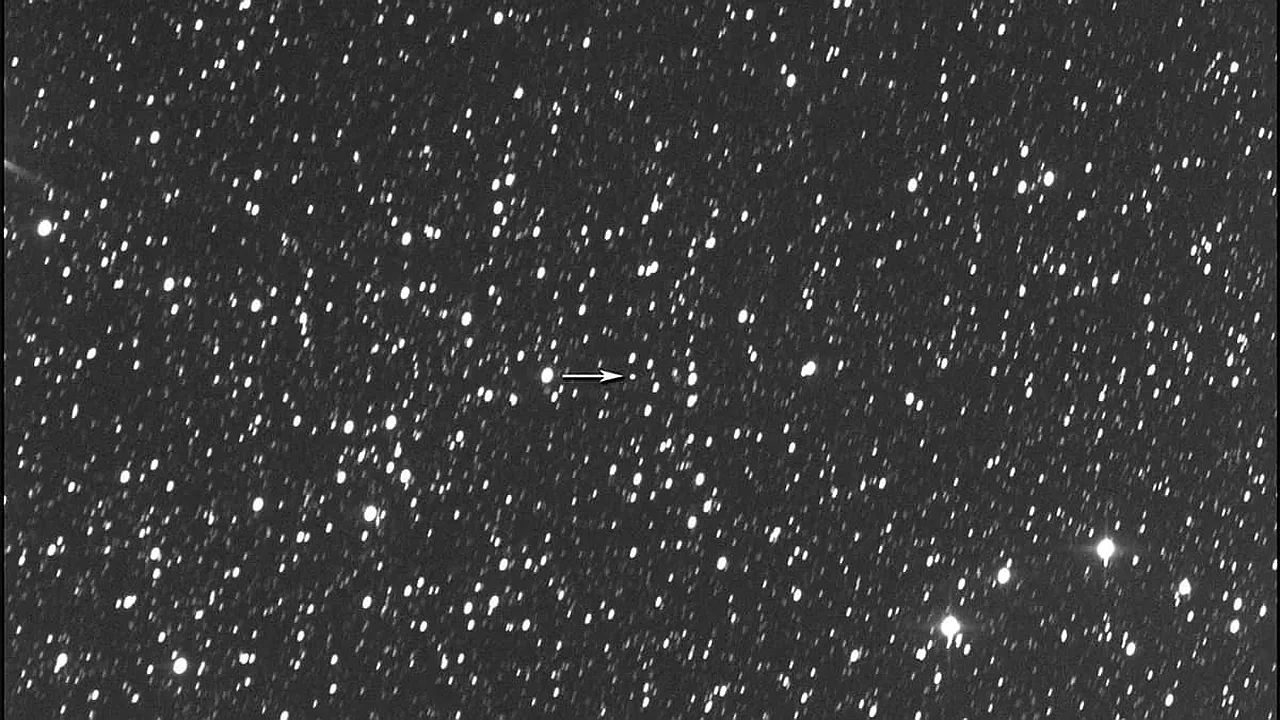
On June 27 of this year, a massive asteroid numbered 152637 (1997 NC1) will fly past Earth. According to NASA, this is the closest this celestial body has come to Earth in the last 400 years. The asteroid will pass at a distance of approximately 2.57 million kilometers from our planet, which is 6.5 times the distance between Earth and the Moon. This is reported by Ixbt.com .
Although this object has been classified by astronomers as "potentially hazardous," experts emphasize that there is no cause for concern. This status is assigned to all large celestial bodies whose orbits are relatively close to Earth. Current calculations show that the 152637 (1997 NC1) asteroid poses no risk of collision with our planet, not only during this current approach but also for the next 100 years.
This asteroid was first discovered in 1997 as part of NASA's NEAT (Near-Earth Asteroid Tracking) program. It belongs to the "Aten" group, whose orbits cross Earth's orbit and partially enter the orbit of Venus. This approach provides a unique research opportunity for scientists, as such large objects coming this close to Earth is a once-in-a-decade event.
Scientists are studying the exact size of the asteroid
Currently, scientific debates regarding the exact dimensions of the asteroid are ongoing. Based on its brightness, it is estimated that its diameter could range from 900 meters to 1.5 kilometers. The problem is that it is difficult to determine the size of an object through telescopes based on reflected sunlight: a large, dark-colored object and a smaller, bright-colored one can look the same.To put an end to this uncertainty, NASA plans to use the Goldstone Solar System Radar (GSSR) system. As Marina Brozovic, an astronomer at NASA's Jet Propulsion Laboratory, explains, the radar method will help determine not only the exact position of the asteroid but also its shape, rotation speed, and composition.
Sky enthusiasts in Uzbekistan may also have the opportunity to observe this event. At its closest point, the asteroid's brightness will reach a magnitude of 10. This is sufficient to see it using small telescopes or even powerful binoculars. This opportunity will be even more favorable for those living in the Northern Hemisphere.
The next opportunity to study this asteroid from such a close distance and in such detail will only occur in 2088. A previous similar large approach occurred in January 2022 with the 1994 PC1 asteroid. Currently, scientists are gathering all data and working on further improving space safety systems.


Comments 0
…