


Revolution in Physics: Scientists Create First Thorium-229 Nuclear Clock
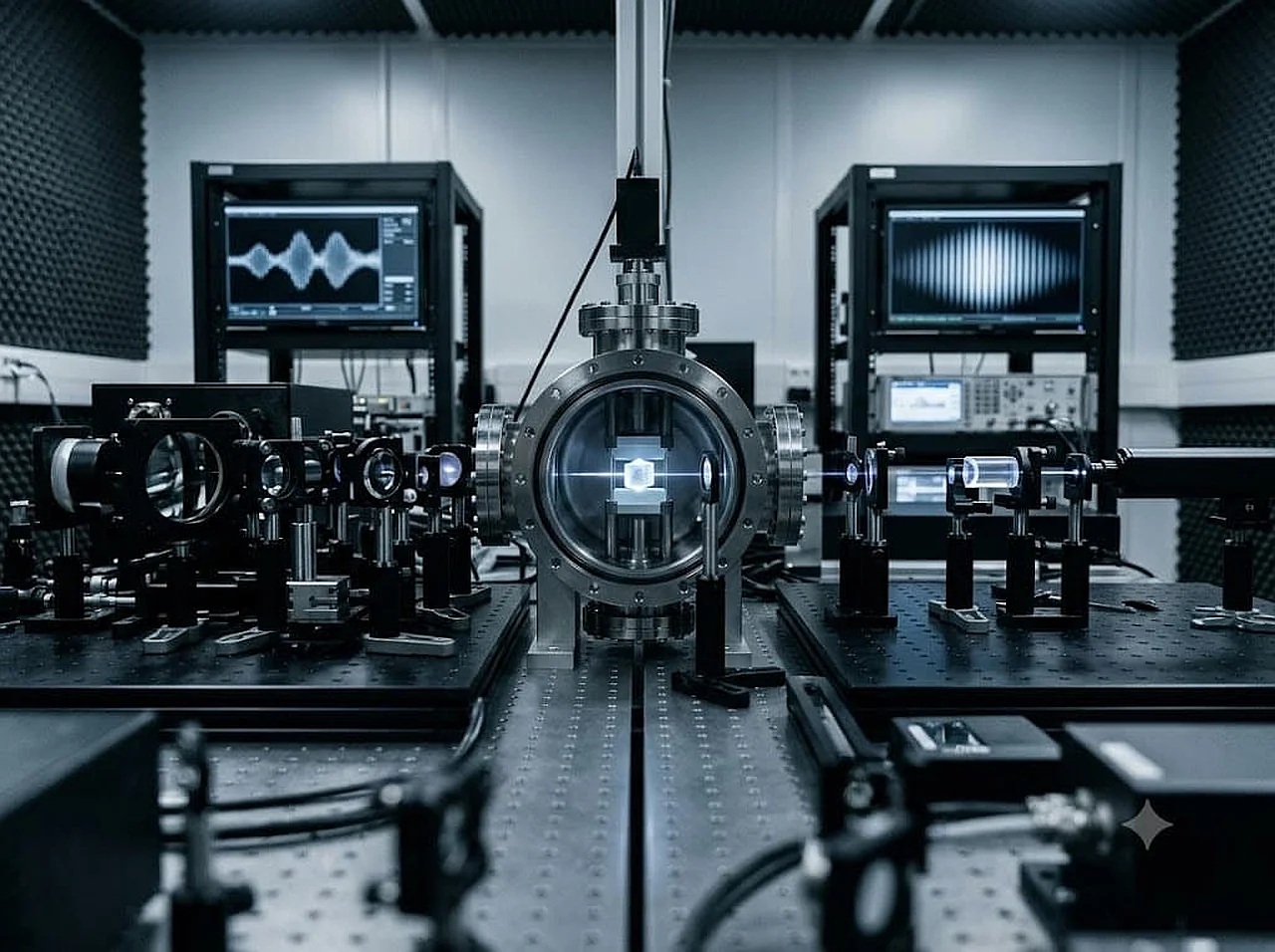
A long-awaited major technological breakthrough has occurred in the world of modern physics: two independent research groups have succeeded in creating the first functional nuclear clock. This discovery is expected to take time measurement precision to an entirely new level. According to ixbt.com, this achievement was recorded by scientists from Xinhua University in China and the Vienna Center for Quantum Science and Technology in Austria. This is reported by Ixbt.com news reports.
Currently, the most accurate timekeepers in the world are atomic clocks. They calculate time via transition frequencies in the electron shells of an atom. However, the newly created nuclear clock is fundamentally different: it is based on transitions between energy states within the atomic nucleus itself, namely between protons and neutrons. This method is distinguished by its resistance to the influence of external electric and magnetic fields, as the nucleus is much more strongly shielded than the electron shells.
The uniqueness of the Thorium-229 isotope
The Thorium-229 isotope was chosen as the primary object in creating the nuclear clock. The uniqueness of this element is that the energy transition process in its nucleus has much lower energy compared to other elements. This allows the process to be excited using laser radiation. For almost all other nuclei, achieving such a result was considered impossible because it would require extremely high energy.However, the technological process was not easy. The main problem was the need to work in the spectrum with a wavelength of 148 nanometers. Stable control of laser radiation in such a range is an extremely complex task. Chinese and European scientists overcame this barrier by placing Thorium-229 nuclei into calcium fluoride (CaF2) crystals and irradiating them with a vacuum ultraviolet laser.
Practical significance of the discovery
The results achieved during the research are astonishing. The Chinese group led by Beichen Xuan demonstrated stability with a precision of one part in 10 trillion per day by "locking" the laser frequency to the nuclear transition. This figure can compete with today's best atomic clocks. Austrian scientists led by Luca Toscani de Col used this system to search for "dark matter," a mysterious part of the universe.The implementation of nuclear clocks could revolutionize the following fields:
- Increasing the accuracy of next-generation navigation systems (GPS and others);
- Measuring gravitational fields with ultra-high precision;
- Verifying the constancy of fundamental physical constants;
- Searching for new physical effects beyond the Standard Model.


Comments 0
…