


NASA Scientists Propose Turning Titan Into a Giant Space Fuel Base
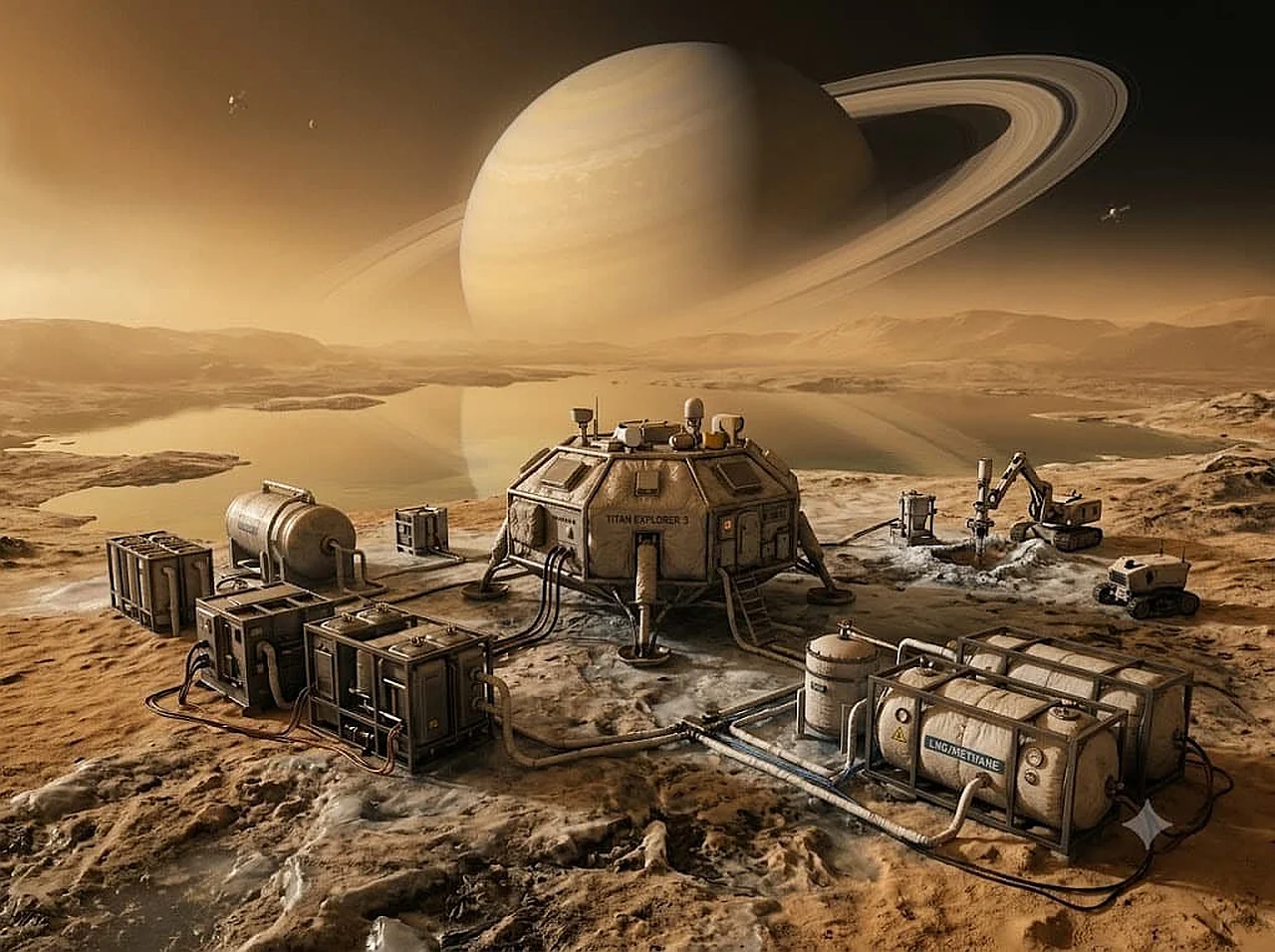
Researchers at NASA's Goddard Space Flight Center are considering Titan, Saturn's largest moon, as a strategic resource base for future long-range space missions. A group led by astronomer Connor Nixon concludes that this celestial body, with its rich hydrocarbon reserves, could become a massive station supplying spacecraft with fuel and essential materials. This is reported by Ixbt.com news says.
Titan is a unique object in the Solar System: it is the only moon with a dense atmosphere similar to Earth's. Its surface features lakes and seas composed of liquid methane and ethane. Scientists plan to harness these natural riches within the framework of the ISRU (in situ resource utilization) concept. Producing tons of fuel here would drastically reduce the costs of transporting it from Earth.
A "gas station" in space
The authors of the study emphasize that Titan has a significant advantage over the Moon and Mars in this regard. The complex hydrocarbons found there are similar to substances like propane, butane, and kerosene on Earth, which can be used not only for rocket fuel but also for producing plastics, synthetic materials, and various chemical reagents. According to ixbt.com, these resources will serve as the foundation for creating an autonomous infrastructure in space.However, conditions on Titan are extremely challenging: the average temperature is -179 degrees Celsius, and gravity is seven times weaker than Earth's. There is almost no free oxygen in the atmosphere, so oxidizers necessary for the combustion process must be obtained, for example, through the electrolysis of water ice.
Despite this, NASA specialists view Titan as an intermediate stop and refueling point for expeditions heading to the outer parts of the Solar System, specifically planets beyond Jupiter and Saturn. Such an approach is expected to take humanity's space exploration capabilities to a new level.
NASA is currently preparing the Dragonfly mission, planned for launch to Titan in the coming decades. This device will study the moon's surface in detail and practically test theories regarding its chemical composition and resource utilization possibilities. Although these projects are currently long-term and theoretical, the future space economy will undoubtedly be built upon such objects.


Comments 0
…