


Water Composition in Uranus' Moons Astonishes Scientists: New Discovery
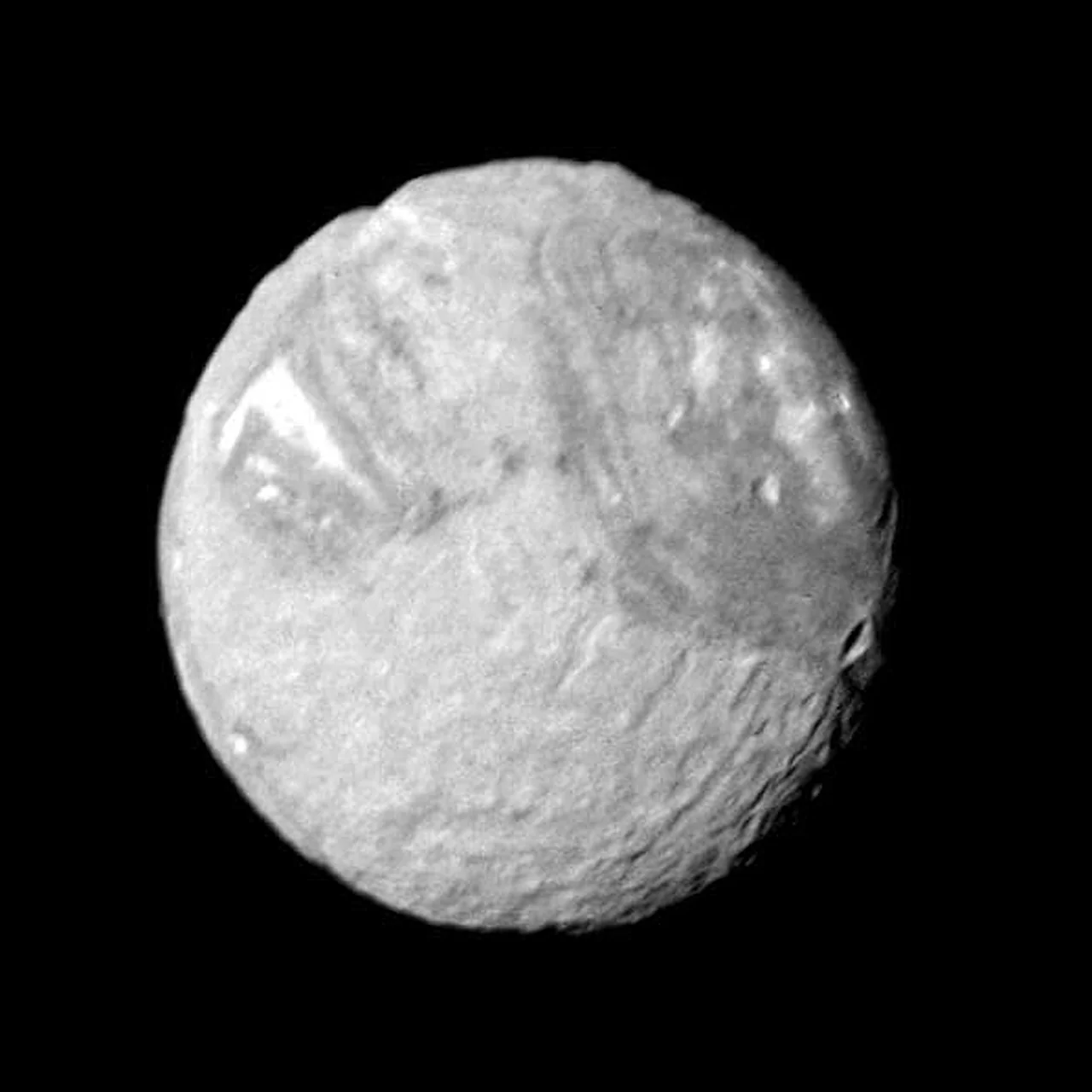
Scientists have succeeded in accurately measuring the isotopic composition of water on the five largest moons of Uranus, one of the most mysterious planets in the Solar System, for the first time. Data obtained via the James Webb Space Telescope may completely change traditional conceptions about the origin of these celestial bodies. Research results indicate that the water composition in these moons differs sharply from that of the planet itself. This is reported by Ixbt.com news reports.
The study published in the PNAS journal detailed the examination of the moons Miranda, Ariel, Titania, Oberon, and Umbriel. Astronomers analyzed the ratio of ordinary hydrogen to its heavy isotope, deuterium, in these bodies. The results were unexpected: it was found that the amount of deuterium in all five moons is approximately five times higher than in Uranus itself and in nearby comets.
Old theories under doubt
This discovery calls into question a hypothesis that has dominated for a long time. Previously, it was believed that Uranus' largest moons formed from materials ejected from the planet after it collided with other large cosmic objects. However, such a large difference in isotopic composition may indicate that the moons do not share a common root with their "parent planet".According to researchers, the new data suggests two scenarios. First, the moons formed far from Uranus' current orbit and were later captured by its gravity. The second assumption is that these moons emerged from the remnants of other large bodies torn apart by Uranus during the early stages of the Solar System.
The biggest puzzle remains associated with the moon Miranda. The isotopic composition of this large moon, located closest to Uranus, differs significantly from the other four moons. This indicates that Miranda may have formed based on a completely different mechanism, opening new research directions for scientists.
Uniqueness of the Uranus system
Uranus is considered one of the most unusual planets in the Solar System. Its axis is tilted by 98 degrees, making the planet seem to rotate "on its side" in its orbit. Its moons are also distinguished by their unusual orbital positioning and unique characteristics. This discovery made with the help of the James Webb telescope proves that the formation history of the Uranus system is much more complex than we thought.According to ixbt.com, this new data requires a revision of the evolution models of planets and their moons. In the future, sending specialized missions to the Uranus system is expected to help determine how this ice giant and its companions came to be in their current form.


Comments 0
…