


James Webb Uncovers the Nature of Mysterious "Little Red Dots" in the Universe
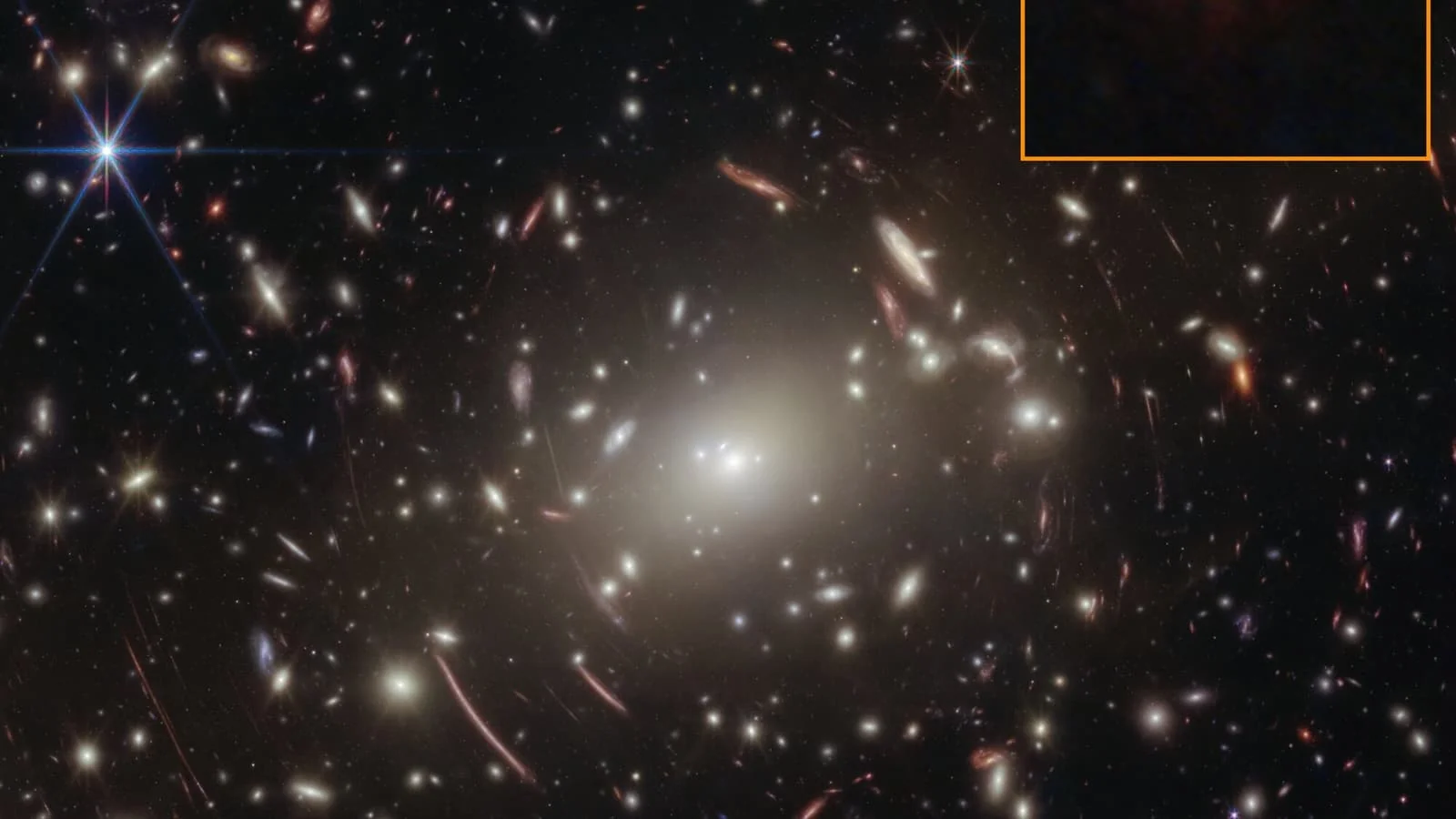
The James Webb Space Telescope (JWST), which is revolutionizing our exploration of the cosmos, has taken a significant step toward understanding the nature of one of the early universe's most enigmatic objects — the "little red dots." Astronomers have succeeded in obtaining the most detailed spectrum of these compact and bright red sources in distant galaxies. Research results indicate that these objects may actually be supermassive black holes enveloped in a dense shell of gas. This is reported by Ixbt.com reports .
A group led by University of Texas scientist Vasiliy Kokorev conducted a deep analysis of an object named GLIMPSE-17775. During the study, 30 hours of spectroscopic observations were carried out via the James Webb telescope. Due to the gravitational lensing effect — where a nearby galaxy cluster amplifies the light of a distant object — these data were equivalent in efficiency to 80 hours of observation.
"Black Hole-Star" Model
According to the scientists' conclusions, the GLIMPSE-17775 object fully fits the "black hole star" (BH*) model. This means that a supermassive black hole is located at the center, surrounded by a dense, partially ionized gas shell. The immense energy released by the black hole during the process of matter accretion is re-radiated by this gas shell, resulting in the characteristic red color we observe.During spectral analysis, lines of hydrogen, oxygen, and helium were identified from the object, as well as an "iron forest" consisting of 16 iron lines. Such indicators only occur in the presence of a very powerful high-energy radiation source. According to ixbt.com, this confirms the interaction of radiation emanating from the accretion disk around the black hole with the external environment.
The GLIMPSE-17775 object dates back approximately 1.8 billion years, belonging to the early periods after the Big Bang. It is located in the region of the Abell S1063 galaxy cluster, and due to the expansion of the universe, its light has undergone a strong "redshift." Compared with Hubble telescope data, some faint signs around the object also revealed a connection to the stellar population within it.
A New Step Toward the Secrets of the Universe
This discovery is very important for astronomy as it helps in understanding how supermassive black holes formed and evolved in the early universe. While "little red dots" were previously assumed to be simply dense star clusters, the theory that they have an active nucleus at their center is now prevailing.Nevertheless, scientists emphasize the need to continue research in this area. The James Webb telescope is planned to study dozens more such objects in the future. This will allow researchers to determine whether the proposed "BH*" model is a general rule for all such red dots or if GLIMPSE-17775 is a unique exception.


Comments 0
…