


A New Era in Space Exploration: Ultra-Black Coating Created for Satellites
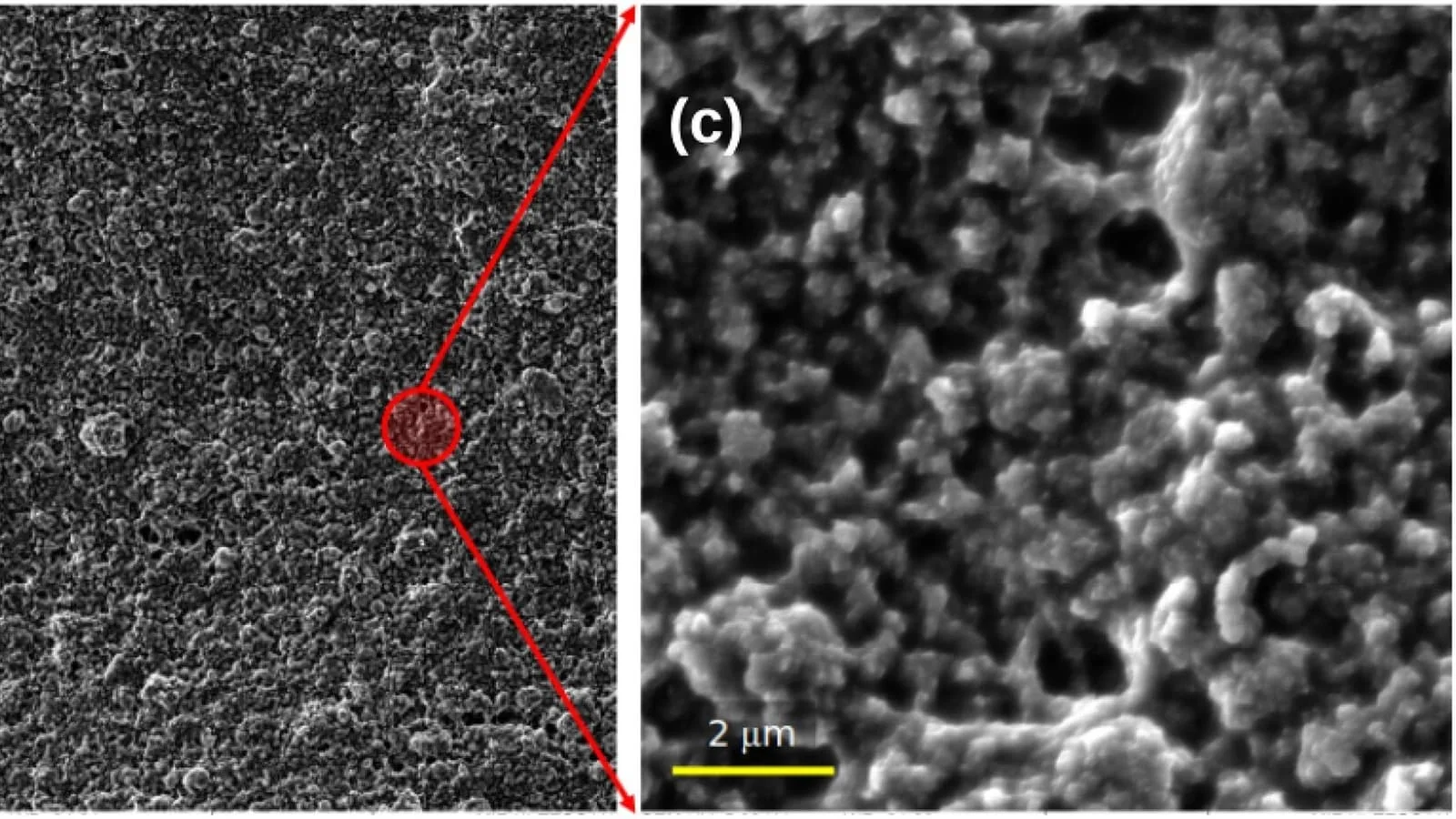
Scientists at the University of Surrey in the UK have found an effective way to solve the problem of satellite brightness, which is becoming a serious obstacle to space exploration. Researchers tested an ultra-black coating called Vantablack 310 and proved that it can make orbital devices almost invisible to ground-based telescopes. This discovery is expected to drastically reduce the negative impact of millions of new satellites planned for launch in the coming years on astronomical observations. This is reported by Ixbt.com reports.
Currently, the rapid increase in the number of satellites in Earth's orbit has become one of the greatest threats to modern astronomy. According to existing projects, more than 1.7 million devices could be launched into orbit in the near future. Sunlight reflecting off the metal surfaces of satellites creates bright streaks and flares in images captured by telescopes. This hinders the detection of faint objects such as distant galaxies, asteroids, and supernovae.
Capabilities of Vantablack 310 technology
According to a study published in the Monthly Notices of the Royal Astronomical Society, the Vantablack 310 material developed by Surrey NanoSystems reflects only 2 percent of incident light. Using laboratory experiments and computer modeling, scientists analyzed how a satellite covered with this material would appear from Earth. The results showed that the brightness of the device could be reduced to the minimum level recommended by the International Astronomical Union.Another important advantage of this technology is that it scatters reflected light evenly in all directions. This prevents the sharp and bright flares observed on standard metal surfaces. Lead researcher Astha Chaturvedi noted that the night sky remains the most important tool for studying the universe, but observing it is becoming increasingly difficult. The new engineering solution allows for solving the problem without fundamentally changing satellite designs.
According to astrophysicist Noelia Noël, this issue should concern not only professional astronomers but everyone who wants to preserve the natural appearance of the night sky. This study was an important step from simply noting the problem to the stage of practical solutions. According to Ixbt.com, scientists are now planning to test this coating in real space conditions.
Upcoming tests in space
The next phase of the project involves installing the Vantablack 310 coating on the Jovian-1 satellite and launching it into orbit. This mission, carried out in collaboration between the universities of Surrey, Portsmouth, and Southampton, will test the material's durability in the extreme conditions of space. It will also measure how significant the change in satellite brightness is via ground stations.If the space tests are successful, ultra-black materials could become a standard solution for all future satellite constellations. This would allow for the development of fundamental science alongside global internet projects from companies like SpaceX, Amazon, and others. This news is also important for amateur astronomers and experts, as the clarity of the night sky directly affects the quality of scientific observations.


Comments 0
…