


Nuclear Solution for AI: Ampera Unveils 3D-Printed Reactor
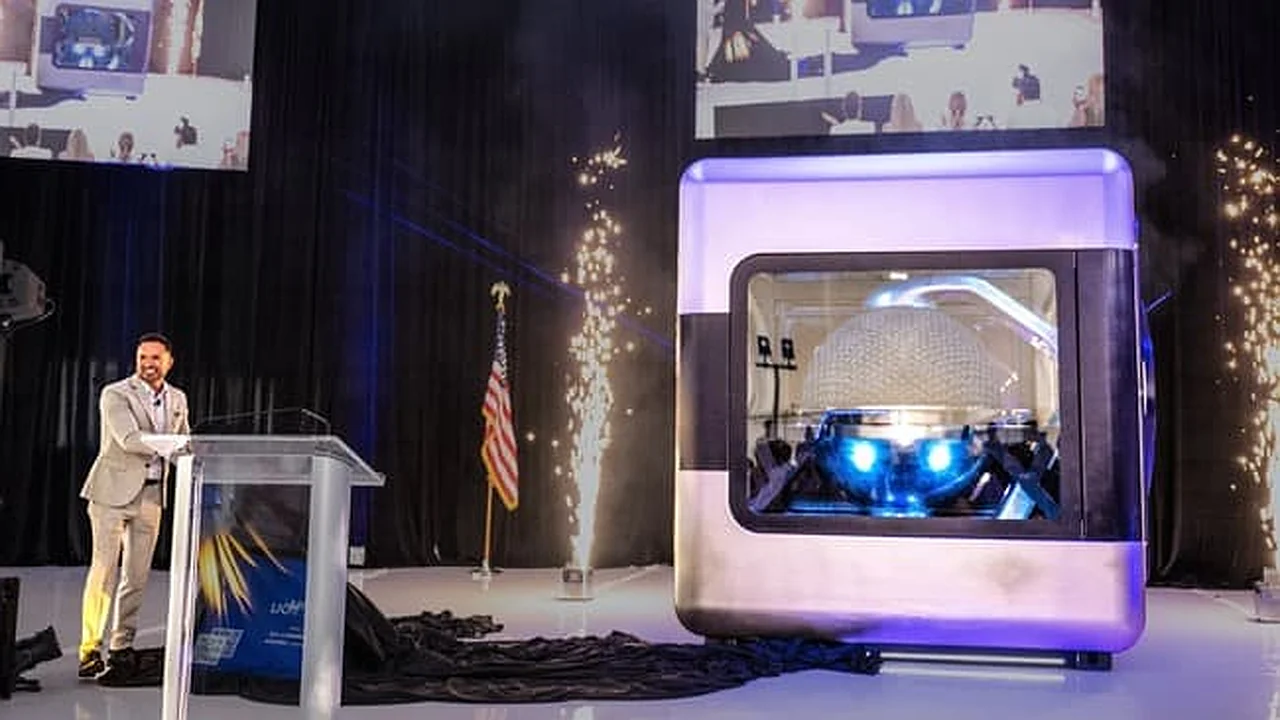
The rapid development of AI technologies is causing a sharp increase in global energy consumption. To solve this problem, the Ampera startup has demonstrated its revolutionary development. The company presented the first full-scale nuclear reactor module in a container format, created using 3D printing technology. This device is expected to provide AI data centers with continuous and eco-friendly energy. This is reported by Ixbt.com news says.
This reactor developed by Ampera is based on a subcritical and solid-state architecture. According to ixbt.com, the uniqueness of the project is that it uses thorium fuel instead of traditional uranium. Unlike uranium, thorium is not self-fissile and requires an external neutron source to start a chain reaction. This takes nuclear safety to a new level, reducing the risk of uncontrollable reactions to almost zero.
Harmony of Safety and Compactness
The subcritical mode of the reactor means that the system cannot continue to operate without external stimulation. That is, in an emergency, the nuclear reaction stops automatically upon loss of external power. Furthermore, the absence of moving parts in the reactor core increases its reliability and simplifies maintenance during long-term autonomous operation.Ampera engineers emphasize that the reactor modules are designed for serial production in factory conditions. They can be transported in standard shipping containers to any location. This approach provides unprecedented flexibility in designing energy systems. If necessary, several modules can be combined to increase power or integrated into hybrid energy complexes.
Future Prospects and Power Specifications
According to company calculations, a fully configured device is capable of producing approximately 30 MW of power. It utilizes a closed cycle based on supercritical carbon dioxide (sCO2 Brayton cycle). Such power can supply not only large AI servers, but also the following sectors:- Defense and military industry facilities;
- Large industrial enterprises;
- Maritime transport and shipbuilding;
- Autonomous settlements in remote areas.
For countries like Uzbekistan, which are rapidly industrializing and transitioning to a digital economy, such compact and safe energy sources could be of strategic importance in the future. It is natural that such innovative solutions, which reduce the load on traditional grids for the stable operation of data processing centers, would generate great interest.


Comments 0
…