


The AI Revolution: 16 Nobel Laureates Call to Save the Global Economy
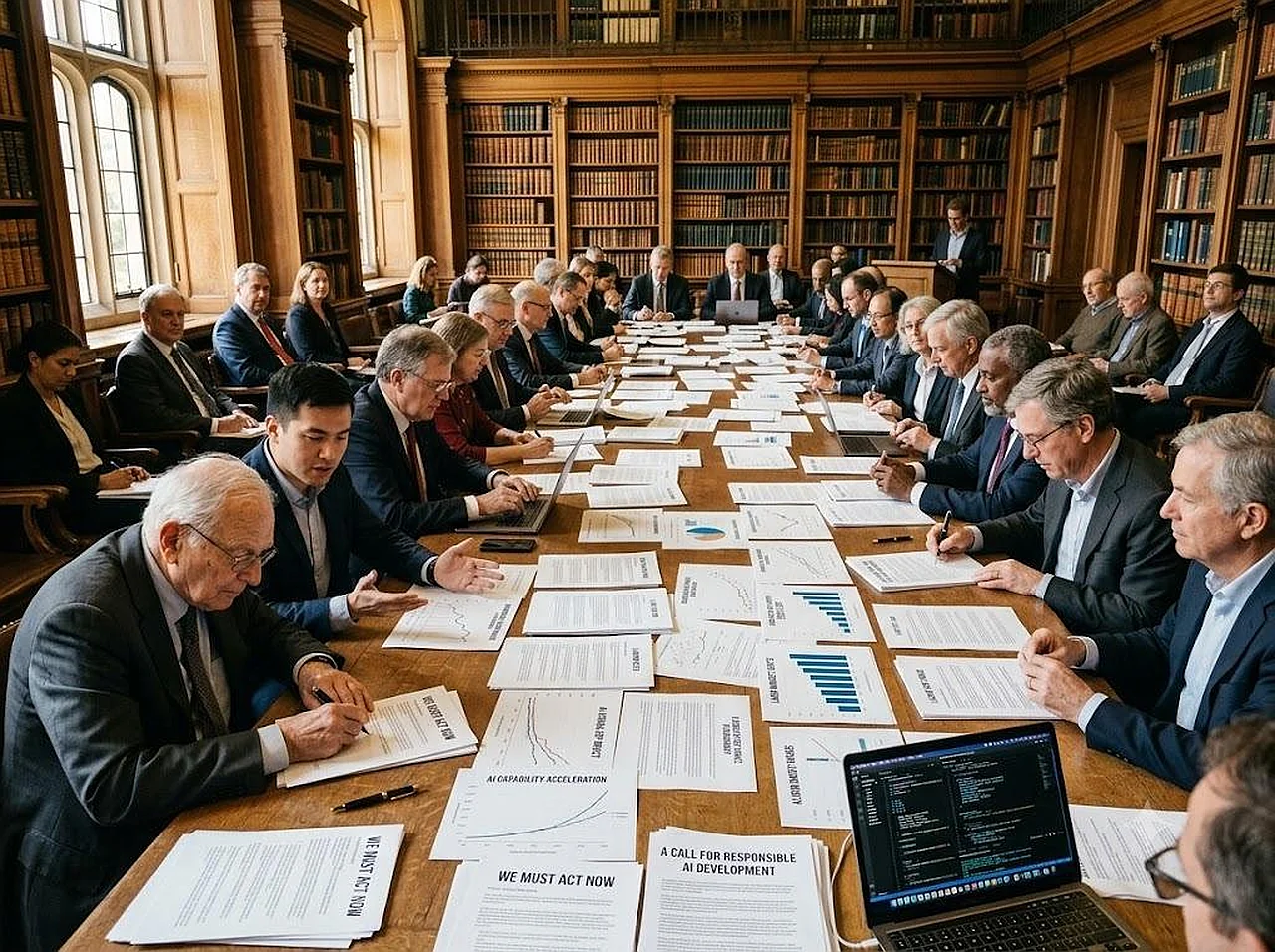
Leading global economists and influential technology experts have issued a special open letter warning of the economic risks that the development of AI could trigger. The document, titled "We Must Act Now" and prepared by the Stanford Digital Economy Lab, includes over 200 experts, including 16 Nobel laureates. Experts believe the changes brought by AI will be broader in scale than the Industrial Revolution but will occur in a much shorter timeframe. This is reported by Ixbt.com reports .
The authors of the appeal emphasize that within the next 10 years, AI systems will become unprecedentedly powerful and completely transform the global economy. Although this technology has the potential to increase labor productivity and living standards, it also poses a risk of mass displacement of humans from the labor market. For this reason, scientists are calling on governments and tech giants to prepare social institutions for these changes.
10 times faster than the Industrial Revolution
Erik Brynjolfsson, director of the Stanford Digital Economy Lab, notes that the capabilities of AI are growing much faster than our understanding of their economic consequences. According to him, this very gap requires urgent action to ensure that the technology serves the interests of society as a whole, rather than just a narrow circle of companies or individuals.Nobel laureate Michael Spence stated that the scale and speed of the process require uniting all forces. Anton Korinek of Anthropic believes that while humanity took decades to adapt to steam engines, electricity, and computers, we may have only a few years to adapt to AI.
The signatories include prominent scholars in economics such as Daron Acemoglu, Joseph Stiglitz, Paul Krugman, and Ben Bernanke. High-level representatives from giant companies like Google, Anthropic, and OpenAI, including Jeff Dean and Sarah Friar, have also supported the initiative. This shows that the creators of the technology themselves are concerned about future social stability.
The need for new economic models
Experts believe that there are currently insufficient economic metrics and models to assess the impact of AI on employment, income distribution, and productivity. This hinders the development of a clear action plan. Therefore, scientists propose working in the following areas:- Creating new incentives for AI to complement human labor rather than replace it;
- Revisiting social protection mechanisms and state institutions;
- Implementing oversight systems that ensure technological development aligns with societal interests.


Comments 0
…