


Artificial intelligence and neuroimplants restore movement and sensation to a paralyzed person
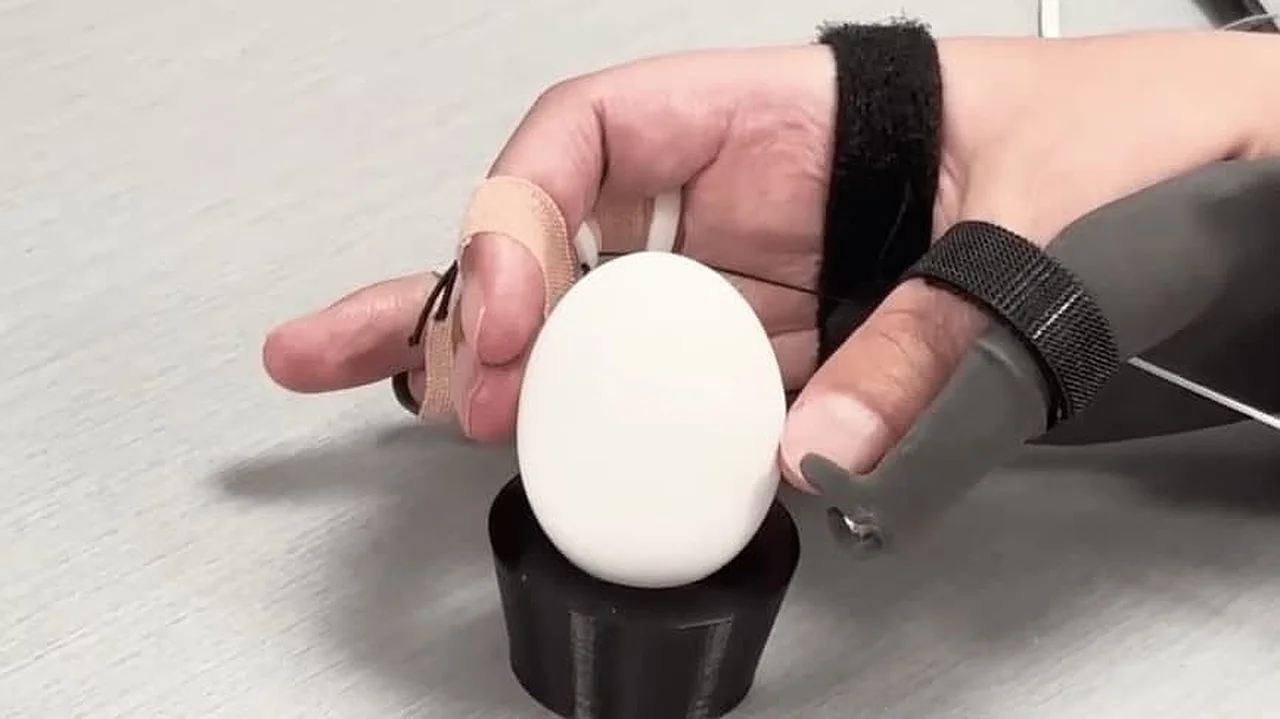
A major breakthrough has occurred at the intersection of medicine and technology: scientists have managed to restore movement and sensation to the arms of a patient who had been paralyzed for four years using artificial intelligence (AI) and specialized neuroimplants. The study results, published in the journal Nature Medicine, open a new door of hope for millions of people who have lost the ability to move due to spinal cord injuries. This is reported by Ixbt.com reports .
This unique experiment involved Keith Thomas, who suffered a severe neck injury in 2020 due to a diving accident. After four years of complete paralysis of his arms and legs (tetraplegia), Thomas returned to life with the help of a "double neural bypass" system developed by the Feinstein Institutes for Medical Research at Northwell Health.
How does the technology work?
The foundation of the system consists of a brain-computer interface, AI algorithms, and methods for electrical stimulation of the spinal cord and brain. During a complex 15-hour surgery, specialists implanted 5 microelectrode arrays into Thomas's brain. These chips read signals indicating the intention to move and transmit them to a computer for processing.Artificial intelligence analyzes brain signals and converts them into commands transmitted to the wrist muscles. As a result, the patient was able to move his arm simply by thinking about performing a movement. This process is carried out by artificially restoring (bypassing) natural neural connections.
Amazing results and sensory ability
After the training process, Keith Thomas began performing simple, yet previously impossible, tasks such as eating independently, drinking from a cup, and even scratching his nose. According to the study, within 35 weeks, his grip strength increased by 86 percent in his right hand and 62 percent in his left. Most surprisingly, he was able to pick up an empty eggshell without breaking it, even while holding a conversation (without focusing).Within the project, not only movement but also tactile sensation was restored. For this, scientists used "cortical mirroring" technology. Sensors on a 3D-printed bracelet stimulated the brain's sensory area, creating a sense of touch. 25 weeks after the experiment began, the patient began to feel his wrist, which he had not felt at all since the injury.
Scientists emphasize that the most important aspect is the phenomenon of neuroplasticity. Even two years after the stimulation was stopped, some of Thomas's motor functions remained. This indicates the nervous system's ability to form new connections. In the future, it is planned to use this technology to treat complications after strokes.


Comments 0
…