


Solar Flares and the Demise of Opportunity: Unlocking the Mystery of Martian Dust Storms
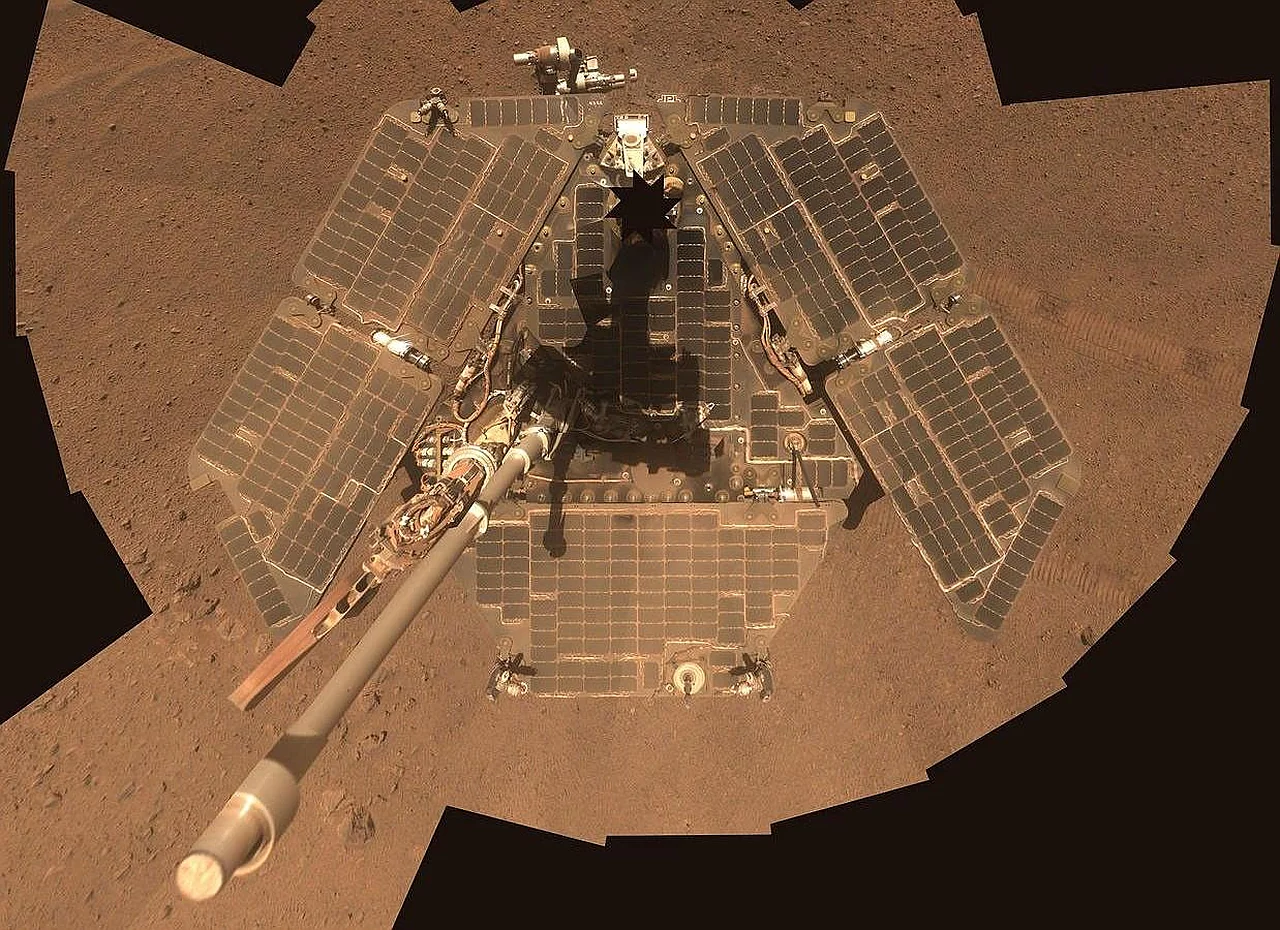
An international team of astronomers has proposed a new scientific theory regarding the origin of one of the most destructive natural phenomena on Mars: global dust storms. According to the research, powerful solar flares and plasma ejections could be a key factor in triggering or intensifying dust storms on the Red Planet. This discovery is a significant step in understanding the causes of the global disaster that led to the demise of the legendary Opportunity rover in 2018. This is reported by Ixbt.com reports .
The scientists' conclusions are based on data collected by the American MAVEN orbiter and the joint Russian-European ExoMars Trace Gas Orbiter (TGO) mission. Experts carefully studied the impact of solar activity on the Martian atmosphere between 2018 and 2021. According to Ixbt.com, the researchers analyzed a total of six major solar events.
While the atmosphere did not change significantly in five of the studied cases, the events of June 2018 presented a completely different picture. At that time, a powerful stream of plasma ejected from the Sun coincided with a local dust storm that had begun on Mars. Instruments recorded an abnormally high heating of the atmosphere, which triggered the rapid expansion of a small storm in the northern hemisphere.
The end of the Opportunity mission
As a result of this solar activity, a global dust storm emerged within a few weeks, covering the entire planet. This event was fatal for the Opportunity rover, which had served successfully on the Red Planet for 15 years. The thick curtain of dust blocking sunlight stopped the rover's solar panels from generating energy, resulting in a loss of communication with the device.NASA experts tried to restore communication for several months, but in 2019, they officially announced the end of the mission. Notably, the device was originally designed for only 90 days of operation, but it endured much longer than expected. Scientists emphasize that Mars lacks a strong magnetic field like Earth's, making it vulnerable to solar winds.
Researchers explained how the upper layers of the Martian atmosphere heat up under the influence of solar particles:
- High-energy particles from the Sun alter atmospheric dynamics;
- Rising temperatures accelerate the lifting of dust particles;
- Local storms spread to a planetary scale within a few days.
Safety for future missions
For now, scientists are not rushing to confirm the direct link between solar activity and storms with 100% certainty, but the evidence appears very compelling. If this hypothesis is fully proven, it will be much easier to implement safety measures for future missions to Mars and even for the first human steps on the planet.The ability to predict dust storms in advance will protect not only technical equipment but also future astronauts from unexpected dangers. Currently, researchers continue to observe similar processes on other planets, which helps to better understand weather changes in the solar system.


Comments 0
…