


SpaceX on the Verge of a Historic Turning Point: Catching Starship in Mid-Air Planned
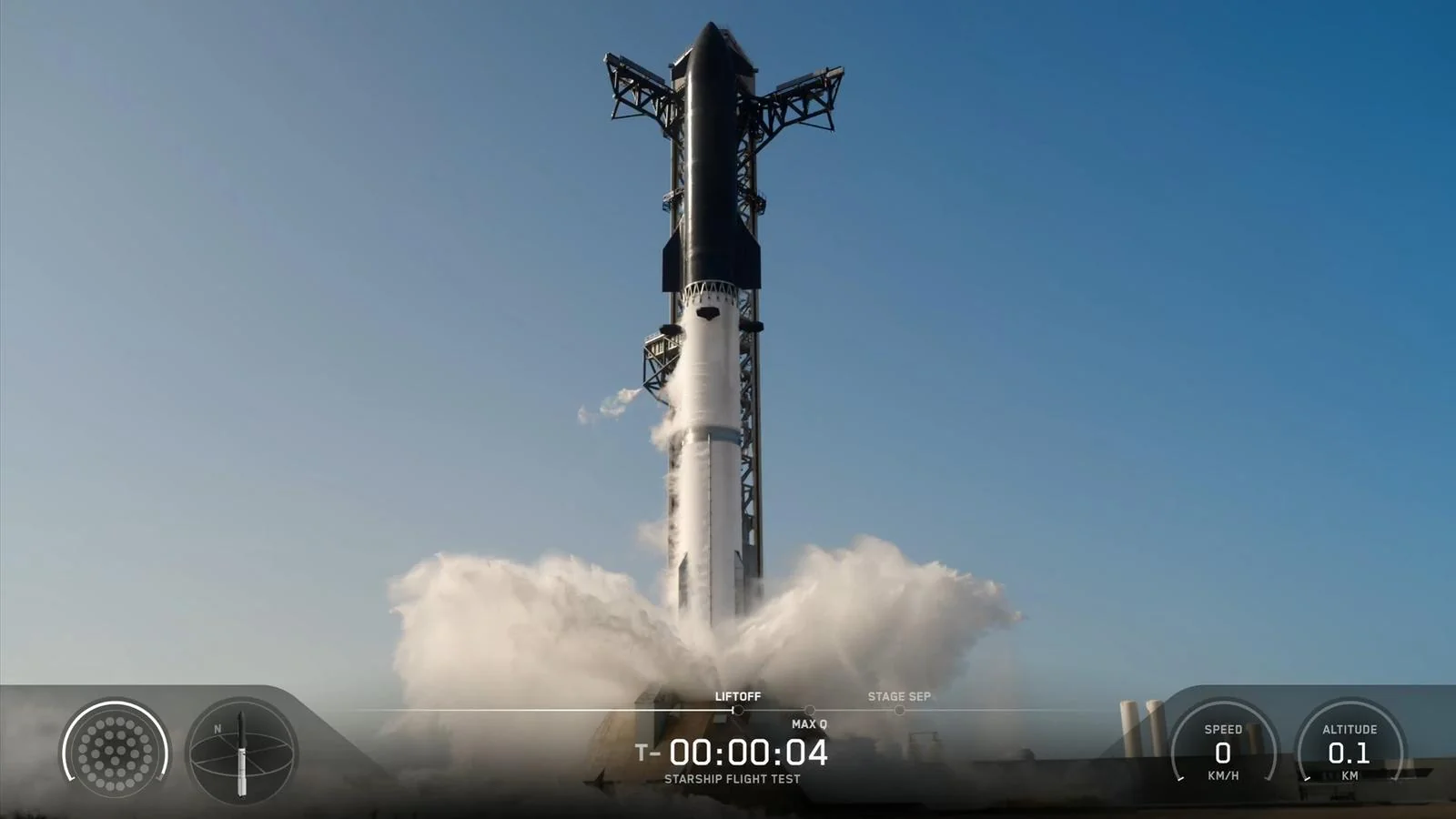
SpaceX, led by Elon Musk, is preparing to take another revolutionary step in space exploration. Following a successfully completed 13th test flight, the company now plans to catch the 50-meter upper stage of the Starship spacecraft directly in mid-air. This complex technological process may be tested as part of the Flight 14 mission expected to take place in August. This was reported by Ixbt.com reports.
According to SpaceX founder Elon Musk on his X social media page, if the analysis of data from the latest flight shows no serious issues, the company will attempt to catch the Starship V3 spacecraft using the Mechazilla tower during the next attempt. This is expected to be one of the most important achievements in the reuse of space technology.
Mechazilla and the "Chopsticks" Technology
Until now, all test flights of Starship ended with it landing in the ocean. For example, while in the 12th test the ship exploded upon hitting the water, during the 14th flight Starship V3 made a soft landing in the Indian Ocean for the first time. According to ixbt.com, the ship maintained its integrity and continued transmitting telemetry data while floating on the water. SpaceX engineers rated this as the "softest landing" in the program's history.In the Flight 14 mission, the spacecraft is expected to return not to the ocean, but directly to the launch pad. There, it will be met by a giant service tower called Mechazilla. The tower will catch the 50-meter spacecraft in mid-air using its two giant mechanical manipulators called "chopsticks".
Toward a Fully Reusable System
It is worth noting that SpaceX had previously successfully caught the first stage (booster) called Super Heavy using this exact method. However, the Starship spacecraft itself (the upper stage) has never been recovered in this manner. If the August test is successful, this will remove the primary barrier toward creating a fully reusable super-heavy space system.The main advantage of this technology is that after landing, the spacecraft and booster will not require complex restoration work or searching in the ocean. They can be inspected directly at the launch pad and prepared for another flight in a short time. This will drastically reduce space transportation costs and increase flight frequency.
This news is also of great significance for space technology enthusiasts in Uzbekistan, as Starship is intended to be the primary transport vehicle for future lunar exploration and delivering the first humans to Mars. The August tests will undoubtedly be the center of attention for tech enthusiasts in our region as well as worldwide.


Comments 0
…