


Kreios Space Tests a Space Engine That Operates in Earth’s Atmosphere
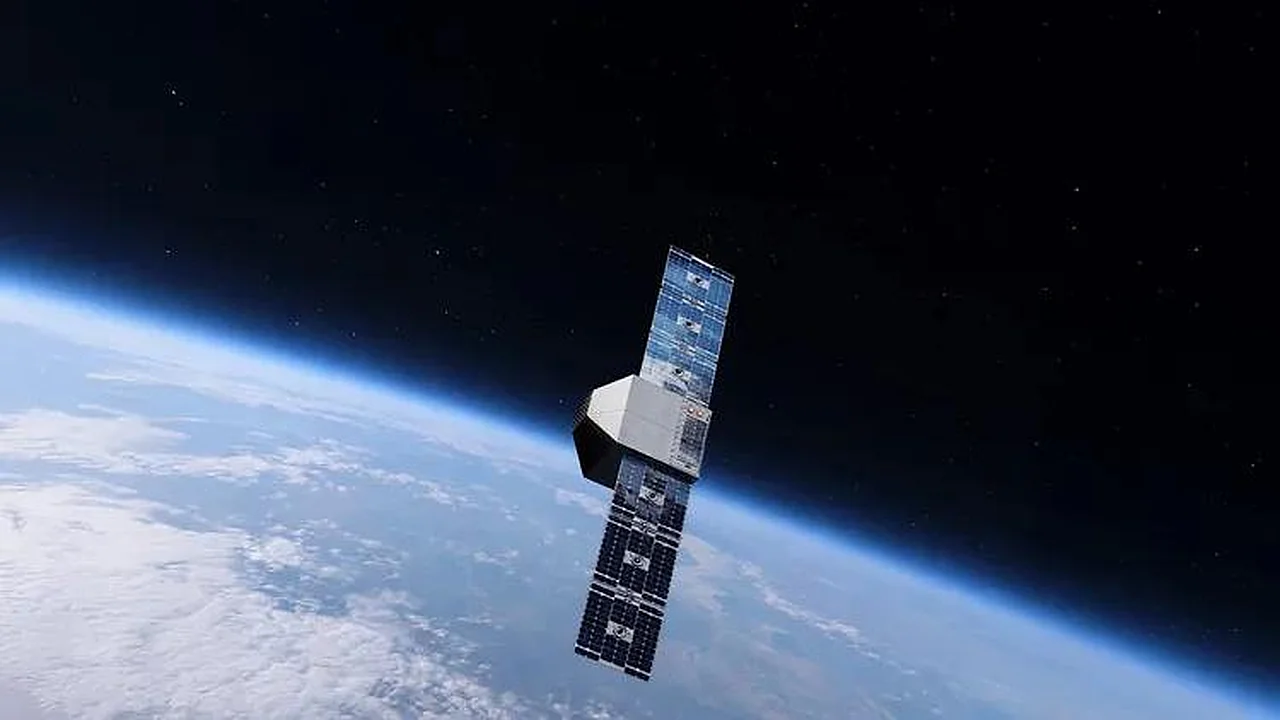
Spain’s Kreios Space is preparing to test a unique space engine that uses Earth’s atmosphere as propellant. According to ixbt.com, if the experiment is successful, Air-Breathing Electric Propulsion (ABEP) technology could allow satellites to operate for years in very low orbits without carrying large fuel reserves. According to Ixbt.com, the company reports .
According to the specialists’ plan, the first experimental satellite equipped with an ABEP system is expected to be placed into very low Earth orbit, or VLEO. Although no exact launch date has been officially announced, Kreios Space is working toward 2027. The new system operates on a principle similar to that of a conventional air-breathing jet engine, but uses an extremely rarefied atmosphere instead of dense air.
How the Innovative Technology Works
During flight, the device captures residual gas molecules from its surroundings, after which they are heated and ionized. The resulting plasma is accelerated and expelled from the engine, generating the required thrust. The main advantage of this approach is that the spacecraft does not require a constant supply of onboard propellant. The electricity needed by the engine is provided by solar panels, while the material used to generate thrust is taken directly from the atmosphere.ABEP technology is being developed specifically for extremely low orbits known as VLEO, at altitudes of approximately 100 to 400 kilometers. However, these altitudes also have a serious drawback: even the extremely thin atmosphere creates significant drag on a satellite, gradually reducing its speed and altitude. Conventional engines can compensate for this braking effect, but their propellant reserves are quickly depleted during continuous operation.
Taking Image Quality and Communications to the Next Level
The new technology proposes turning this problem into an advantage. The atmosphere that slows the satellite down simultaneously serves as a source of propellant for its engine. If the system can capture enough molecules and accelerate them efficiently, the spacecraft will be able to maintain its orbit continuously.For the first demonstration mission, Kreios Space selected the MP42 platform from Lithuania’s Kongsberg NanoAvionics. NanoAvionics engineers are adapting the satellite to the experimental engine assembly and successfully integrating the ABEP system. Extremely low orbits attract space agencies for several reasons: the closer a satellite is to Earth, the more detailed the images its optical systems can capture. This is important for remote sensing, mapping, and monitoring objects on the Earth’s surface.


Comments 0
…