


Scientists have created a quantum battery that charges in femtoseconds
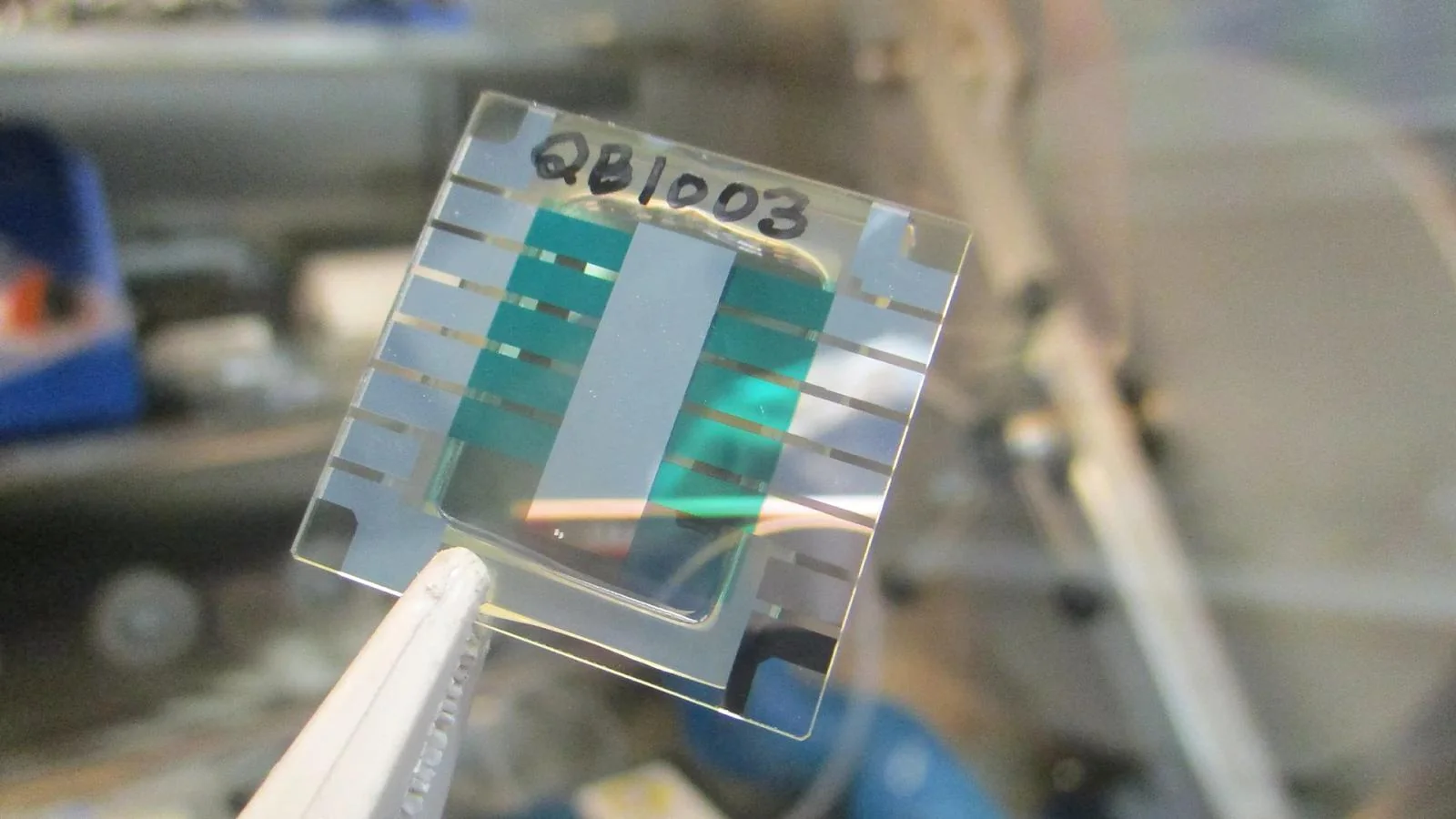
Researchers at Australia's national science agency, CSIRO, have created a prototype of a quantum battery that differs fundamentally from traditional lithium-ion batteries. This new technology is attracting the attention of experts due to the fact that the charging speed increases with the size of the device and its ability to generate electric current. This was reported by Ixbt.com reports .
According to ixbt.com, the new development is being carried out by a team led by quantum physicist James Quach. Unlike traditional batteries, this device does not rely on chemical reactions to store energy, but rather uses collective quantum effects based on the interaction of light and matter.
How a quantum battery works
The core of the device consists of an optical microcavity made of two tiny mirrors located just 100 nanometers apart. This is about a thousand times thinner than the thickness of a human hair. The space between the mirrors is filled with organic dye molecules and illuminated with a laser.The interaction of photons with molecules creates hybrid states of light and matter called polaritons. As a result, a super-absorption effect occurs, and molecules begin to absorb energy not independently, but collectively. The more molecules in the system, the faster the energy absorption process.
Prospects and practical application
Currently, the experimental sample is capable of charging in femtoseconds — one quadrillionth of a second. The stored energy is retained for about a million times longer than the charging process, i.e., in nanoseconds. Nevertheless, the technology is still far from the level of batteries intended for smartphones or electric vehicles.The capacity of the current prototype is microscopic, consisting of only a few billion electron-volts. The main task facing the researchers is not only to increase this indicator but also to extract the stored energy in a stable manner. The latest experiment is an important step in this direction, as the team added an additional layer that allows for the extraction of electric current from the battery.
Another important advantage of the CSIRO development is that it can operate at room temperature. Some alternative quantum battery concepts require the use of superconductors and cooling to temperatures below -150 °C, which significantly complicates practical application.


Comments 0
…