


New plasma engine powered by atmospheric gas created
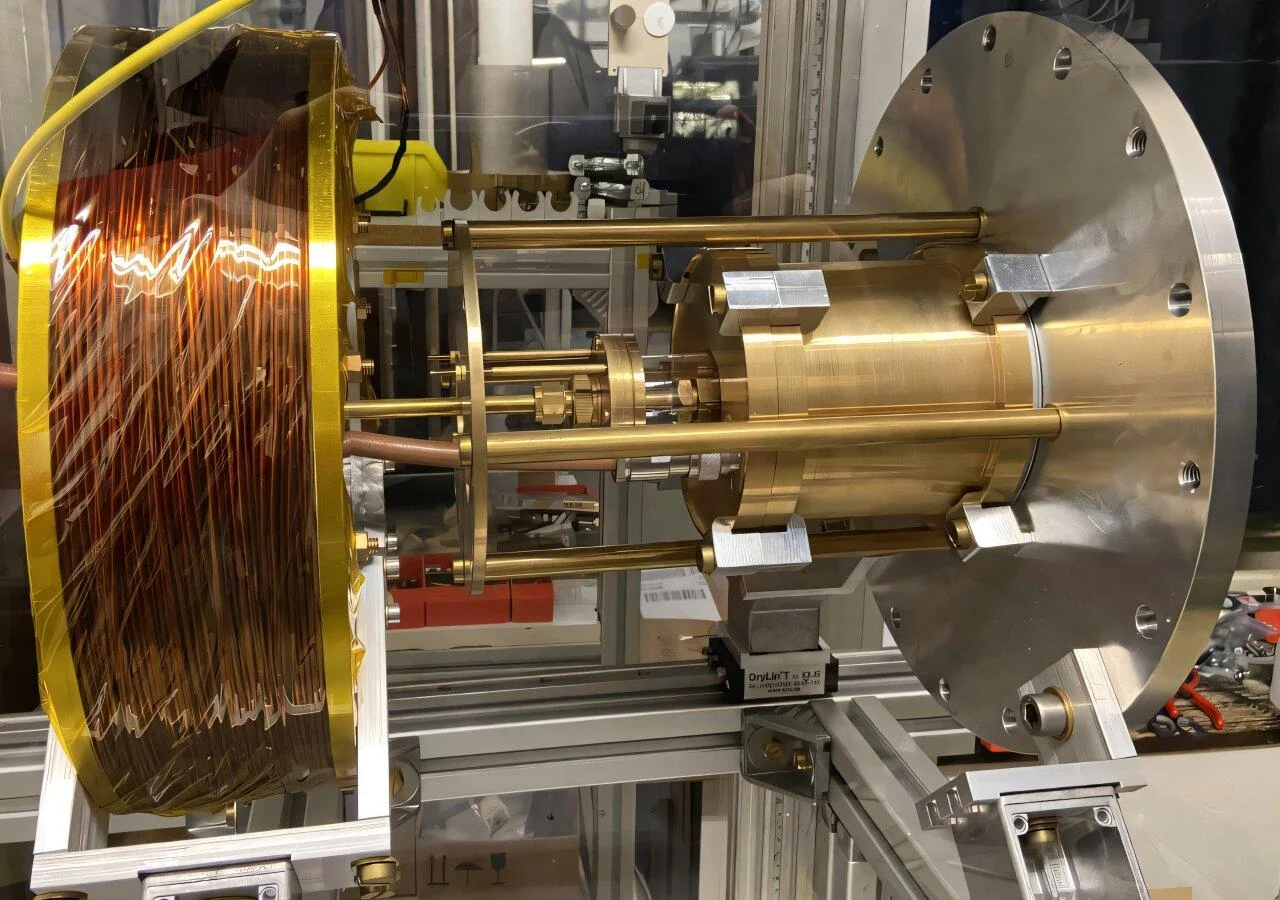
Researcher Francesco Romano from the University of Stuttgart has developed an experimental plasma engine capable of using Earth's thin atmosphere as a propellant. According to ixbt.com, this technology could allow satellites to operate for years in ultra-low orbits without the need for xenon reserves. This is reported by Ixbt.com news.
This development belongs to the Atmosphere-Breathing Electric Propulsion (ABEP) class, and its operating principle is based on the satellite collecting molecules and atoms from the upper layers during flight and ionizing them. The generated plasma is accelerated using an electromagnetic field, creating reactive thrust.
Advantages of the new technology
Such engine systems are of particular interest for very low Earth orbits at altitudes of 100–450 km. The closer a satellite is to Earth, the more detailed images it can capture, while radar and communication systems require less power. Also, after the mission ends, the device leaves the orbit faster, reducing the amount of space debris.However, the main problem with VLEO orbits is the drag of the residual atmosphere. Even at such altitudes, satellites gradually slow down and are forced to constantly compensate for speed loss by consuming propellant. The new device proposes using the thin gas that causes this aerodynamic drag as a propellant.
Technical challenges and solutions
The most difficult obstacle proved to be atomic oxygen, a highly active component of the upper atmosphere, as it tends to erode the electrodes, cathodes, and other elements of traditional plasma engines. To solve this problem, Romano created a contactless radio-frequency helicon engine without an external neutralizer. The magnetic field shapes the quasi-neutral plasma flow, which allows for the elimination of one of the most vulnerable elements.Special attention was also paid to creating an air intake system within the project. Among the three tested variants, the design with a reflective parabolic surface was found to be the most efficient. During experiments, it collected approximately 94.3% of the incoming atomic oxygen, nitrogen, and argon particles.
To generate plasma, a birdcage antenna inspired by medical MRI antenna design is used. During tests, it was found that up to 99% of the transmitted high-frequency power was delivered to the engine's plasma generation zone.
In a vacuum chamber, the device generated plasma stably at just 50–60 W of power. Scientists modeled the composition and concentration of gases typical of Earth's upper atmosphere. Calculations show that a full-scale satellite equipped with such an engine would be capable of maintaining an orbit at an altitude of 190–250 km using less than 1.6 kW of electrical energy, which can be provided by solar panels.


Comments 0
…