


India's Cashless Revolution: Report from the Epicenter of 1 Billion Transactions a Day
From ordinary street tea stalls in India to towering shopping complexes in the center of Mumbai, you will witness the same scene: people pulling out smartphones instead of cash from their pockets and scanning QR codes. How did cashless payments become a routine way of life in the world's most populous country?
As part of our international media tour, we visited the brain center of this digital miracle — the headquarters of NPCI (National Payments Corporation of India) — and studied the operational mechanisms of the system.
«India Stack»: A Four-Tiered Digital Foundation
As presentations revealed, this success did not happen by chance. It rests on four solid infrastructure layers:
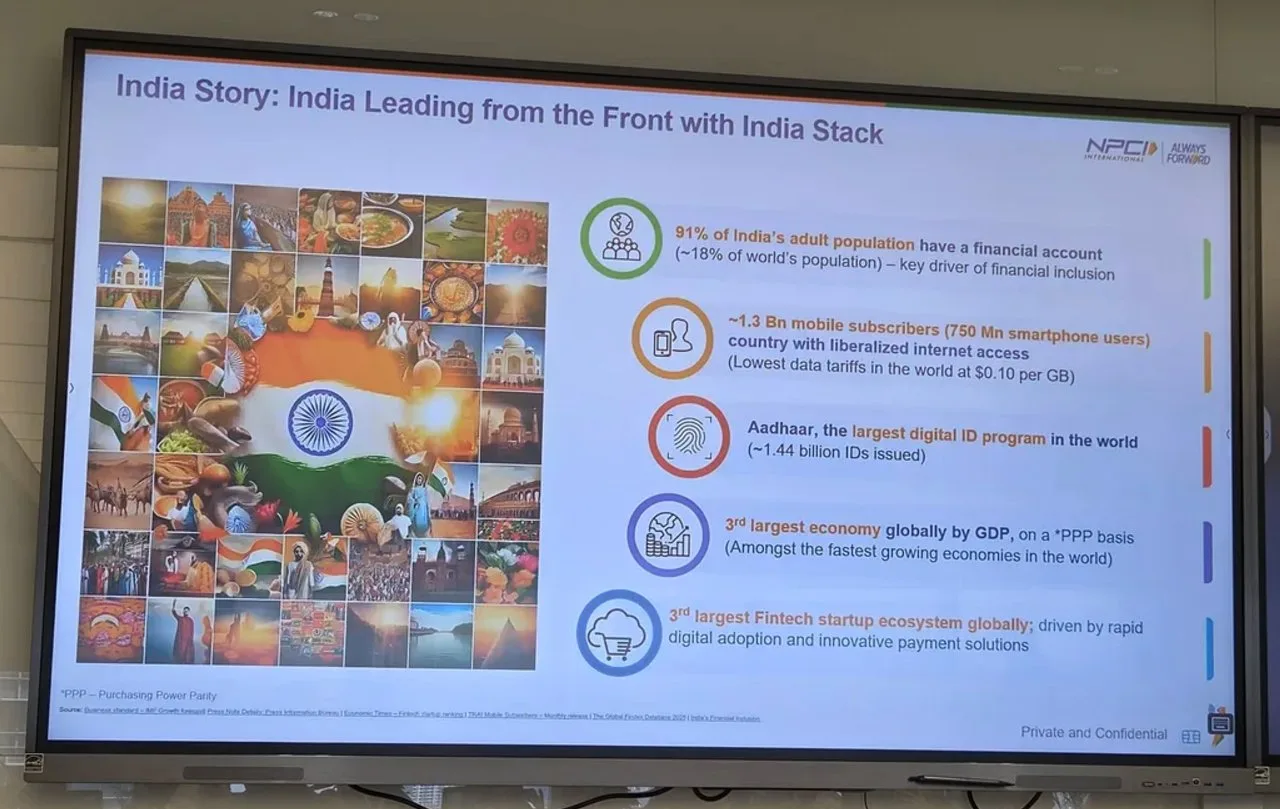
Digital Biometric Code (Aadhaar): 1.44 billion citizens are covered by the electronic identification system. 91% of the adult population has an official bank account, and nearly 17 million people undergo electronic verification (eKYC) daily.
Paperless Documents (DigiLocker): Over 9 billion official documents have been digitized, allowing citizens to use government and banking services without carrying paper around.
Unified Cashless Payment Network (UPI and RuPay): A fast, cheap, and open architecture connecting any bank and fintech application.
Convenient Infrastructure: For 1.3 billion mobile communication users, the cost of 1 GB of mobile internet is one of the cheapest rates in the world — approximately $0.10.
1 Billion Transactions a Day: Staggering Figures
The indicators presented by NPCI have an unprecedented scale not only for the regional but also for the global financial market:
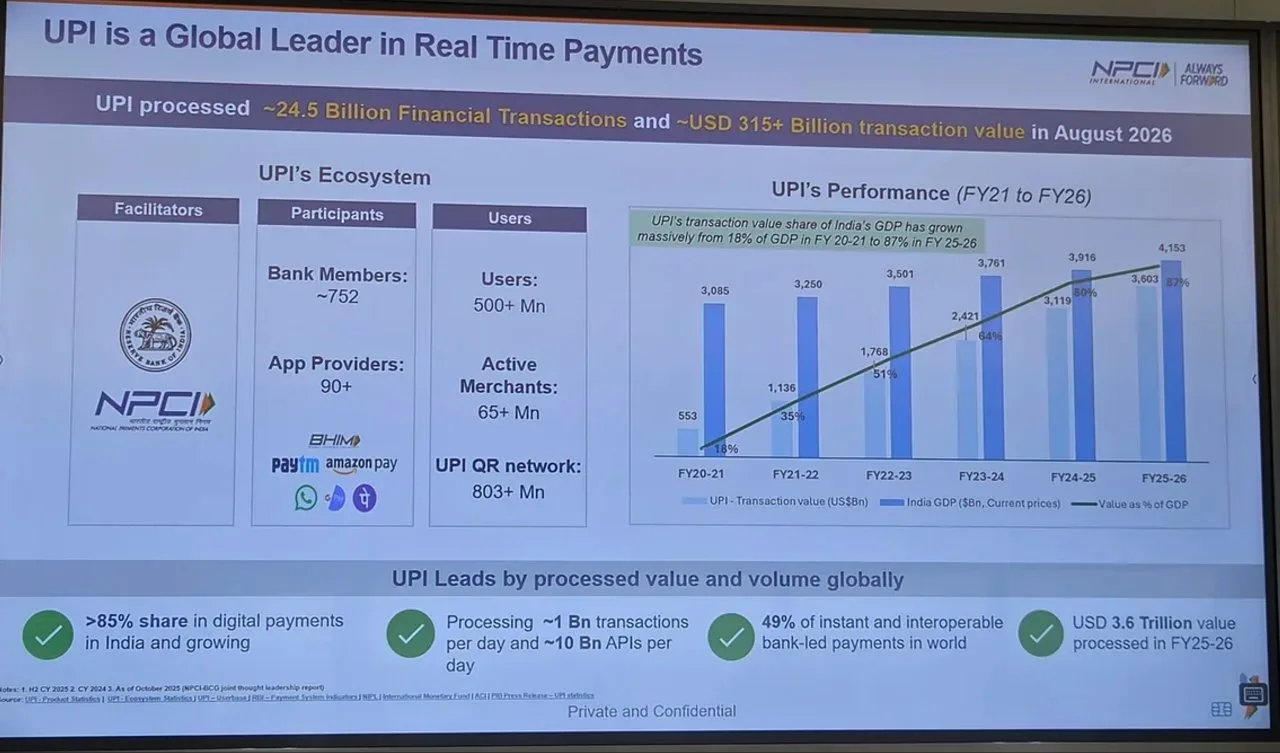
Nearly 49 percent of all instant retail payments involving banks on our planet are handled precisely by India's UPI system.
The system processes over 24.5 billion transactions per month. Monthly turnover exceeds $315 billion, and the number of daily operations surpasses 1 billion.
While the value of UPI transactions accounted for 18% of India's GDP in 2021, today this share has reached 87% (amounting to $3.6 trillion annually).
National Interest, Not a Private Monopoly
The most unique aspect of the system is its management model. NPCI is a not-for-profit organization, managed as a consortium by the Reserve Bank of India (RBI) and 65 major commercial banks.
Here, private fintech apps (Google Pay, PhonePe, Paytm) do not accumulate users' money in their own balances. They only provide a user-friendly interface, while funds go directly from the buyer's bank account to the seller's account within a second. As a result, security is guaranteed, and the system operates free of commissions and on the basis of free competition.
During the BRICS summit days, the Indian side expressed its readiness to integrate this national experience with the payment systems of partner countries. For Central Asia, particularly for Uzbekistan where financial technologies are developing rapidly, this model in Mumbai has great practical significance in building a cashless economy and open fintech infrastructure.



Comments 0
…