


Oxford physicists create the strongest light beam in the laboratory
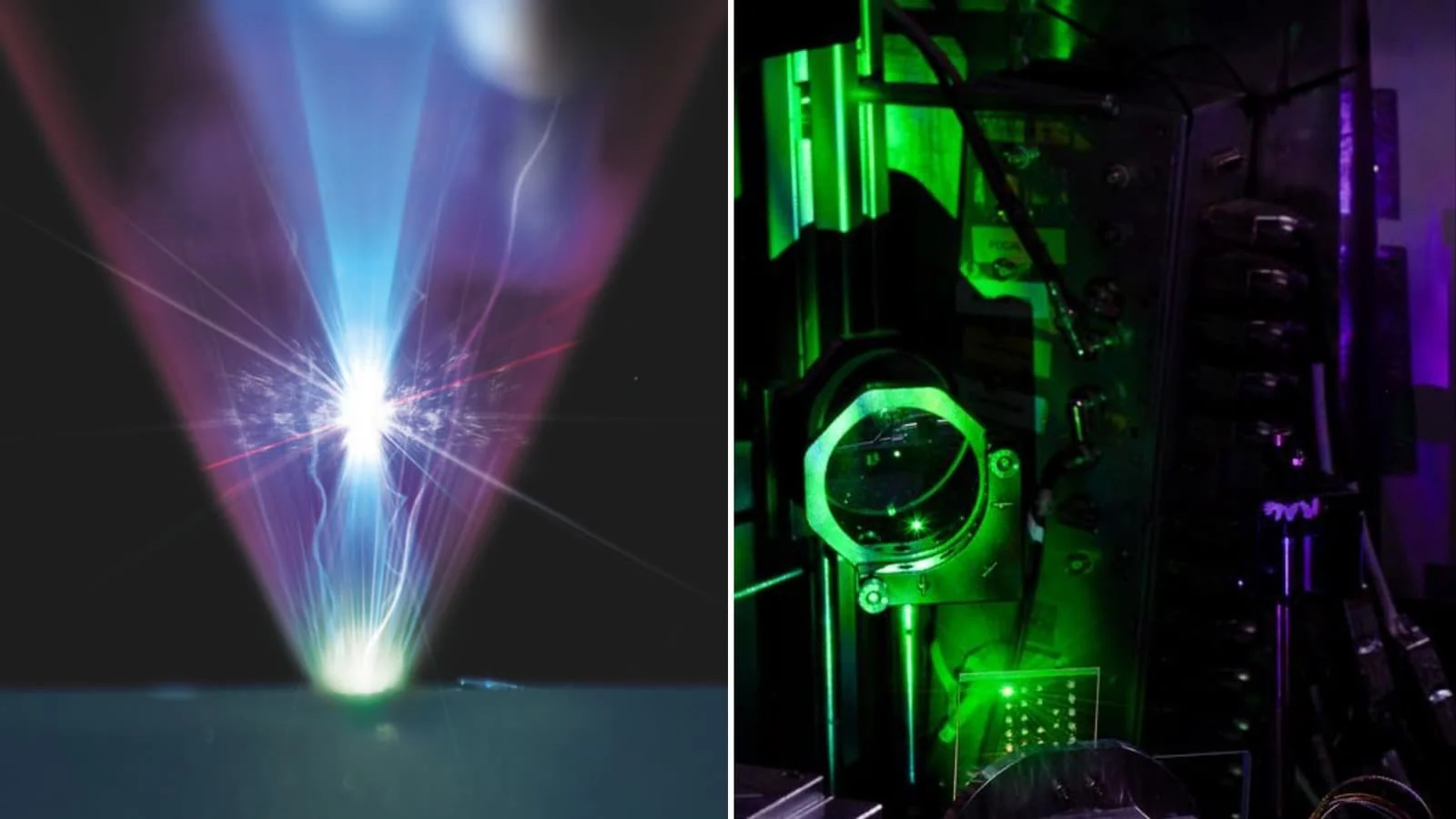
Physicists from Oxford and Queen's University Belfast have developed a groundbreaking method to create the world's most powerful light source in a laboratory setting. The technique involves using plasma as a high-speed mirror to compress laser waves, focusing them into an intense pulse with an unprecedented concentration of energy. This innovation will allow scientists to experimentally investigate theoretical phenomena for the first time, such as the mysterious quantum properties of a vacuum. By combining light generation and amplification into a single system, this discovery is expected to usher in a new era of fundamental physics.
Physicists at the University of Oxford and Queen's University Belfast have developed a method for obtaining the world's most powerful source of light under laboratory conditions. According to the researchers, this coherent radiation source could usher in a new era in science. This was reported by Ixbt.com reports.
The new method consists of two stages, first directing a powerful laser beam into plasma. Under such conditions, the plasma surface acts as an ultra-fast moving mirror, and the reflected light waves are compressed, sharply increasing their energy level.
In the second stage, the altered light waves are focused onto a very small point. As a result, the waves reinforce one another, forming a pulse with an exceptionally high concentration of energy.
This technology opens the way to studying effects that previously existed only in theory.
In particular, scientists will be able to experimentally test the anomalous properties of vacuum predicted by quantum electrodynamics. The new approach stands out because it combines the generation and amplification of radiation in a single system.
Although the research is still at an early stage, the development of the technology will make it possible to carry out scientific experiments previously considered impossible. This discovery could prompt a reassessment of the laws of fundamental physics.



Comments 0
…