


Average monthly wages rise in Uzbekistan, large gap between regions

Quick readAI-generatedShow
- In Uzbekistan, average monthly wages have increased, with significant disparities between regions, according to data from the National Statistics Committee.
- As of the first quarter of 2026, the national average salary reached 6.82 million soums, with Tashkent leading at 11.7 million soums, while Kashkadarya reported the lowest at 4.66 million soums.
- The finance sector offers the highest salaries, averaging 18.6 million soums, whereas agriculture pays the least at around 3.5 million soums.
- Experts attribute these differences to the nature of job opportunities, investment levels, and infrastructure development, highlighting the need to address wage disparities across regions and sectors.
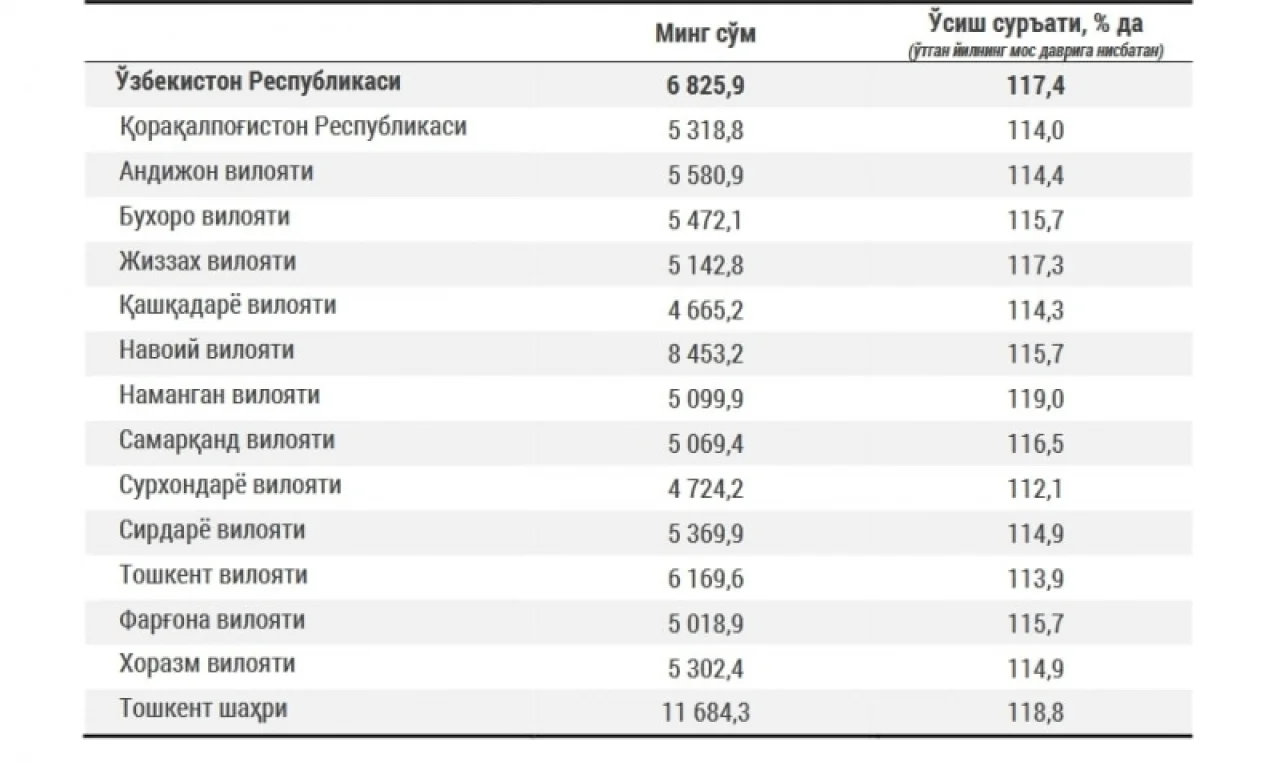
According to the results of the first quarter of 2026, an increase in public income was recorded in Uzbekistan. According to the data from the National Statistics Committee, the average monthly wage across the country amounted to 6.82 million soums.
Analysis shows that a significant disparity in salaries persists across regions. In particular, Tashkent city maintains its lead as the highest-paying region. The average monthly salary in the capital reached 11.7 million soums.
Navoi region took second place, where the average salary was 8.45 million soums. Experts attribute this to the development of the industrial and mining sectors.
Conversely, the lowest figure was recorded in Qashqadaryo region, where the average monthly salary amounted to 4.66 million soums.
Large differences are also observed across sectors. The highest income corresponds to the financial sector. That is, employees of banking, insurance, leasing, and credit organizations earn an average of 18.6 million soums.
The lowest wages were recorded in the agriculture, forestry, and fishing sectors — approximately 3.5 million soums. Additionally, salaries in socially significant sectors remain at a relatively low level. In particular, an average of 4.11 million soums was paid in the healthcare and social services sector, and 4.61 million soums in the education system.
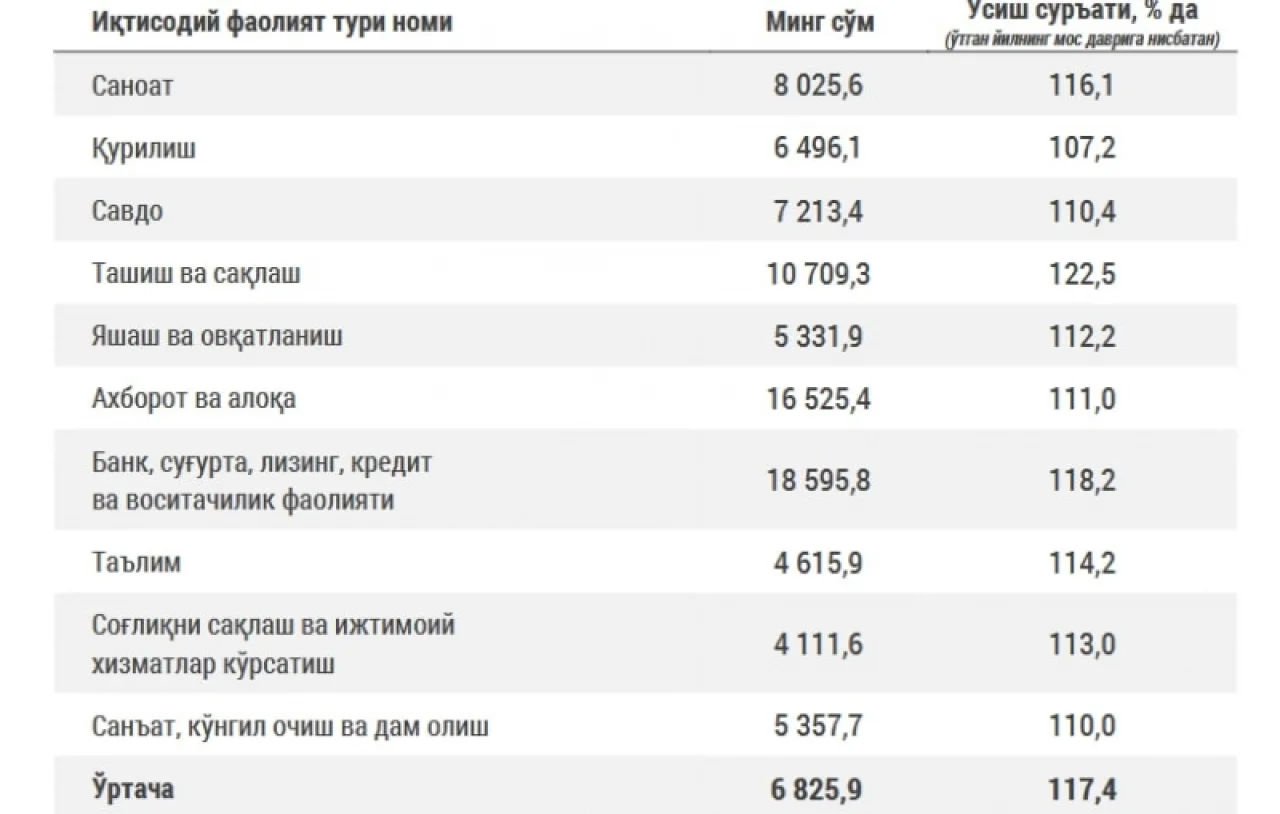
According to experts, such differences between economic sectors and regions are related to the nature of jobs, the volume of investments, and infrastructure development.
Overall, the increase in the average wage in the country is assessed as a positive trend. However, reducing the salary gap between regions and sectors remains one of the pressing issues.


Comments 0
…