


El Nino Threat: Sharks Are Invading New Territories
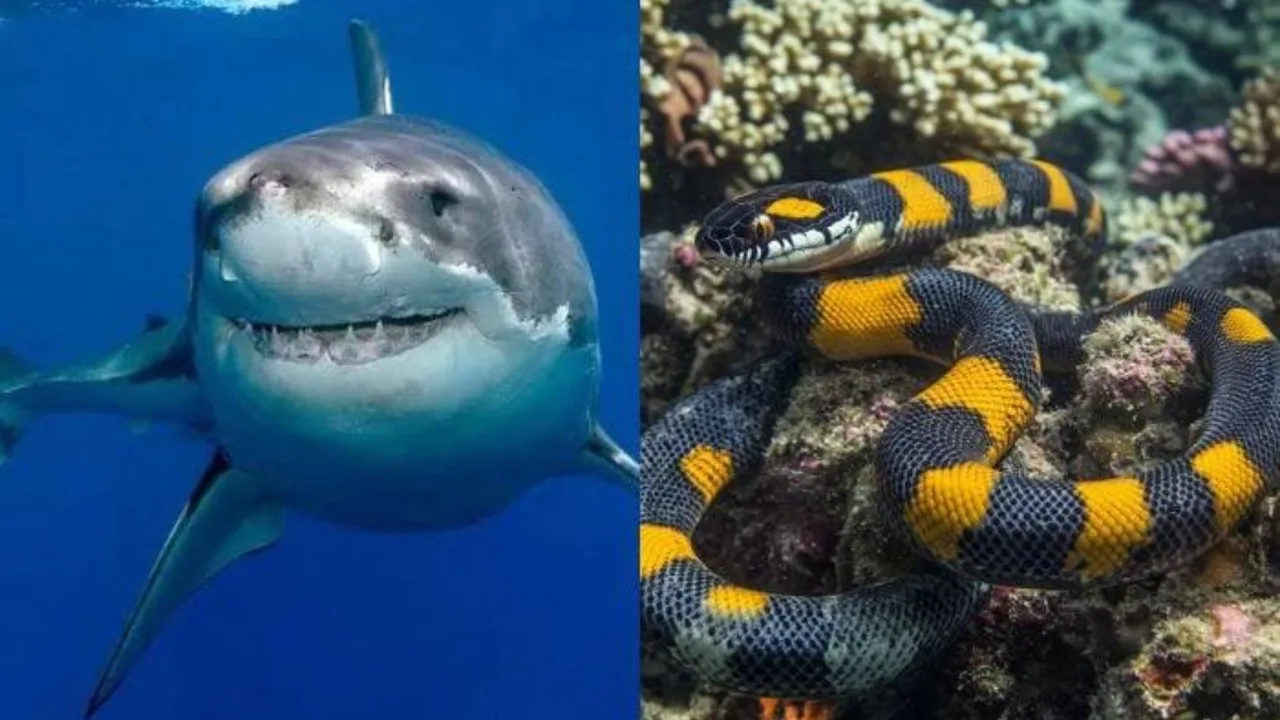
Marine scientists warn that the intensification of the El Nino climate phenomenon could significantly impact the movement of ocean creatures. According to experts, a sharp rise in water temperatures is likely to cause sharks, venomous sea snakes, and other marine life not typically found in certain regions to migrate into new waters.
According to the U.S. National Oceanic and Atmospheric Administration (NOAA), El Nino is expected to reach a moderate to strong phase by the fall of this year. Currently, ocean waters near the U.S. West Coast have warmed to record levels. Therefore, scientists emphasize that serious changes in the ocean ecosystem may occur.
El Nino is a natural climate phenomenon associated with the weakening or directional shift of winds blowing from east to west in the Pacific Ocean, causing warm waters to move toward the U.S. instead of the Asian coast. This process usually occurs once every two to seven years and can last from 9 to 12 months.
According to NOAA forecasts, there is a 63% probability of a 'very strong' El Nino occurring from November 2026 to January 2027. Experts say this could be one of the strongest El Nino events in history. However, agency representatives also noted that this situation is not a cause for panic.
Ken Graham, director of the NOAA National Weather Service, noted that each El Nino has unique characteristics and their impacts vary. Thanks to modern observation systems and scientific analysis, the ability to predict potential changes and prepare the population has expanded.
Scientists emphasize that the number and species of sharks, in particular, may change. Not only white sharks, but also tiger sharks, bull sharks, and hammerhead sharks are expected to appear in new areas. Chris Lowe, a professor at California State University, stated that juvenile white sharks have begun leaving their traditional habitats in San Diego, and more unexpected species may approach the coasts due to El Nino.
Experts also note that this is not limited to sharks. Tropical creatures such as mahi-mahi, bluefin tuna, sea turtles, and venomous sea snakes may also be encountered in new areas. According to Douglas McCauley, director of the Benioff Ocean Initiative at the University of California, it is quite likely that many 'unusual tropical creatures' previously almost never seen in California waters will appear.
One of these is the yellow-bellied sea snake, which possesses a potent venom and does not normally live in California waters. Scientists say warm waters could cause such species to temporarily enter these regions.
In addition, rising water temperatures could accelerate the proliferation of toxic algae known as Pseudo-nitzschia. The domoic acid they produce is dangerous for humans and marine animals. During the strong marine heatwave called 'The Blob' observed in 2015, the harvesting of crabs and other seafood along the U.S. West Coast was temporarily suspended.
Experts do not rule out that similar changes may be observed this time as well. At the same time, it is noted that sharks and whales may approach the coasts, while certain fish species, particularly tuna reserves, may increase in some areas.


Comments 0
…