


Mysterious substance found in 66-million-year-old dinosaur bone
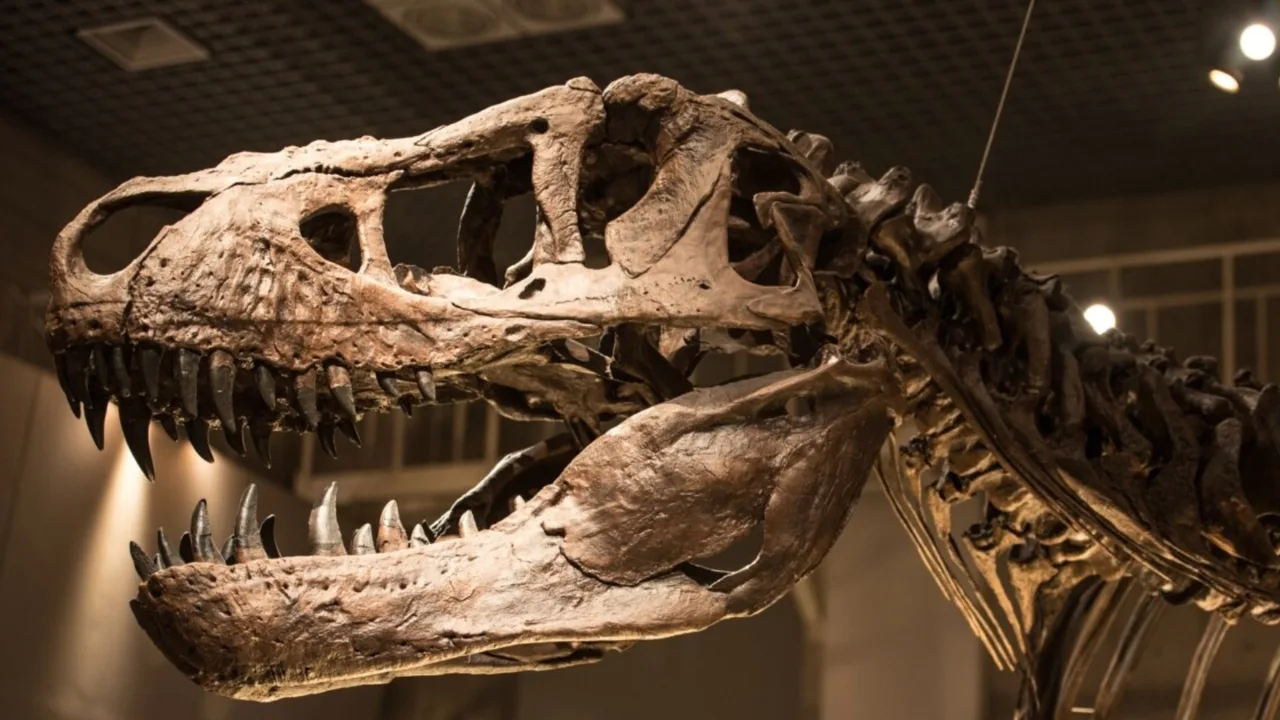
Scientists a 66-million-year-old dinosaur bone have identified preserved molecules of collagen, the main protein in bone tissue. The unusual discovery is prompting scientists to reconsider the view that all organic molecules inevitably disappear during fossilization.
The study results Analytical Chemistry journal.
The bone came from a dinosaur fossil found in the Hell Creek Formation in South Dakota, USA. It belonged to an edmontosaur from the late Cretaceous period, weighing approximately 22 kilograms.
Scientists detect traces of collagen in dinosaur bone
During the study, specialists found in the sample an amino acid characteristic of collagen, hydroxyproline. This strengthens the theory that parts of ancient organic substances can remain preserved in fossils for millions of years.
However, the scientists also considered the possibility of accidental contamination with modern proteins. They therefore used several scientific methods, including protein sequencing and tandem mass spectrometry.
The analyses showed that the organic substances identified had not entered later from the external environment, but had come directly from the fossil itself .
New evidence in a 30-year scientific debate
The question of whether proteins can retain their composition for tens of millions of years has been debated in science for nearly 30 years.
A research team led by University of Liverpool professor Steve Taylor has produced new results showing that such long-term preservation may theoretically be possible under certain natural conditions.
Experts say the discovery is highly significant for paleontology. If ancient proteins can remain preserved in some fossils for millions of years, scientists may gain much more information about the biology and evolution of extinct animals.
A “treasure” may be hidden among ancient fossils
The study authors have put forward another intriguing possibility. In their view, the archival specimens collected and preserved over the past century may include many previously unstudied samples with preserved collagen.
If these theories are confirmed by further research, paleontologists may gain a vast “treasure trove” for studying extinct species at the molecular level .
This would open new opportunities to enrich our understanding of dinosaurs that lived millions of years ago and study their biological characteristics in greater depth.


Comments 0
…