


A 23-Meter Fatal Flight: BMW with 4 Students Falls from Overpass in India
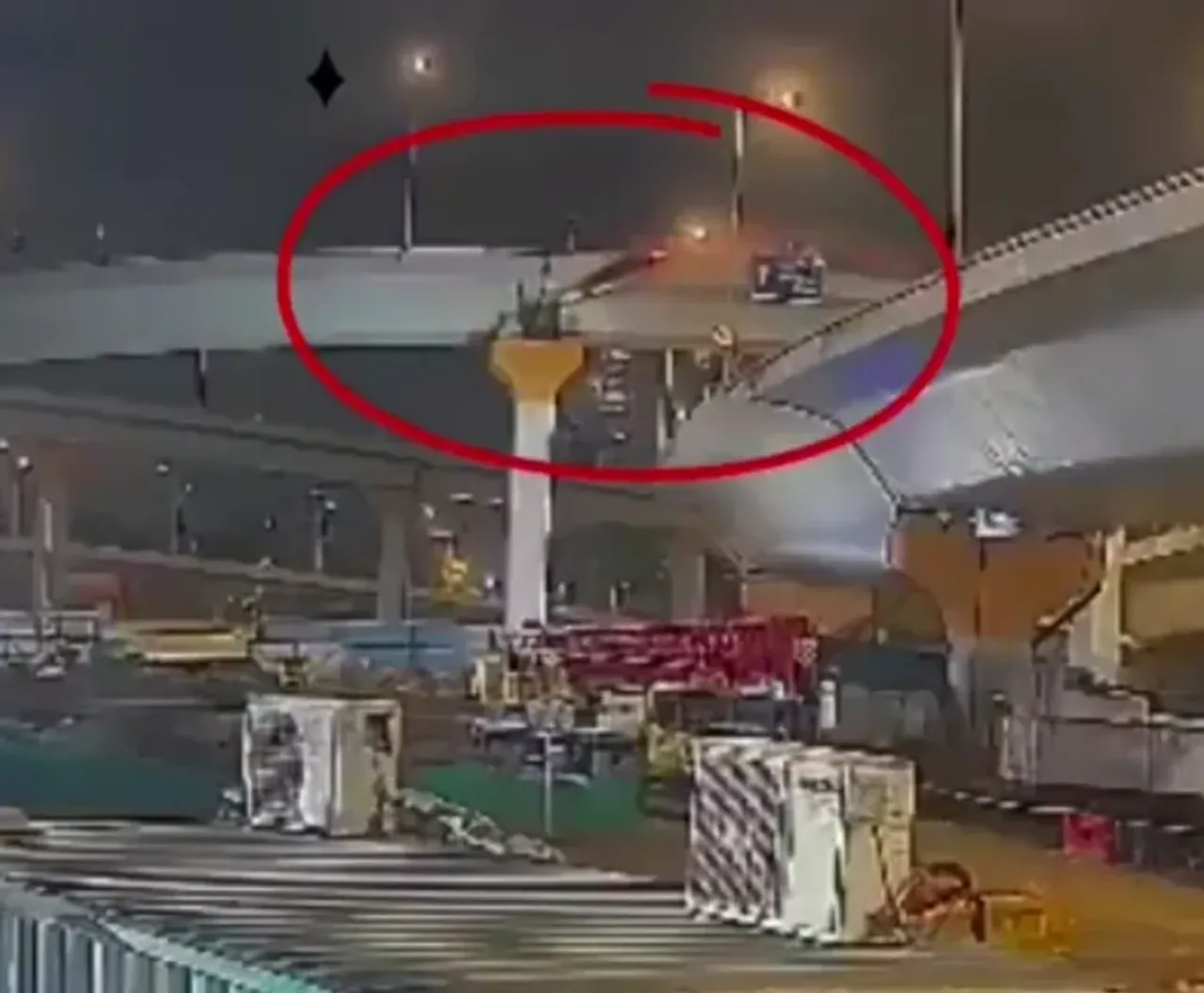
A horrific road accident has occurred in India, shaking the public and sparking widespread discussion on social media. A high-speed BMW carrying four students crashed through an overpass wall, plummeting 23 meters (equivalent to the height of a multi-story building). The tragic incident was captured on CCTV, and the video has spread rapidly online.
According to local media, the youths were returning from a night out when the driver lost control, smashing through concrete and metal safety barriers before falling into a construction site for a parking lot. The impact was so severe that three students died on the spot, while the fourth was rushed to the intensive care unit in critical condition. Preliminary police reports suggest the vehicle was traveling at at least 120 km/h.
So, how did a young driver's risk-taking and high-speed night driving turn into an irreparable tragedy? Why can't safety barriers on overpasses withstand such impacts, and can the life of the surviving student be saved?
«120 km/h, shattered barriers, and 3 victims»: 5 key points of the incident
The most important facts identified regarding the horrific accident in India:
23-meter fall: A high-speed car broke through the overpass safety wall and fell into a parking lot under construction;
Death of 3 students: Three of the four students in the car died at the scene due to severe injuries;
One person fighting for life: The only surviving student was hospitalized with severe injuries and remains under medical supervision;
Night drive tragedy: The youths were returning from a night drive around the city when the accident occurred;
120 km/h speed: Police forensic experts estimate the car was moving at a speed significantly higher than the speed limit.
Accident in India: Details of the incident and statistical indicators
Analysis of the tragic accident details:
Criteria and parameters | Incident details and recorded facts |
Location of the incident | Road overpass (India) |
Fall height | 23 meters (approx. 7-8 story building height) |
Car model | BMW |
Number of passengers | 4 students |
Scale of casualties | 3 dead, 1 critically injured |
Estimated speed | Around 120 km/h |
Point of impact | Construction site of a parking lot |
Road safety and forensic analysis: Why does speeding on bridges and overpasses end in death?
Conclusions of road safety experts and specialists:
Inertia and kinetic energy force: When a multi-ton vehicle traveling at 120 km/h hits a turn or barrier, the kinetic impact force multiplies; even thick concrete barriers cannot withstand such a direct impact;
«Empty road» effect and night illusion: Empty roads at night create a false sense of security in young drivers and encourage speeding; however, reduced night visibility drastically cuts reaction time;
No room for error on overpasses: On a normal road, a car might stop on the shoulder, but on overpasses and bridges, any loss of control leads directly to a fall and inevitable death;
Infrastructure control: Incidents like this highlight the urgent need for reinforced metal barriers on bridges and overpasses, as well as an increase in automated speed-monitoring cameras.
The horrific video of this tragedy serves as another serious warning that excessive speed and negligence on the roads can claim lives in seconds.
In your opinion, what should be done to prevent such tragic incidents on bridges and overpasses — building higher and stronger concrete barriers or toughening penalties for speeding at night? Leave your thoughts in the comments and share this article to warn other drivers!



Comments 0
…