


Iranian President Masoud Pezeshkian delivers a sharp blow to international hypocrisy (video)
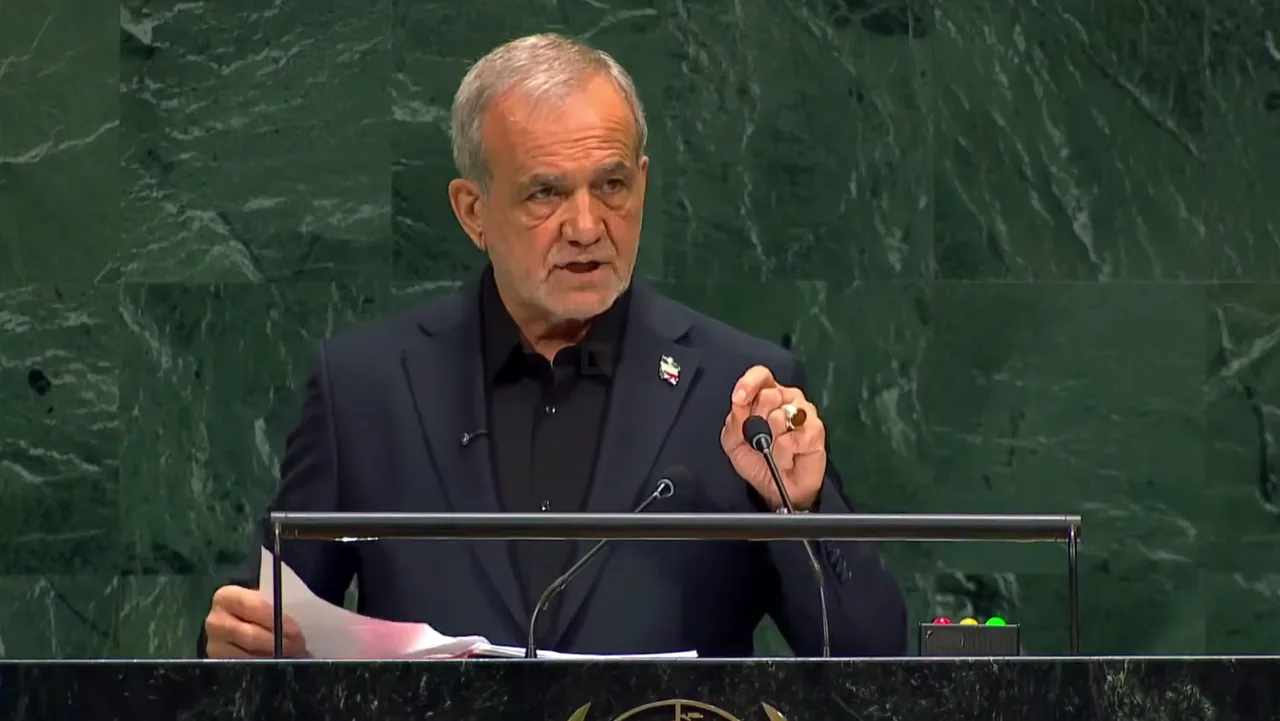
Military confrontation and nuclear tension in the Middle East have reached a new diplomatic flashpoint. President of the Islamic Republic of Iran, Masoud Pezeshkian, openly addressed the international community and global security organizations, harshly exposing the immense hypocrisy and double standards in world politics. The Iranian leader firmly emphasized that nuclear weapons and mass destruction tools dragging the entire region into the fires of war actually rest in Israel's hands: "Atomic and nuclear bombs exist within the Israeli regime, yet for some reason, international inspectors are incessantly demanded to come to Iran! Israel has brutally killed over 70,000 innocent people in the Gaza Strip, whereas Iran was subjected to attacks while seeking a path to peace at the negotiating table."
Pezeshkian passionately criticized the fact that Israel is not a party to the Treaty on the Non-Proliferation of Nuclear Weapons (NPT), has never allowed IAEA inspections throughout its history, and yet is granted full opportunity to freely bombard any capital in the Middle East. This statement has once again propelled the crisis in Gaza, the threat of direct strikes between Tehran and Tel Aviv, and the issue of unfair distribution of nuclear inspections to the very top of the global agenda.
So, what evidence lies behind Pezeshkian's bold accusation, why is Israel's nuclear arsenal being concealed from international inspections, and towards what dangerous point is the nuclear confrontation in the Middle East heading?
"Israel's nuclear bomb, 70,000 casualties, and IAEA inspections": 5 key points of the statement
The most important facts and analytical theses from Masoud Pezeshkian's speech:
Clear indication of the center of nuclear weapons: Pezeshkian openly stated that the real weapon of mass destruction and nuclear bomb in the region is in Israel's hands;
The paradox of unfair inspections: He condemned the fact that the state possessing the atomic bomb remains sidelined while all inspections and pressures are directed at Iran, which advocates for peaceful atoms;
Over 70,000 casualties in Gaza: It was officially mentioned that more than 70,000 innocent civilians have died as a result of Israel's military actions;
Strikes at the negotiating table: The fact that Iran is targeted by bombardments while conducting diplomatic dialogue was assessed as hypocrisy;
Immunity outside the NPT treaty: He strongly criticized that Israel gains the freedom to bomb any territory without recognizing the Non-Proliferation Treaty and without letting inspectors in.
Nuclear confrontation in the Middle East: Comparison of Iran and Israel's status
Analysis of international law, nuclear inspections, and the actual situation of the parties:
Indicators and criteria | Islamic Republic of Iran | Israeli regime |
Status of nuclear weapon possession | Officially denied (peaceful nuclear program) | Unofficially recognized nuclear state (approx. 90–200 warheads) |
NPT (Non-Proliferation Treaty) | Member state (has obligations) | Not a member (undertook no obligations) |
IAEA inspector oversight | Regular inspections and camera monitoring | Not a single inspection permitted |
Scale of regional strikes | Retaliatory strikes and defensive posture | Freely targeting capitals in Gaza, Lebanon, Syria, and others |
Civilian casualty rate | The side defending against attacks | Over 70,000 people killed in Gaza |
International pressure and sanctions | Years-long severe economic embargo and pressure | Diplomatic and military protection by Western countries |
Geopolitical and security expertise: Why is Pezeshkian's statement a mirror of global injustice?
Conclusions of international security analysts and orientalists:
Exposure of "double standards": The global community has kept Iran under unprecedented sanctions for decades, accusing it of enriching uranium and potentially creating a nuclear weapon; however, the fact that Israel—which possesses the Dimona nuclear center and whose actual atomic bomb is no secret—is not subject to any international oversight demonstrates a deep crisis within the UN and IAEA systems;
Responsibility against the backdrop of "70,000 casualties": The humanitarian tragedy in the Gaza Strip and the deaths of tens of thousands of women and children show that Israel acts with a sense of total impunity in the region; Pezeshkian linking these figures to nuclear policy places Western politicians in a difficult moral corner;
The danger of "targeting any capital": Tel Aviv's unrestricted airstrikes against facilities in Damascus, Beirut, and Tehran completely erase the borders of sovereign states in the Middle East; Iran believes these actions are backed by Israel relying on its own nuclear deterrence;
Prospects for negotiations and Tehran's position: Pezeshkian's statement that "we were at the negotiating table" signifies Iran's readiness for a diplomatic solution, but under unilateral threats and attacks, such dialogue loses its meaning.
Masoud Pezeshkian's statement forcefully raised from the highest podiums that in order to achieve genuine stability in the Middle East, first of all, all states possessing nuclear weapons, including Israel, must be subject to international oversight.
In your opinion, is it fair for Israel to possess nuclear weapons while remaining completely exempt from IAEA inspections and all pressure being directed solely at Iran? Can the international community abandon double standards in nuclear oversight to stop the war in the region? Leave your personal thoughts in the comments and share this exclusive analysis highlighting the painful geopolitical reality of the Middle East with all politics enthusiasts!



Comments 0
…