


A massive 6-meter whale shark dies off the coast of Colombia
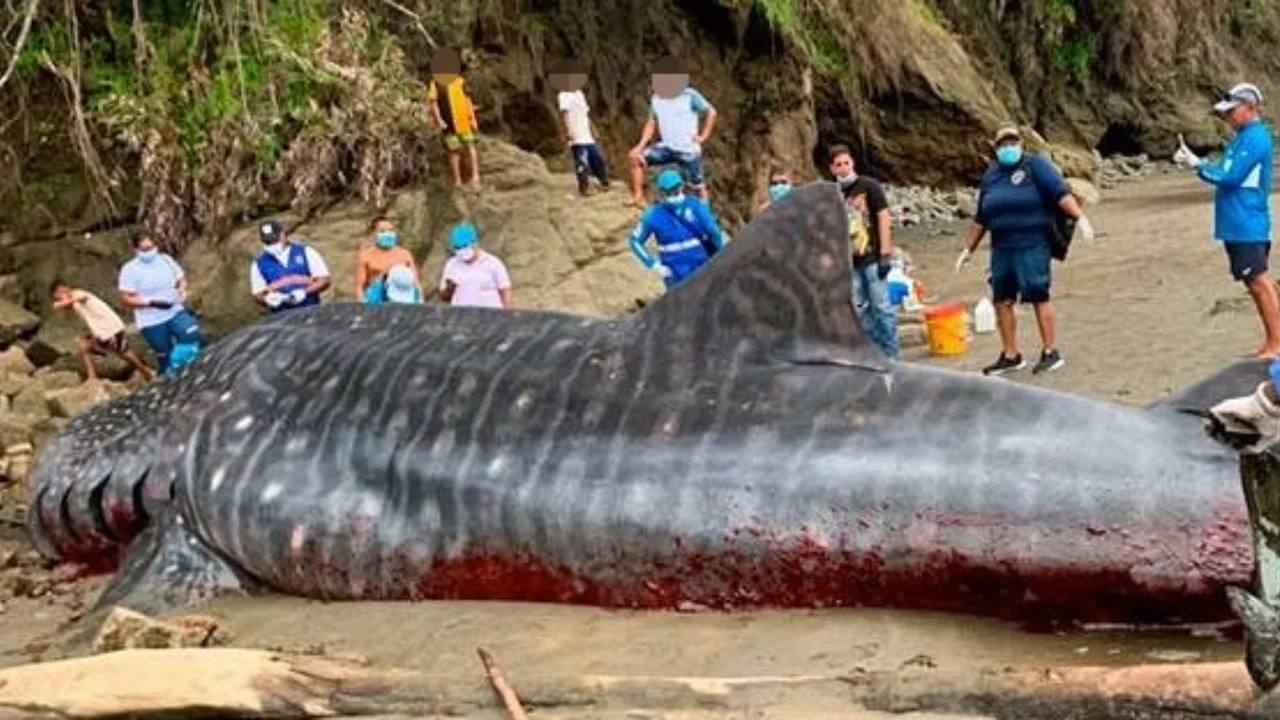
A giant whale shark, nearly 20 feet (6 meters) long, died after washing ashore on the Pacific coast of Colombia.
The whale shark (Rhincodon typus), considered the largest fish in the world, was found motionless on the sand of a remote beach in the Nabugá area on the morning of Wednesday, September 30. The massive creature, whose length was comparable to a small boat, was still alive when found.
Local residents tried to help the shark. Villagers poured seawater over its body and tried to pull it back into the water from the shallow sandy area using boats. However, the outboard motors of the boats were not powerful enough to move the giant creature.
By the time environmental protection officers arrived at the Nabugá beach, the whale shark had already died.
Codechocó, the regional environmental organization in Colombia's northern Pacific region, immediately activated a special protocol established for tangled or stranded wildlife at sea in response to the incident.
Units of the Coast Guard, local government representatives, and environmental organizations were dispatched to the scene. However, poor telephone reception, the rugged terrain, and the need to travel about an hour and a half by boat from the town delayed the rescue operations.
Kary Sánchez Minota, deputy director of Codechocó, stated that by the time specialists arrived at the beach, the animal had already died, and the process of properly disposing of its carcass began immediately.
The specialist later stated that special samples had been taken from the marine animal. This was because the timing of the whale shark's stranding did not coincide with the usual migration season for this species.
"This is not the migration season for this species. Therefore, we need to determine what caused the death of this animal," Sánchez Minota said.
During the investigations, it will be studied whether visible injuries on the shark's body, various diseases, entanglement in fishing gear, or severe natural conditions in the sea caused its death.
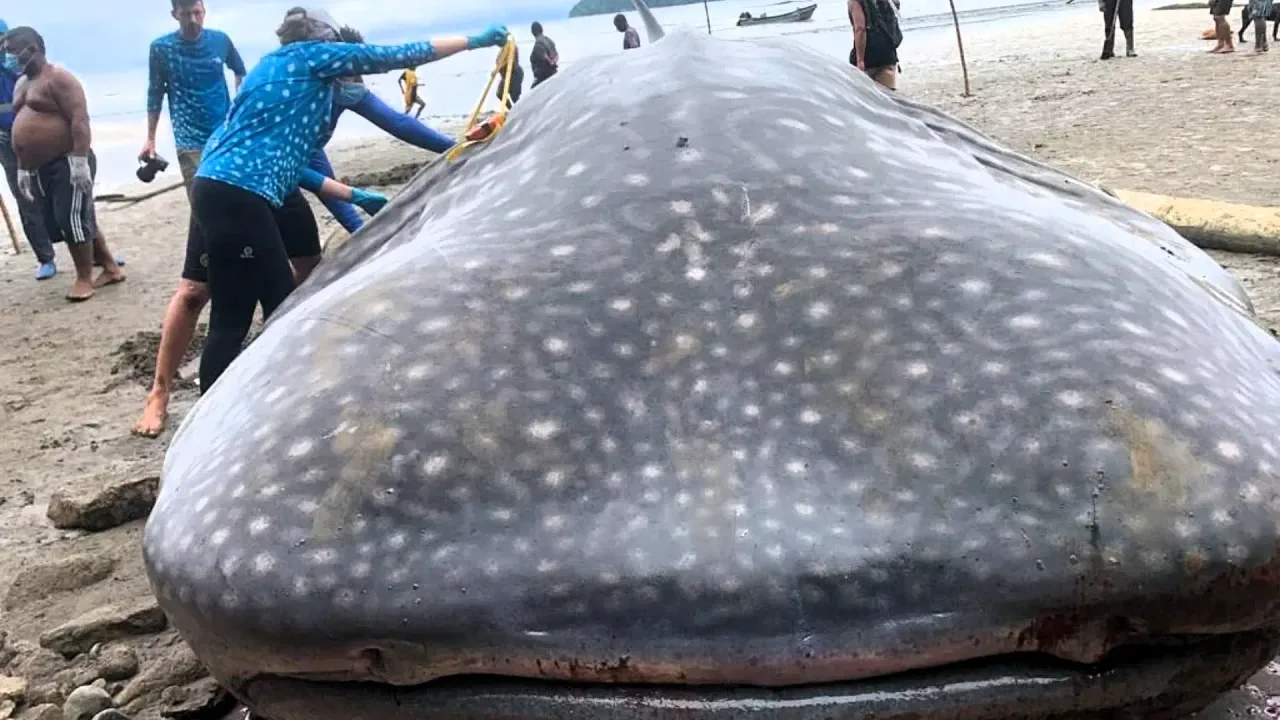
Codechocó's statement also emphasized the importance of taking samples, as the whale shark's stranding did not fall within the typical season for the region.
Normally, whale sharks come to these coasts of Colombia in the spring to feed on plankton and small fish. They can also be encountered in the open sea in other seasons. However, finding such an animal very close to the shore at the end of September is considered unusual.
In a video filmed at the scene and circulated on social media, a local resident also expressed concern. According to him, the residents of Nabugá did not know how to remove the stranded giant whale shark and asked the authorities for help.
Local residents tried to move the animal, but the boat motors were not powerful enough. Therefore, it was stated that a larger motor was needed to get it off the beach.
According to Need To Know, responsible agencies have also begun the disposal of the animal's carcass. This is aimed at minimizing potential sanitary and pollution risks to public health and the environment.
Sánchez Minota advised locals not to touch stranded marine animals with their bare hands. She noted that marine animals are likely to carry parasites that could affect human health.
Currently, specialists are working to determine why the whale shark stranded and what factors contributed to its death.
Whale sharks are filter-feeding marine creatures and the largest fish on Earth. Adult whale sharks can reach a length of 12–20 meters and a weight of about 20 tons.
This species is listed as endangered by the International Union for Conservation of Nature (IUCN).


Comments 0
…