


Archaeologists discover unexpected room under Roman emperor's palace
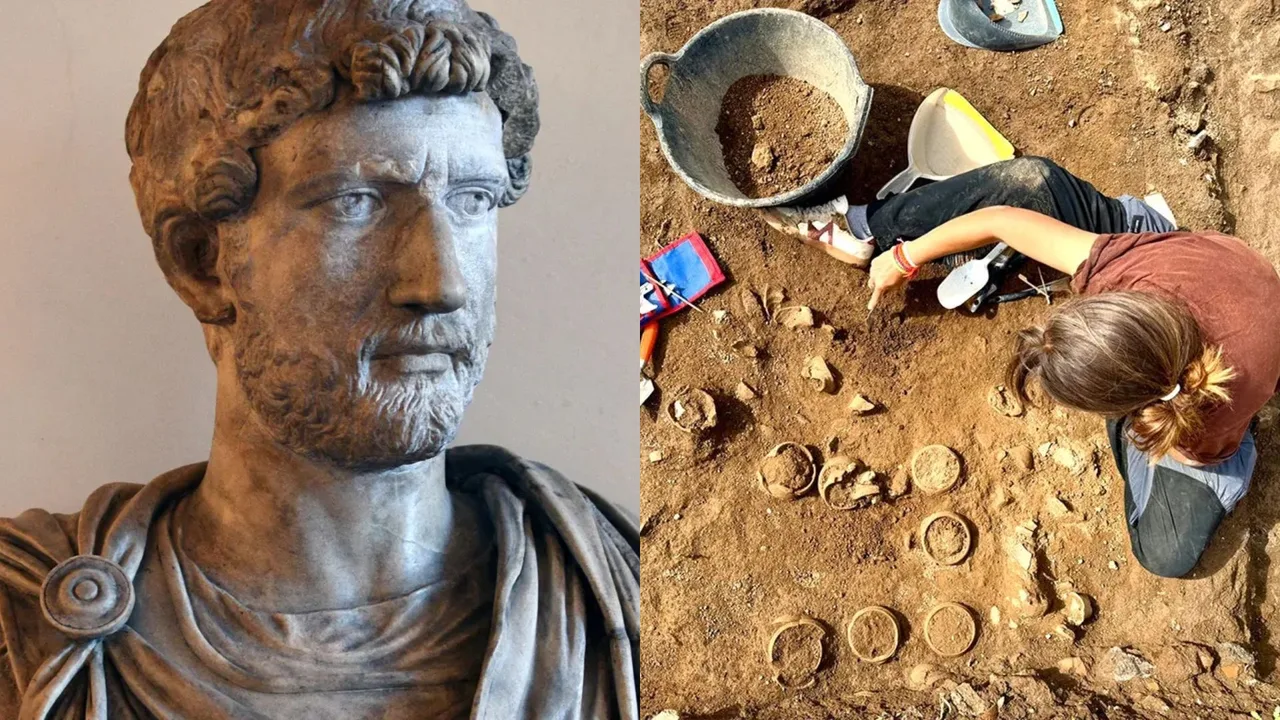
In the famous Hadrian's Villa in Tivoli, Italy, archaeologists have made another significant discovery. During excavations, a hidden underground structure was found beneath the palace belonging to one of Rome's legendary emperors. Experts believe that this find could be the oldest structure known to date in the complex. This was announced by the Pablo de Olavide University (UPO) in Seville, Spain.
It turns out that this vast palace was the residence of the famous Emperor Hadrian, who ruled the Roman Empire from 117 to 138 AD. Hadrian, who built the famous Hadrian's Wall in northern Britain, holds a special place in history for his travels across the Roman Empire. Today, his villa is a UNESCO World Heritage site, attracting thousands of tourists and scholars every year.
The underground structure discovered by archaeologists is estimated to date back to the Roman Republic period, which spanned from 509 to 27 BC, long before Hadrian's time. This means the structure existed centuries before the imperial palace was built.
Experts believe the underground rooms may have served as storage areas or silos for grain. Later, the building fell into disuse and was partially filled with ancient construction debris and ceramics.
Project leader and archaeologist Rafael Hidalgo noted that it was unexpected for the structure not to be completely buried in soil. Further excavations revealed even more interesting findings.
Many ceramic fragments were found in the underground rooms, as well as architectural terracotta decorations that once adorned the roofs of nearby buildings. Some decorations feature dog heads, while others depict bull heads, preserving valuable information about ancient Roman architecture.
Scientists say the materials found are crucial for determining when this ancient villa was built and how long it was in use. This helps enrich knowledge about the historical complex that existed before Hadrian's palace.
Another remarkable aspect is that the vaulted roof of the underground structure has been preserved in almost perfect condition. Archaeologists note that in such structures, roofs usually collapse over time. However, this time, even the traces of the wooden molds used by the ancient Romans during the concrete pouring process were clearly visible.
Experts say this discovery could fill important gaps in Roman history, as Hadrian demolished much of the previous buildings when constructing his palace, leaving very little information about them.


Comments 0
…