


The first atomic bomb explosion in history created a new form of matter
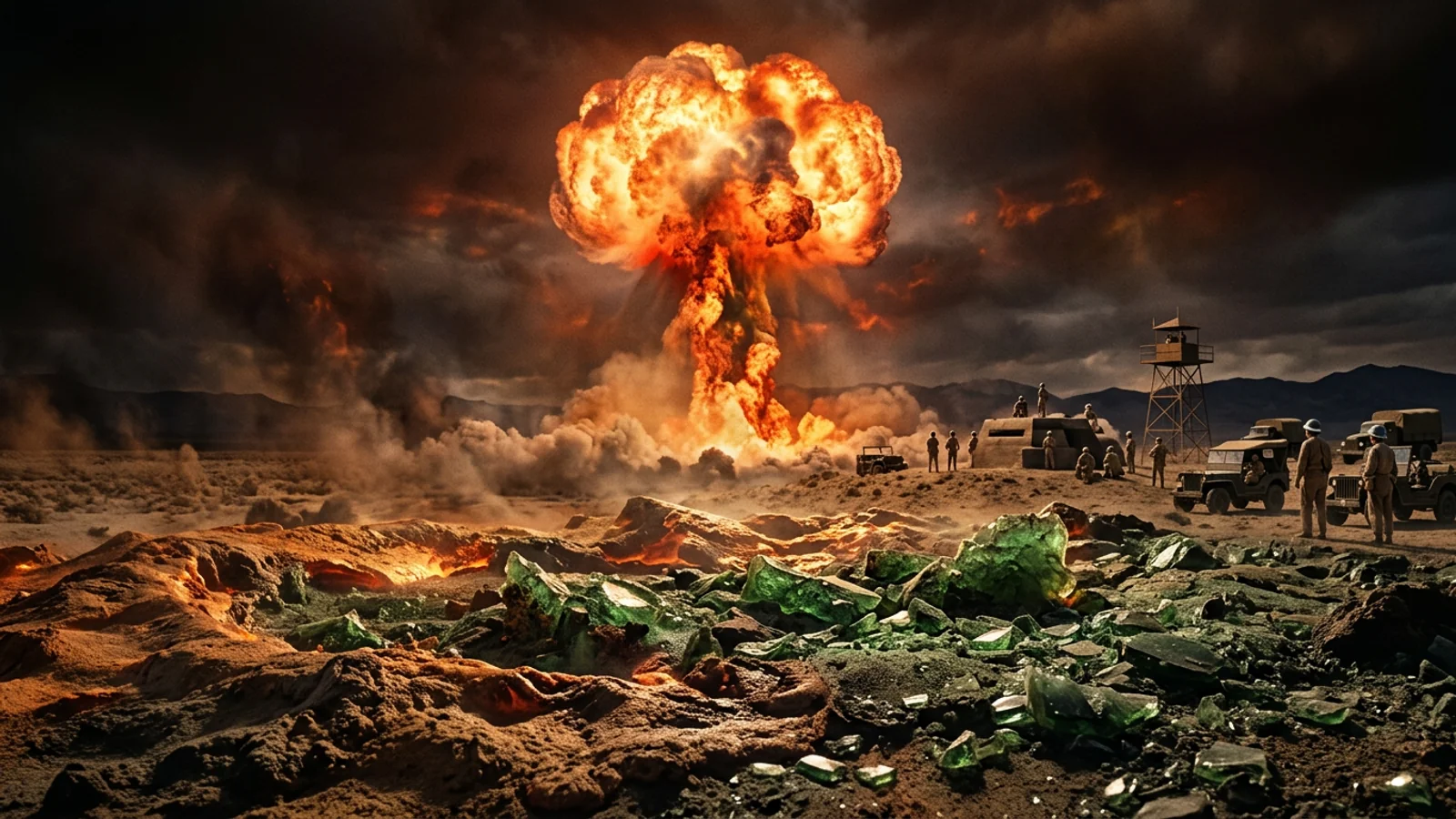
US and European scientists have identified a previously unknown form of silicon clathrates within trinitite, a mineral formed as a result of the 1945 "Trinity" nuclear test. The extreme temperature and pressure generated during the explosion melted the soil, creating this unique glass-like substance. This is reported by Ixbt.com reports .
Researchers found unusual crystal structures containing calcium, copper, and iron atoms in trinitite samples. Such exotic materials form only under conditions of extremely high pressure and temperature, making them nearly impossible to recreate in a laboratory environment.
A team led by Princeton University professor Paul Steinhardt had previously discovered quasicrystals in the same area. The new finding suggests that the process of matter formation during a nuclear explosion is much more complex than scientists had assumed.
Calculations performed using quantum chemistry methods did not fully align with existing theories. This is prompting scientists to reconsider the physical and chemical processes that occurred during the explosion and to study more deeply how extreme conditions affect the structure of matter.
As a reminder, the "Trinity" test was conducted on July 16, 1945, at the "White Sands" testing ground in New Mexico. It was the first nuclear explosion in human history, carried out as part of the "Manhattan Project".



Comments 0
…