


Juno Tests Detonation Engine for Satellites
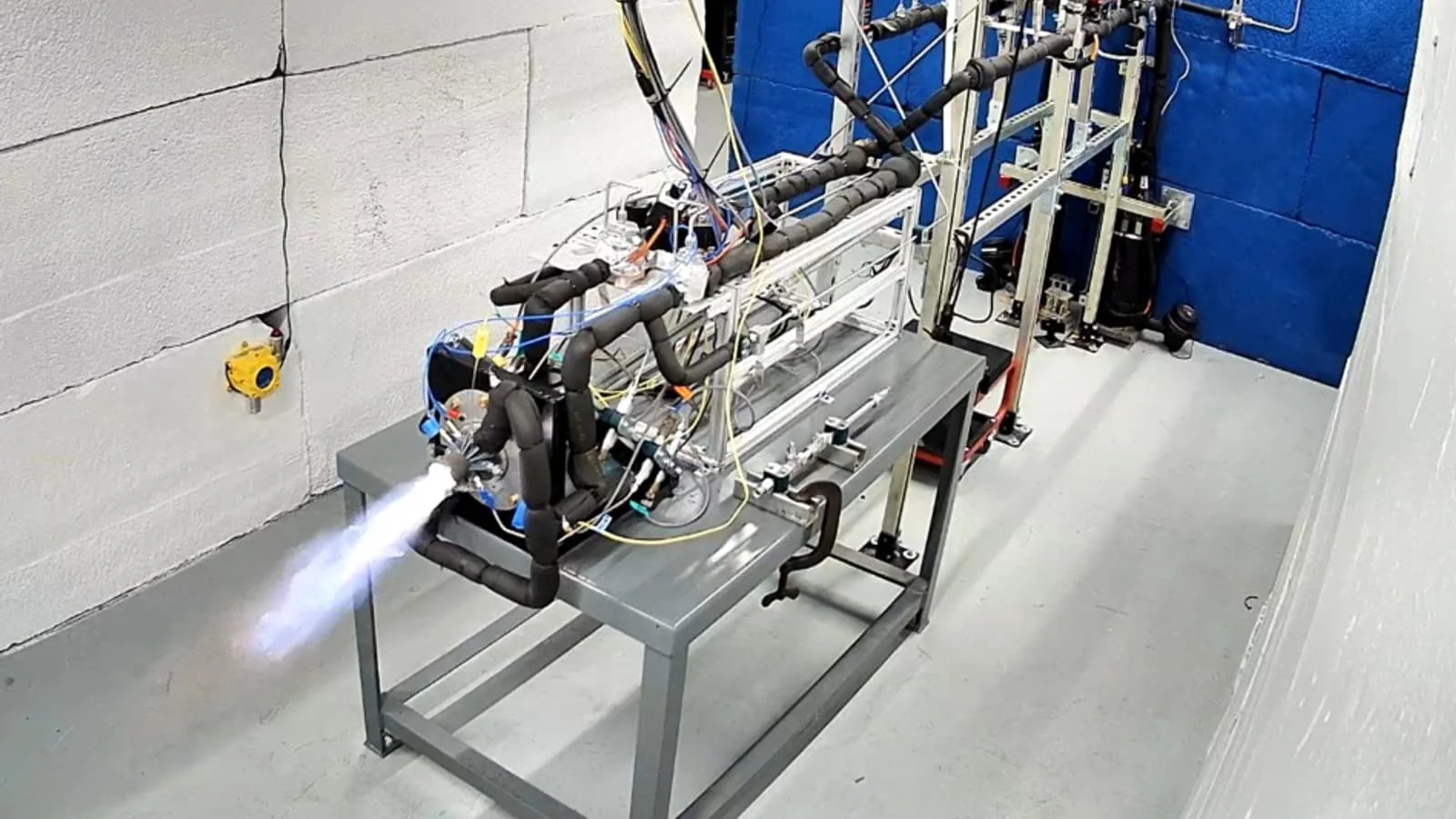
US-based Juno Propulsion has raised $1.4 million in investment to finalize the development of a new type of engine for satellites—the Rotating Detonation Engine (RDE). These funds will help bring the device to its first orbital tests, scheduled for the first quarter of 2027. The main project, named Iris, is expected to be launched into space as a payload on the Momentus platform. This was reported by Ixbt.com news .
Rotating detonation engines are considered one of the most promising areas in rocket technology. Unlike traditional engines, RDE technology operates via a continuously rotating detonation wave instead of steady combustion. Theoretically, this approach allows for higher efficiency with the same amount of fuel consumption. According to Alexis Harroun, CEO of Juno Propulsion, conducted tests showed 7 percent higher efficiency than traditional schemes.
Another significant advantage of the new development is the fuel type. Many satellites still use highly toxic hydrazine, while the Juno system operates on a mixture of nitrous oxide and ethane, which is safer and cheaper. During the first flight, the engine's ignition in space, its ability to perform long-term maneuvers for orbit changes, and high-precision short impulses will be tested.
Currently, organizations such as JAXA and Venus Aerospace are also working on similar projects, but Juno plans to stand out in the market by creating its own production facilities. If the 2027 demonstration is successful, these engines could become a new standard for small satellites, providing high efficiency, compactness, and low-cost operation.


Comments 0
…