


Parker Solar Probe approaches the Sun at a distance of 6.1 million kilometers
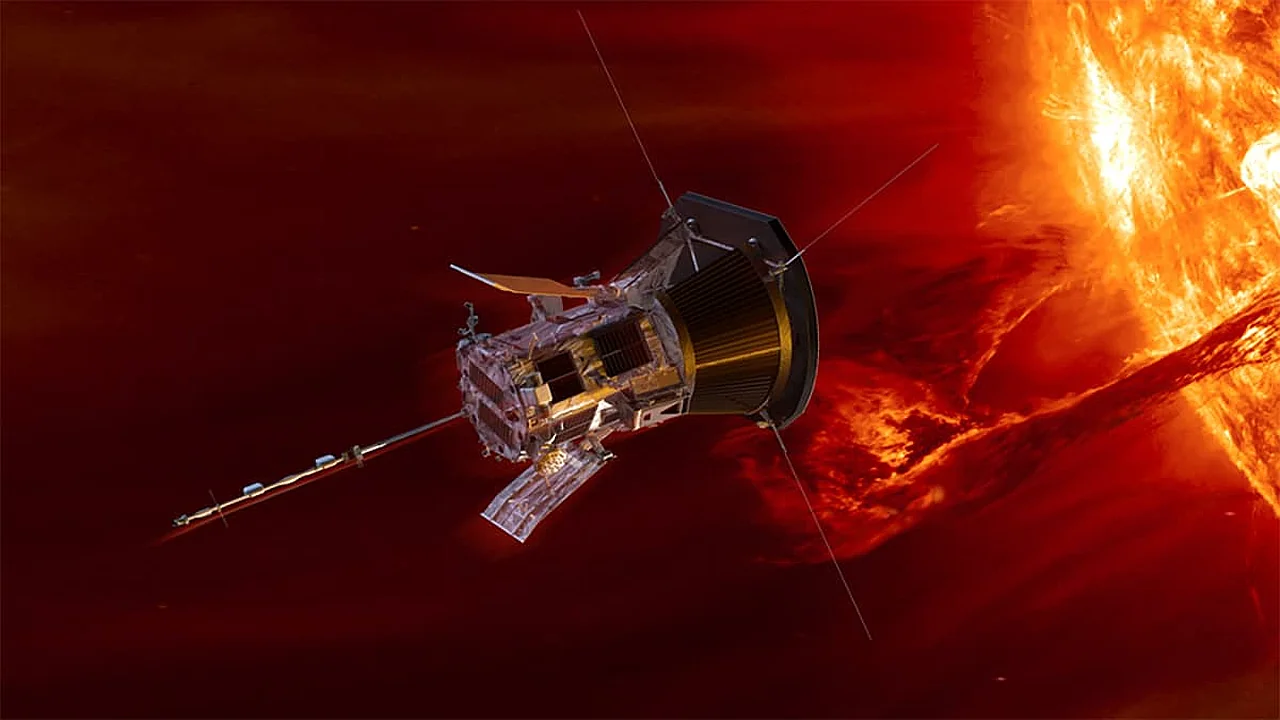
The Parker Solar Probe has successfully completed its latest extreme close approach to the Sun. According to experts at the Johns Hopkins Applied Physics Laboratory, the spacecraft transmitted a beacon signal to Earth after nine days of autonomous operation. This was the probe's 28th flight through the Sun's outer atmosphere, the corona. This is reported by news from.
During the closest approach on June 8, the Parker Solar Probe matched its own personal records. The probe reached a distance of approximately 6.1 million kilometers from the star's surface, which is less than 5 percent of the distance between Earth and the Sun. Driven by solar gravity, the spacecraft reached speeds of nearly 692,000 km/h. At this speed, it would take less than 40 minutes to travel the distance between Earth and the Moon.
This mission is significant as it coincides with the solar maximum, the peak of the 11-year solar activity cycle. Being directly inside the solar corona, the Parker Solar Probe collected vital data on the origin of solar wind, magnetic field structures, and space weather mechanisms. Although the probe's 11.4 cm thick carbon-composite heat shield reached temperatures of 926°C, the onboard electronics remained at a safe temperature.
From June 17 to June 30, the primary scientific data collected during the transit through the solar corona will be transmitted to Earth. The findings will help scientists better understand solar processes and improve the accuracy of space weather forecasts, which are critical for satellites, communication systems, and power grids.


Comments 0
…