


Next Expedition to ISS: Soyuz MS-29 Crew Declared Ready for Flight
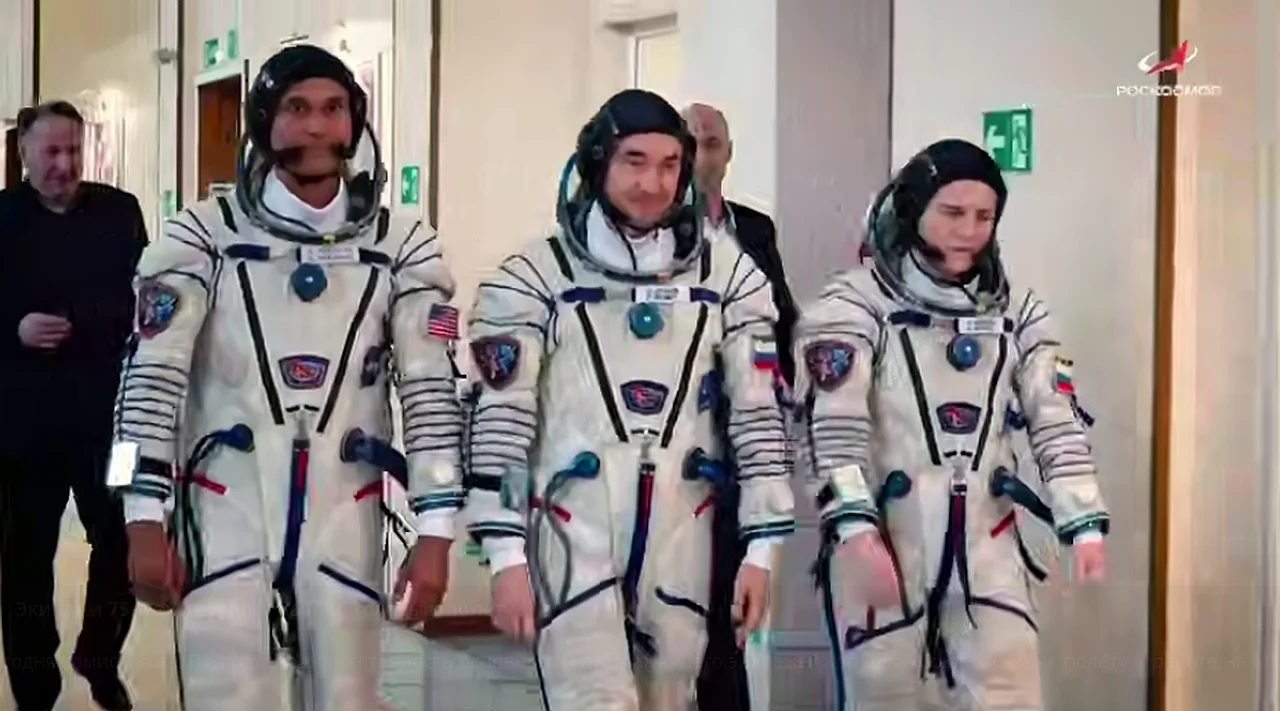
The primary and backup crews of the Soyuz MS-29 crewed spacecraft, which will carry out the next long-term expedition to the International Space Station (ISS), have been officially confirmed as fully ready for flight. Following final checks by the state commission, it was determined that the cosmonauts' qualifications and health fully meet the requirements for performing the orbital mission. This is reported by Ixbt.com news reports.
This process, held at the Gagarin Cosmonaut Training Center, is one of the decisive stages for the mission participants. Specialists tested not only the crew members' technical knowledge but also their ability to act in unexpected situations. Following the commission's positive conclusion, the group members will head to the Baikonur Cosmodrome for the final stage of preparation.
Crew Composition and Flight Date
According to the plan, the launch of the Soyuz MS-29 spacecraft is scheduled for July 14 of this year. The primary crew consists of Russian cosmonauts Anna Kikina and Petr Dubrov, as well as NASA astronaut Anil Menon. It is worth noting that this crew was formed within the framework of international cooperation to expand the scope of scientific research on the station.As per tradition, a backup group also underwent training alongside the primary crew. The backup team includes cosmonauts Konstantin Borisov and Dmitriy Petelin, and NASA representative Denise Burnham. They will perform the same level of training as the primary crew until the flight and remain ready to take over the mission if necessary.
Objectives of the Orbital Mission
After the spacecraft docks with the ISS, the new expedition members will join the team currently operating on the station. They are tasked with several critical objectives, including conducting complex scientific experiments, maintaining station systems, and ensuring the overall stability of the platform.According to Ixbt.com, the research conducted during this expedition will cover the fields of biology, physics, and space medicine. Such missions allow not only for the development of fundamental science but also for testing technologies necessary for the future colonization of the Moon and flights to Mars.
For the Central Asian region, and Uzbekistan in particular, the significance of this flight lies in the fact that every launch from the Baikonur Cosmodrome remains the center of attention for aerospace specialists and enthusiasts in the region. The success of the mission marks a new stage of cooperation in international space exploration.


Comments 0
…