


Cosmic Map Updated: Euclid Telescope Captures Unprecedented Image of Milky Way Center
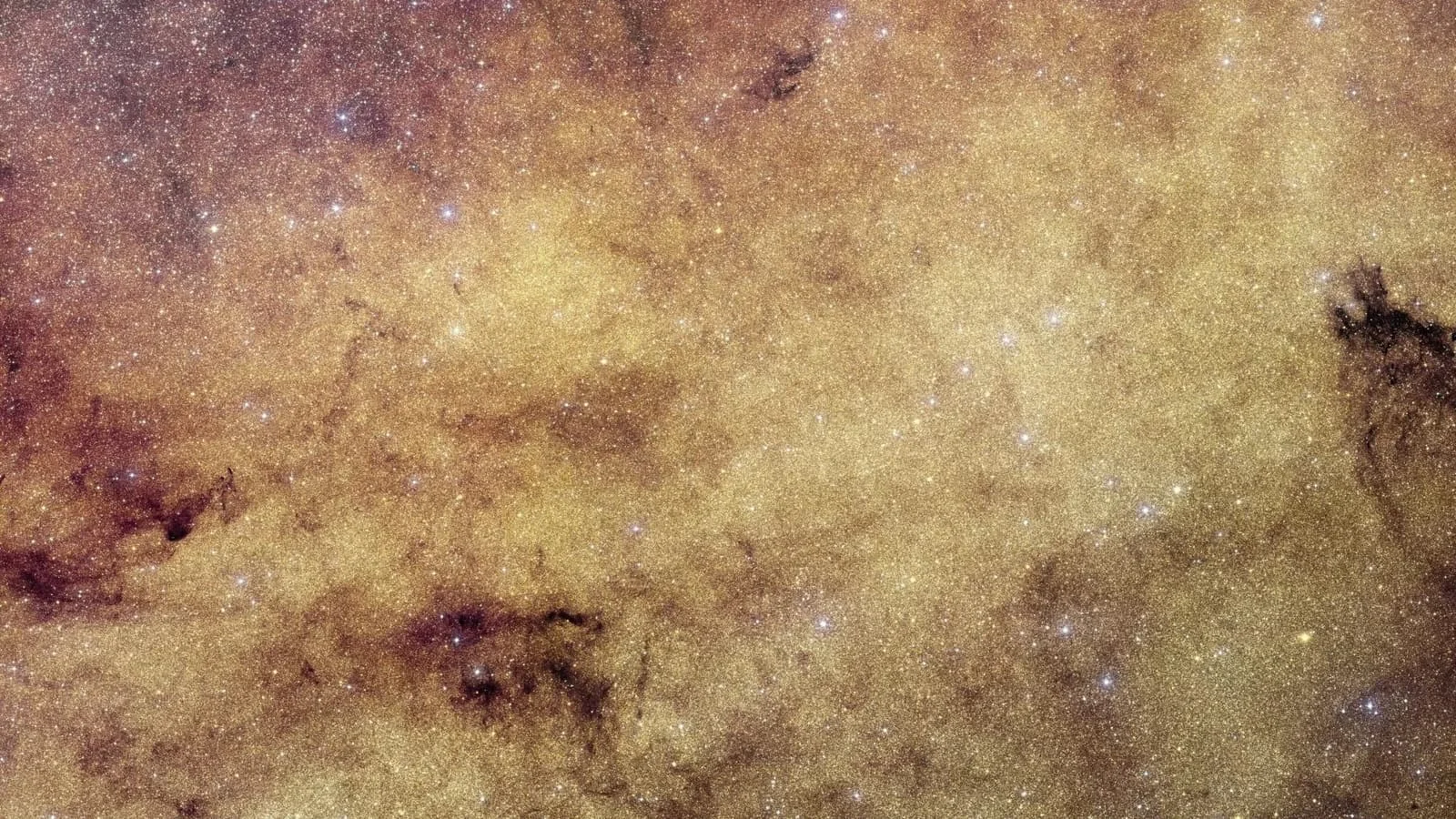
The Euclid telescope, launched by the European Space Agency (ESA), has created the most detailed image of the center of the Milky Way galaxy to date. This massive mosaic, obtained from just 26 hours of observation, contains more than 60 million stars. This discovery is not just an astronomical photo, but will serve as a key "reference map" for searching for exoplanets in the future. This is reported by Ixbt.com reports .
Thanks to its wide field of view, the Euclid telescope accomplished this complex task in a record-breaking short time. For comparison, the Keck Observatory in Hawaii, one of the most powerful observatories on Earth, would have spent nearly 2000 hours to capture an image of the same depth. Euclid completed this in just over a day, covering an area 270 times wider than the Hubble telescope in a single attempt.
A New Stage in the Search for Exoplanets
The resulting image is of revolutionary importance for finding new planets via the gravitational microlensing method. This method is based on the amplification of light from a distant star under the gravitational influence of another star in the foreground. If a planet exists around the foreground star, it creates a characteristic change in the light signal. According to ixbt.com, almost all of the nearly 300 exoplanets found in the last 20 years were identified specifically in the direction of the galactic center.Jean-Philippe Bonnefoy, an astronomer at the Paris Institute of Astrophysics, emphasized that a densely populated star field is necessary for such observations. The mosaic created by Euclid already includes 51 known planetary systems. This map will serve as a foundation for NASA's future Nancy Grace Roman Space Telescope project.
An important aspect of the new map is that it records the movement of stars and their initial positions. In the future, when the Nancy Grace Roman telescope detects a microlensing event, scientists will be able to rely on Euclid's data to accurately calculate the mass of the planets and their position in the system.
Discovering Cold and Distant Worlds
Unlike traditional methods, the microlensing method is not limited to only hot and large planets. It allows for the discovery of planets orbiting in cold and distant orbits outside the Solar System. Scientists speculate that almost every star in the Milky Way may have at least one such planet.Data on cold exoplanets like OGLE-2005-BLG-390Lb and objects in binary star systems currently within Euclid's field of view are being reviewed. According to project lead Valeria Petroni, the high-resolution images captured by the telescope will be an incomparable source for studying stellar motion, dust cloud structures, and galactic dynamics over time.


Comments 0
…