


Pumpkin Cooked in Space: Chinese Taikonauts Complete One Month on Tiangong Station
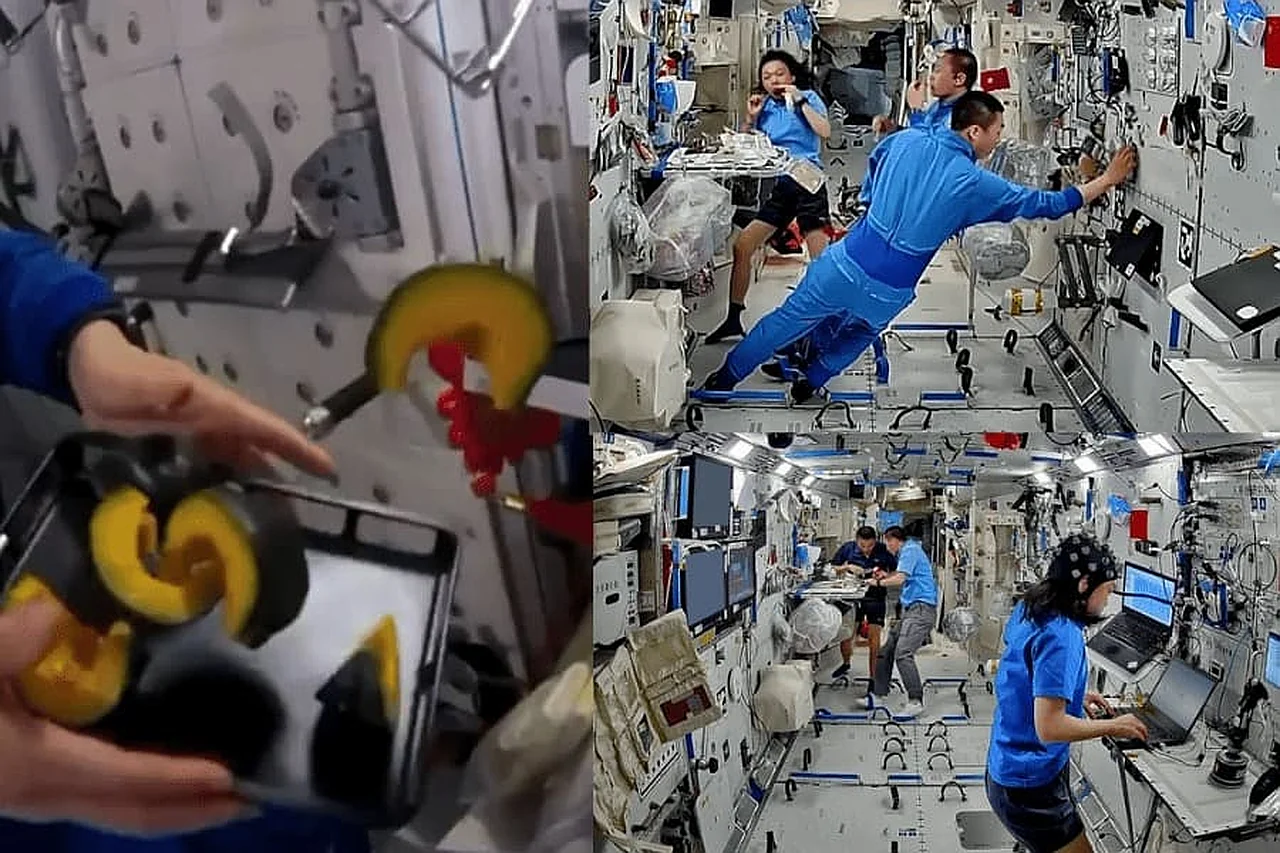
The crew of China's Shenzhou-23 mission has successfully completed the first month of their operations on the Tiangong orbital station. The team of taikonauts, consisting of Zhu Yangzhu, Zhang Zhiyuan, and Li Jiaying, not only performed complex scientific and technical tasks during this period but also took a new step in food preparation in space. This is reported by Ixbt.com news reports.
According to the China Manned Space Agency (CMSA), sweet pumpkin pieces were cooked for the first time on board the station using a special oven. Such domestic experiments are not merely recreational activities, but an important element in improving the psychological state and comfort of the crew during long-term space expeditions. The ability to prepare hot and tasty meals in space is a necessary preparation stage for future interstellar flights.
Medical Research and Microgravity Effects
The main part of the mission consisted of research in the field of space medicine. The taikonauts performed ultrasound examinations on each other, studying the condition of the neck, wrist vessels, and abdominal organs. This data is crucial for analyzing changes in blood circulation and the muscular system in the human body during prolonged weightlessness.Additionally, the activity of the human brain in orbit was a focus of the research. Using electroencephalography (EEG) equipment, crew members tested visual-motor coordination and behavioral reactions under various lighting modes. These experiments will help account for the human factor in the future colonization of the Moon and flights to further distances.
Synergy of Robotics and Traditional Medicine
The expedition program also included experiments on human-robot collaboration. By working with the station's onboard robot, the taikonauts collected necessary data to refine control algorithms for autonomous systems. Such robotic assistants are expected to become primary aids for humans in performing complex tasks in open space.Interestingly, the Chinese space program has not abandoned traditional folk medicine methods. Crew members are using a traditional Chinese medicine diagnostic complex to monitor their health. This method is valued as an effective tool for monitoring physiological indicators during multi-month flights.
As a reminder, the Shenzhou-23 spacecraft was launched into orbit on May 24, 2026. One of the primary goals of this mission is to conduct experiments on humans staying continuously in space for one year. All collected scientific results will serve as a foundation for China's future flights to distant objects in the Solar System, including the Moon.


Comments 0
…