


Faraday Future Patents New Technology to Increase Hybrid Vehicle Efficiency
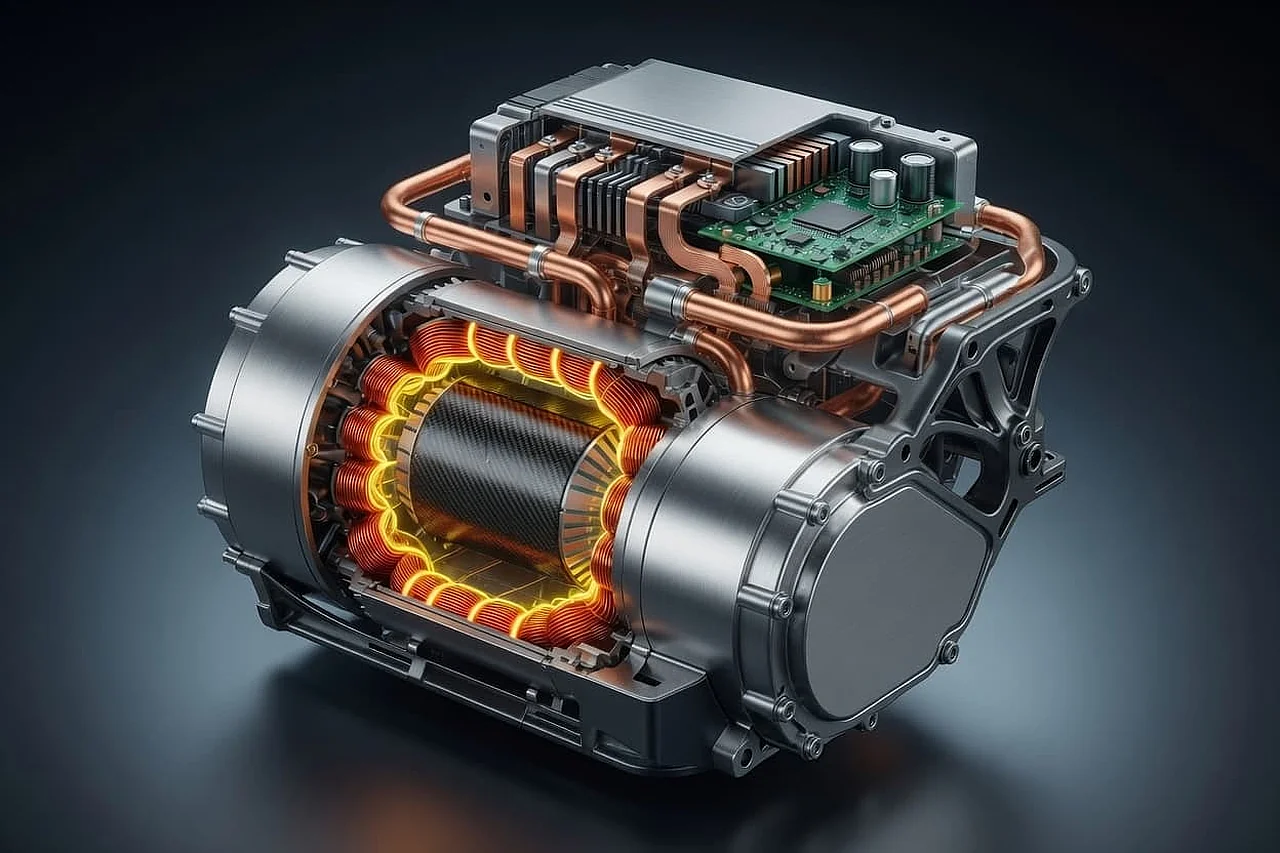
The US company Faraday Future has received a patent for a new transmission system expected to bring revolutionary changes to the world of hybrid vehicles. Patent No. 12,630,004 is designed for extended-range electric vehicles (EREV), fundamentally altering the operating principle of the internal combustion engine and electric motors. This technology serves to significantly increase the energy efficiency of hybrid systems while reducing their cost. This is reported by Ixbt.com news reports.
The main peculiarity of the new architecture is that the internal combustion engine (ICE), electric generator, and drive wheels can operate independently of each other. According to ixbt.com, while traditional hybrid systems have a strict mechanical link between all elements, Faraday Future engineers have developed flexible power distribution using several shafts and couplings. This allows for the free management of energy flow depending on driving conditions.
Technological Advantages and Operating Modes
Faraday Future specialists emphasize that in the new system, the engine can perform several functions simultaneously. Specifically, it can propel the car directly, generate electrical energy to charge the battery, or provide maximum power in conjunction with the electric motor. When necessary, all energy sources combine to push the vehicle's dynamic performance to the highest level.The company listed the following advantages of this scheme:
- Increased reliability due to reduced mechanical complexity of the transmission;
- Reduction in production costs;
- Optimization of fuel and electrical energy consumption;
- Increase in the distance traveled on a single charge and fuel fill.
This development is part of the AIHER (AI Hybrid Extended-Range Electric Powertrain) platform introduced by Faraday Future in 2025. This platform is aimed at creating hybrid systems managed by AI. For regions with sharply changing climates, such as Uzbekistan, this technology could be very useful, as it allows for the rational use of an additional energy source when battery efficiency drops in cold weather.
It should be noted that so far this is only about a patent. Obtaining a patent does not mean the immediate implementation of the technology into mass production. Faraday Future still needs to prove the efficiency of this system in real road conditions and integrate it into serial models. Nevertheless, this invention lays the groundwork for hybrid vehicles to become cheaper and more reliable in the future.


Comments 0
…